
If you’re a therapist, psychiatrist, or practice administrator, you’ve probably heard of Alma.
- Membership-based platform at $125/month
- Bundles insurance credentialing, billing, EHR tools, and client referrals
- One of the most recognizable names in private practice management
Alma isn’t right for everyone, though. Its insurance participation varies by state and payer. It partners with major insurers like Aetna, Cigna, Optum, and Anthem Blue Cross Blue Shield, but eligibility depends on your location and license.
Alma is also built for individual therapists in private practice. Group practice owners and larger healthcare organizations often outgrow its feature set quickly.
Meanwhile, the credentialing market has grown up. Purpose-built platforms now exist for:
- Solo physicians
- Multi-specialty group practices
- Telehealth companies managing multi-state licensing
- Health plans and large hospital systems
Whether you’re a solo therapist, a group practice owner, or an HR admin at a multi-facility system, this guide covers the top 10 Alma alternatives for 2026, with features, use cases, and what makes each one worth considering.
What to Look for in a Credentialing Platform
Before diving in, here’s a quick checklist of what good credentialing software should offer:
- Speed of credentialing – How quickly can you get enrolled with payers?
- Payer network breadth – Which insurance companies does the platform support?
- Primary source verification (PSV) – Does it verify credentials directly from the source?
- Automated alerts and renewals – Does it notify you before licenses or certifications expire?
- EHR integration – Does it connect with your existing clinical workflow tools?
- Compliance & NCQA standards – Is it built to meet healthcare compliance requirements?
- Pricing model – Subscription, commission, or per-provider pricing?
Now, let’s explore the top Alma alternatives & competitors.
List of Alma Alternatives & Competitors in 2026
| Platform | Primary Strength | Credentialing | LMS/Training | Pricing Model | Best Scale | AI Features |
| Alma | Private practice therapists | ✅ Core | ❌ No | $125/month | Solo-Small Group | ⚠️ Partial |
| MantraComply | AI-powered physician enrollment | ✅ Full | ❌ No | Custom | Solo–Large Group | ✅ Yes |
| Headway | Fast, free credentialing | ✅ Core | ❌ No | Free(Commission) | Solo–Group | ⚠️ Partial |
| Grow Therapy | Practice growth + insurance credentialing | ✅ Core | ❌ No | Free(Commission) | Solo–Group | ⚠️ Partial |
| Talkiatry | Managed virtual psychiatry credentialing | ✅ Core | ❌ No | Employment Model | Solo–MediumGroup | ⚠️ Partial |
| ThriveWorks | W-2 employment + managed credentialing | ✅ Core | ❌ No | Employment Model | Group-Large | ❌ No |
| MedTrainer | All-in-one compliance + credentialing | ✅ Full | ✅ Full | Subscription (custom) | SMB–Enterprise | ✅ Yes |
| Symplr | Enterprise workforce integration | ✅ Full | ⚠️ Limited | Enterprise (custom) | Enterprise | ⚠️ Partial |
| Modio Health | License & credential tracking | ✅ Core | ❌ No | Subscription | Group–Mid Enterprise | ❌ No |
| Rula | Ethical practice support + credentialing | ✅ Core | ❌ No | Free(commission) | Solo–Group | ⚠️ Partial |
| TheraNest | Customizable EHR + billing for therapists | ❌ No | ❌ No | $41–$98+/month | Solo-Small Group | ❌ No |
1. MantraComply
MantraComply is an AI-powered credentialing and provider enrollment platform. It’s built to cut the administrative workload healthcare organizations deal with every day.
- AI automation reduces paperwork errors
- Credentialing timelines as short as 30–45 days, depending on payer and provider circumstances
- Real-time application tracking
- Dedicated account manager for every provider
- Nationwide coverage across multiple states
For physicians entering new insurance networks or expanding into new states, MantraComply manages the complexity of multi-payer enrollment. Providers don’t have to juggle dozens of separate applications themselves.
Key Features:
- AI-driven application automation and data extraction
- Real-time credentialing status tracking
- Dedicated account managers for each provider
- Nationwide insurance enrollment support
- Compliance and license monitoring
Ideal for: Independent physicians, multi-specialty practices, and providers looking to credential quickly without administrative overhead.
2. Headway
Headway is Alma’s most direct competitor in behavioral health.
- Helps mental health providers get credentialed with major insurers
- Manages billing
- Connects therapists with clients through a public directory
- Free to join, earns revenue through commission, not a monthly fee
The biggest difference: speed. Providers can get credentialed and start seeing patients in 2–4 weeks. Alma averages 45 days.
Headway’s network has grown to nearly 50,000 providers, giving therapists strong visibility to clients searching for in-network care.
Key Features:
- Free to join (commission model)
- 2–4 week credentialing timeline
- Billing and claims management
- Public provider directory with client-matching
- Multi-state credentialing support
Ideal for: Therapists and prescribers who are cost-conscious and want fast credentialing without monthly fees.
3. Grow Therapy
Grow Therapy is more than a credentialing tool, it’s a full practice growth platform.
- Supports 135+ specialties with identity-based search filters
- Offers self-guided tools and worksheets for client engagement
- Available in all 50 states and Washington, D.C.
- Free to join (commission model)
- Network of roughly 26,000+ providers
One trade-off: credentialing timelines vary by payer, specialty, and state and tend to run longer than Headway’s.
Key Features:
- 135+ specialties with identity-based filtering
- Client progress tools and self-guided worksheets
- In-person and virtual session support
- Insurance credentialing and billing management
- Free to join (commission model)
Ideal for: Therapists who want more clinical tools alongside credentialing and billing support, particularly those offering identity-affirming or specialized care.
4. Talkiatry
Talkiatry is built specifically for psychiatry, not general mental health.
- Fully virtual model for evaluations and medication management
- Handles all credentialing, scheduling, billing, and prescription logistics
- Accepts many major insurance plans
Unlike Alma or Headway, which serve a broad range of providers, Talkiatry focuses only on psychiatric care. Average session cost runs closer to $30, compared to about $21 on Grow Therapy.
Key Features:
- Psychiatry-exclusive network
- Fully virtual model
- Managed credentialing and enrollment
- Prescription logistics support
- Wide insurance acceptance
Ideal for: Psychiatrists and psychiatric nurse practitioners (PMHNPs) who want a streamlined, fully managed virtual practice without the burden of self-managing administrative tasks.
5. Thriveworks
Thriveworks is a large, clinician-founded practice group.
- Operates across 49 states and Washington, D.C.
- More than 340 locations nationwide
- Employs therapists as W-2 employees, not 1099 contractors
That means real benefits: health insurance, 401K matching, paid time off, student loan repayment help, and malpractice insurance.
Credentialing is fully handled by Thriveworks’ internal team; clinicians don’t manage any of it themselves. The company also offers free supervision for post-graduate licensure candidates.
Key Features:
- W-2 employment model with full benefits
- Dedicated internal credentialing team
- Same-day and same-week appointment availability
- Most major insurance plans are accepted
- Free supervision for post-grad licensure candidates
Ideal for: Early-career therapists and counselors who want employment stability alongside credentialing support, rather than managing their own independent practice.
6. MedTrainer
MedTrainer isn’t a therapy directory or billing tool, it’s an enterprise-grade compliance platform.
- Ranked #1 Healthcare Compliance Software by G2 reviewers
- Combines credentialing, compliance training, onboarding, and continuing education in one platform
- AI features handle form population, data extraction, and document collection automatically
For healthcare organizations that want one unified compliance system instead of several disconnected tools, this integration is the main draw.
Key Features:
- AI-powered credentialing automation
- Integrated compliance training and CE library (250+ courses)
- Real-time audit-ready documentation
- Enrollment workflow automation
- Built-in compliance alerts and monitoring
Ideal for: Small to mid-market healthcare organizations, clinics, and hospitals that need credentialing integrated with broader compliance and training workflows.
Also Read: Top 10 MedTrainer Alternatives & Competitors in 2026
7. Symplr Provider
Symplr Provider is built for large health systems managing complex provider data at scale.
- Backed by NCQA-accredited credentialing specialists
- Focuses on operational efficiency for established healthcare enterprises
That said, reviews on G2 and Capterra are mixed. Users report a clean interface, but note difficult implementation, inconsistent support, and missing features like alerts and onboarding tools that competitors already offer. It works best for organizations already inside the Symplr ecosystem.
Key Features:
- NCQA-accredited team backing
- Provider data management at enterprise scale
- Streamlined interface design
- Integration with the broader Symplr operations suite
Ideal for: Large health systems and enterprises already using Symplr’s broader product suite.
8. Modio Health
Modio Health (OneView) is known for one thing: strong credential tracking.
- Tracks provider credentials, licenses, and affiliations across multiple facilities
- Alerts teams before board certifications, CAQH re-attestations, and other deadlines expire
- Consistently praised for ease of use and support
It’s more affordable and simpler than platforms like Symplr, a strong fit for smaller health systems and group practices that don’t need enterprise pricing.
Key Features:
- Centralized credentials and licensure management
- Multi-facility tracking capabilities
- Expiration alerts and automated reminders
- Transparent workflow visibility for entire teams
- CAQH re-attestation tracking
Ideal for: Group practices, community health centers, and mid-sized health systems that need strong credential tracking without enterprise pricing.
9. Rula
Rula (formerly PATH Mental Health) has built its reputation on ethical business practices.
- Handles credentialing, payer enrollment, billing, referrals, and EHR in one platform
- Offers no-show and cancellation pay protection, a real financial safety net most platforms skip
- Runs case consultations, clinical office hours, and a CEU podcast subscription for its provider community
The platform also maintains ongoing credentialing requirements to keep its network compliant and quality-focused.
Key Features:
- Full credentialing and payer enrollment management
- Integrated EHR (HIPAA-compliant)
- No-show and cancellation pay protection
- Client referrals and benefit verification
- Clinical office hours and CEU podcast access
Ideal for: Therapists who prioritize ethics, quality, and clinical community alongside credentialing and billing support.
10. TheraNest (Now Ensora Mental Health)
TheraNest, now rebranded as Ensora Mental Health, is a well-established EHR platform for behavioral health.
- Offers deep customization for forms, workflows, and billing
- Does NOT handle credentialing as a managed service like Alma or Headway
- Best used once you’re already credentialed, for billing and claims
Pricing runs $41–$98+/month, based on active caseload rather than clinician count, a cost-effective option for solo or small group practices. A 21-day free trial lets you test it hands-on first.
Key Features:
- Custom intake forms, assessments, and templates
- Insurance claim submission and denial tracking
- Clearinghouse enrollment and payer connections
- AI-assisted note-taking (recent addition)
- Scheduling, telehealth, and client portal
Ideal for: Solo practitioners and small behavioral health groups that are already credentialed and need a flexible, affordable EHR with strong billing tools.
Alma Alternatives & Competitors: How to Choose the Right Provider
With so many options, here’s a quick decision framework:
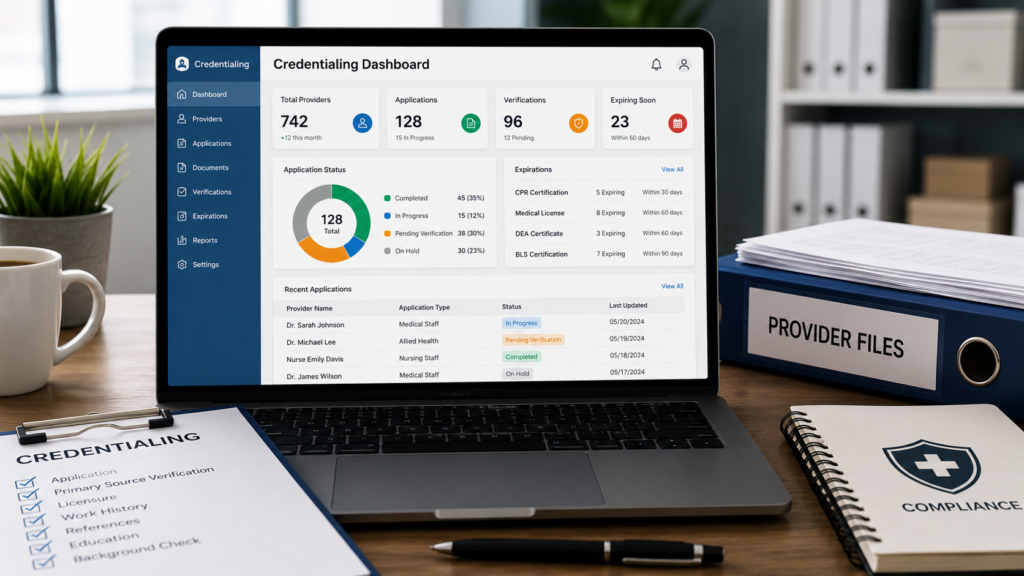
- You want a managed end-to-end solution for solo practice → look for platforms that bundle credentialing, billing, and client referrals under a single subscription, with strong insurer panel coverage in your region.
- You run a group practice managing multiple providers → prioritize platforms with multi-provider credentialing workflows, centralised billing management, and role-based access for practice administrators.
- You need stronger insurer coverage than Alma provides → evaluate platforms with broader payer network relationships, particularly those with confirmed BCBS and Medicare panel access in your state.
- You want more provider autonomy and income control → choose a platform without commission-based referral models, where client relationships and revenue remain fully in your hands.
- You operate a telehealth practice across multiple states → prioritise platforms built for multi-state licensing, automated licence renewal tracking, and payer enrollment at speed.
- You need enterprise-grade credentialing for a multi-facility system → move beyond practice management tools entirely and evaluate dedicated credentialing platforms with EHR integration, primary source verification, and NCQA-aligned workflows.
- You have a lean administrative team and need simplicity → look for platforms with intuitive onboarding, strong customer support ratings, and automation that reduces manual follow-up without requiring a dedicated credentialing specialist to operate.
Conclusion
The credentialing landscape in 2026 is more diverse than ever. Alma is still a solid choice for independent therapists who want an all-in-one platform. But it’s not the only or the best option for every practice type, specialty, or scale.
The biggest shift right now is AI-powered automation. Platforms like MantraComply and MedTrainer are cutting the time and effort it takes to credential providers. Behavioral health platforms like Headway and Rula are making insurance participation accessible even without an administrative background.
Whatever your needs, the right platform should free you from paperwork, so you can focus on delivering quality care.
Frequently Asked Questions
Alma is a membership-based platform for mental health providers bundling insurance credentialing, billing, EHR, referrals, and continuing education into a $125/month subscription. While popular for ease of use and streamlined credentialing through its insurance partnerships (~45 days), providers seek alternatives due to billing disputes, opaque patient charges, limited insurance network coverage, commission structures reducing earnings, and poor suitability for larger or multi-specialty organizations.
Headway is known for relatively fast credentialing timelines, often reporting onboarding periods measured in weeks rather than months, though timelines vary by payer and state. MantraComply delivers similar speed, 30–45 days, using AI automation. Traditional processes can take 60 –180 days, depending on insurers and state regulations.
Headway, Rula, and Grow Therapy are free to join and take a commission from insurance reimbursements instead of a monthly fee. This trade-off can be cost-effective depending on session volume and reimbursement rates.