
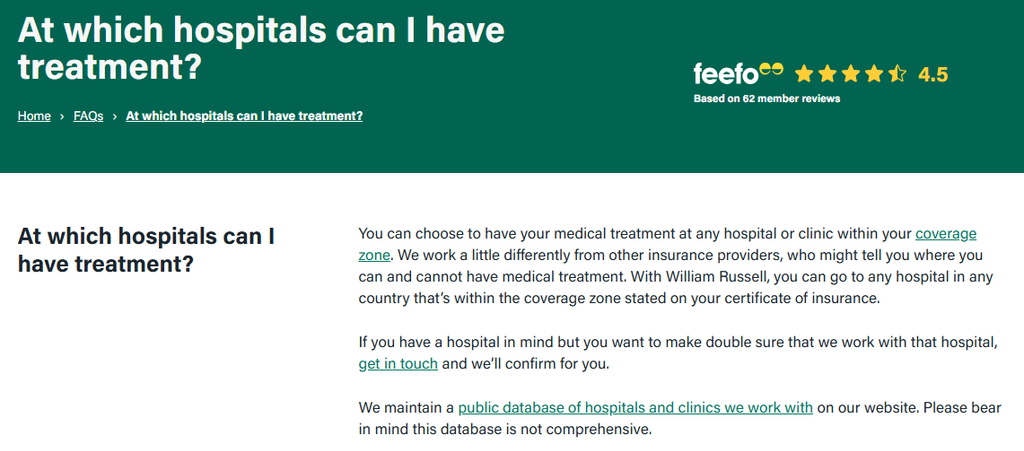
Flexible provider relationships are central to supporting William Russell members worldwide. William Russell lets members choose hospitals and clinics within their policy’s coverage zone while maintaining relationships with more than 40,000 hospitals and clinics worldwide. William Russell Provider Recognition may support direct settlement, hospital admissions, cashless outpatient treatment where available, pre-authorisation and claims administration. This guide explains provider eligibility, documentation, recognition processes, fees, timelines and the ongoing responsibilities involved in treating William Russell members.
What Is William Russell Provider Recognition?
William Russell Provider Recognition refers to establishing a provider relationship that allows healthcare organisations to support William Russell members under applicable network and payment arrangements.
William Russell does not operate a traditional closed network. Members can generally choose hospitals or clinics within their policy’s coverage zone, while William Russell maintains relationships with healthcare providers worldwide.
Further, depending on the plan and treatment, William Russell may settle hospital bills directly. Outpatient treatment is generally reimbursed unless the member has access to an applicable cashless outpatient arrangement.
Eligibility Requirements for William Russell Providers
William Russell does not publish a universal public eligibility checklist for healthcare providers. Eligibility and arrangements may depend on the provider’s location, the services offered, and the member’s policy. Healthcare organisations should confirm the relevant requirements directly with William Russell before assuming that network participation or direct settlement is available.
Key factors to consider:
- Professional Licensing: Hold valid licences and registrations required in your country.
- Clinical Services: Ensure your facility can provide the required treatments and services.
- Provider Relationships: Confirm whether William Russell or its regional partners require specific arrangements for your facility.
- Direct Settlement: Check whether direct payment is available for your location and treatment type.
- Patient Coverage: Verify policy benefits and obtain pre-authorisation where required.
- Supporting Documentation: Keep licences, provider details, fee schedules, and relevant clinical records available if requested.
What Documents Are Needed for William Russell Provider Recognition?
Preparing accurate provider information can help healthcare organisations respond efficiently to William Russell’s enquiries about provider relationships and payment arrangements. As William Russell does not publish a universal public document checklist for provider recognition, the following table outlines general information to prepare. Specific requirements may vary by provider location, facility type, and the arrangements being discussed.
| Document Checklist | Why It Matters |
|---|---|
| Professional Licences and Registrations | Helps demonstrate that the provider is authorised to deliver healthcare services. |
| Provider or Facility Profile | Outlines the organisation’s services, facilities and clinical capabilities. |
| Practice Address and Contact Details | Allows the relevant team to contact the provider and identify its location. |
| Speciality and Services List | Clarifies the treatments and services available to insured members. |
| Fee Schedule and Billing Details | Supports discussions about treatment costs, invoicing and direct settlement. |
| Professional Indemnity Insurance Details | Provides evidence of relevant insurance cover if requested. |
| Banking and Payment Information | May be needed to establish payment arrangements where direct settlement is agreed. |
| Additional Supporting Documents | Addresses any further information requested for the provider’s specific location or arrangement. |
Step-by-Step Process to William Russell Provider Recognition Guide
Establishing a provider relationship with William Russell requires healthcare organisations to understand the relevant contact procedures, documentation requirements and payment arrangements. As William Russell does not publish a universal provider-registration process for every facility, providers should confirm the requirements applicable to their location, speciality and proposed services. The following steps outline how healthcare organisations can prepare for discussions, organise supporting information and manage the administrative responsibilities involved in treating William Russell members.
Step 1: Contact William Russell and Express Interest
Begin by contacting William Russell through its official website to enquire about provider relationships and the arrangements available for your facility. Explain your organisation’s location, clinical specialities, and interest in treating internationally insured patients. Ask whether William Russell works directly with providers in your region or uses a regional partner or third-party network.
During the initial enquiry, clarify the appropriate contact route, whether a formal provider arrangement is possible, and what information is needed to proceed. Preparing your organisation’s details in advance can help make the discussion more productive. An initial enquiry does not guarantee provider recognition or direct settlement.
Step 2: Prepare Provider Details and Supporting Documents
Once you have established the appropriate contact route, organise the information requested by William Russell. Accurate documentation can help the relevant team understand your facility’s services, professional standing and administrative capabilities.
Common information to prepare includes:
- Provider Details: Organisation name, address, contact information and facility type.
- Professional Credentials: Relevant licences, registrations and qualifications.
- Clinical Services: Specialities, treatments and procedures offered.
- Fee Schedule: Charges for consultations, procedures and other services, if requested.
- Facility Documents: Registration certificates and other supporting records, where applicable.
- Billing Information: Invoicing procedures and payment details, if relevant.
This is a general preparation checklist, not an official William Russell document list. Requirements may vary depending on the provider’s location, facility type, and proposed arrangement. Confirm the specific requirements directly with William Russell or its relevant network partner before submitting documents.
Step 3: Confirm Provider and Payment Arrangements
After submitting the requested information, clarify the arrangements available to your facility before relying on direct settlement or cashless treatment. William Russell’s public guidance does not establish one universal approval process for every provider, so the applicable terms should be confirmed directly.
Discuss the following points with the relevant team:
- Provider Relationship: Confirm whether your facility can establish a direct relationship or must work through a regional partner.
- Service Coverage: Clarify which locations, specialities, and treatments are included.
- Direct Settlement: Establish whether direct payment is available and which services qualify.
- Billing Requirements: Review invoice formats, submission procedures, and payment conditions.
- Claims Support: Identify the appropriate contact for payment queries or invoice discrepancies.
Keep written confirmation of any agreed arrangements and clarify the responsibilities your facility must fulfil. Submitting documents does not automatically result in approval, a formal agreement, or guaranteed direct payment.
Step 4: Verify Member Eligibility and Pre-authorisation Requirements
Before providing treatment, verify the patient’s policy benefits and determine whether pre-authorisation is required. Even when a provider has an existing relationship with William Russell, coverage depends on the member’s policy and the treatment involved.
For planned inpatient or daypatient treatment, contact William Russell in advance and provide the clinical information required for assessment. Where possible, follow the insurer’s recommended advance-notification period and obtain confirmation of any guarantee of payment before proceeding. For outpatient services, check whether the member qualifies for cashless treatment or must pay and claim reimbursement.
Step 5: Submit Claims and Maintain Provider Records
Following treatment, submit accurate invoices and supporting documentation according to the agreed process. Maintain records of authorisations, treatment details, invoices, and payment correspondence to help resolve queries efficiently.
Healthcare providers should also keep their contact information, professional credentials, service details, and billing records up to date. Confirm any changes to your facility’s services or payment arrangements with the relevant team. These practices can support smoother administration when treating William Russell members.
Important: William Russell does not publicly specify a universal provider-recognition application form or standard onboarding timeline. Confirm the applicable process, documentation, and payment arrangements directly with William Russell before assuming that your facility is formally recognised or eligible for direct settlement.
How Long Does William Russell Provider Recognition Take?
William Russell does not publicly specify a standard timeframe for provider recognition or establishing direct-settlement arrangements. The duration may depend on the provider’s location, the information submitted, and whether additional checks or discussions about billing and payment arrangements are required.
Healthcare providers should contact William Russell to confirm the expected response time and any outstanding requirements. Preparing accurate provider information and responding promptly to requests may help avoid unnecessary delays, but neither approval nor a specific completion date is guaranteed.

William Russell Provider Recognition and Fee Structure
William Russell does not publish a standard fee structure for healthcare providers seeking to establish provider relationships. The financial arrangements depend on the agreement with the insurer, the treatment provided, and the member’s policy benefits. Healthcare organisations should clarify the applicable terms before accepting patients under direct-settlement arrangements.
Providers should review these key aspects before finalising payment arrangements:
- Reimbursement Queries: Confirm how to resolve outstanding claims or payment discrepancies
- Recognition Costs: Ask whether any fees apply to the proposed provider arrangement.
- Payment Terms: Confirm the agreed rates and payment conditions.
- Direct Billing: Establish whether the facility qualifies for direct settlement.
- Treatment Authorisation: Check approval requirements for planned care.
- Claims Submission: Understand invoice requirements and payment procedures.
How MantraComply Can Assist
MantraComply helps healthcare providers organise credentialing documents and manage administrative requirements when exploring William Russell provider relationships.
This includes:
- Administrative Support: Coordinate documentation.
- Document Management: Organise credentials.
- Application Support: Prepare provider details.
- Requirement Tracking: Track pending documents.
- Record Maintenance: Update provider records.
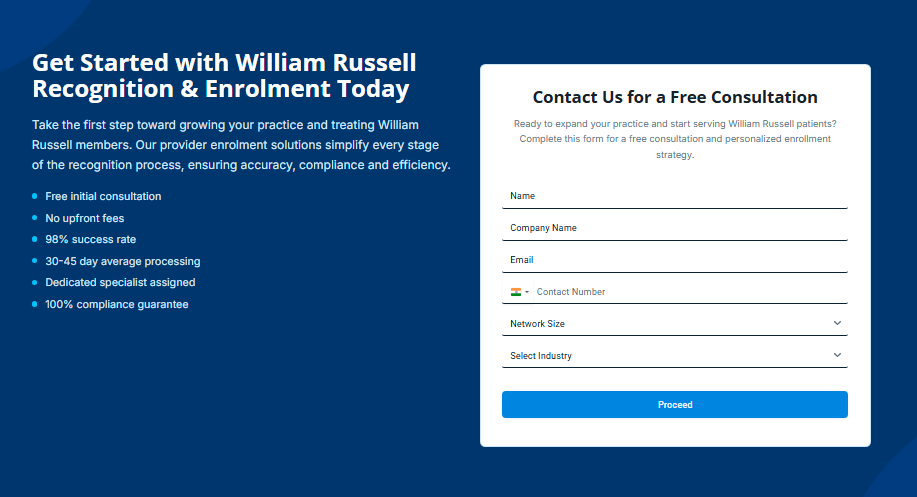
Ready to simplify provider recognition? Get expert support from MantraComply today.
Conclusion
Establishing a relationship with William Russell can help healthcare providers understand the arrangements involved in treating internationally insured patients. A clear approach to provider administration can also help practices manage insurer communications and maintain organised documentation.
MantraComply supports healthcare organisations with credentialing documentation, provider information management, and administrative coordination. With a more structured approach to these tasks, providers can improve internal workflows and devote greater attention to patient care.
Frequently Asked Questions
William Russell Provider Recognition refers to establishing a provider relationship that allows a healthcare organisation to support William Russell members under the applicable network and payment arrangements. The exact process can vary by country and network structure.
No. William Russell states that members can choose any hospital or clinic within their policy’s coverage zone. It also maintains relationships with hospitals and clinics and works with partners in specific markets.
In most cases, William Russell says it settles hospital bills directly when members are admitted to hospital. However, treatment must be eligible under the member’s policy, and any required pre-authorisation should be completed.
William Russell requires pre-authorisation for several types of treatment, including inpatient hospital care, advanced imaging, cancer treatment, transplants, dialysis, rehabilitation, maternity care and treatment received in the USA. Requirements can vary according to the policy.
William Russell does not publish a universal provider recognition fee in its current public provider information. Providers should confirm any applicable commercial or payment terms through the relevant William Russell or network-partner process.
View Sources
- William Russell. At Which Hospitals Can I Have Treatment?. Accessed 14/10/2026.
- William Russell. How to Make a Health Insurance Claim. Accessed 14/10/2026.
- William Russell. Hospitals Our Members Use for Inpatient Treatment. Accessed 14/10/2026.
- William Russell. Cashless Access to Outpatient Treatment. Accessed 14/10/2026.
- MantraComply. William Russell Provider Recognition. Accessed 14/10/2026.