For healthcare providers, maintaining accurate professional information is an important part of credentialing, payer enrollment, and ongoing provider administration. A CAQH profile allows providers to maintain key professional and practice information in a centralized system that can be shared with authorized organizations involved in these processes.
However, creating a profile is only the beginning. To complete CAQH profile requirements successfully, providers must enter accurate information, maintain current supporting documents, review authorization settings, and complete the required CAQH attestation process.
The profile also requires ongoing attention. Licenses expire, practice locations change, employment arrangements evolve, and insurance information may need to be updated. Regular CAQH reattestation and profile maintenance can help ensure that provider information remains current and ready for credentialing-related workflows.
This guide explains how to manage CAQH profile completion, maintain accurate information, complete attestation, and avoid common administrative CAQH mistakes.
What Is a CAQH Profile?
A CAQH profile is a centralized record containing professional, educational, and practice-related information about a healthcare provider. Depending on the provider’s circumstances, the profile may include identification details, professional licenses, education and training history, employment information, practice locations, professional liability coverage, certifications, and supporting documentation.
Maintaining this information centrally can reduce repetitive administrative work when multiple authorized organizations require similar provider details.
However, completing a CAQH profile does not mean that every credentialing or insurance participation requirement has been completed. Healthcare providers may still need to meet payer-specific requirements related to credentialing, contracting, provider enrollment, and participation.
Why Accurate CAQH Profile Completion Matters
An incomplete or outdated profile can create unnecessary administrative work during credentialing and payer-related processes.
For example, an outdated practice location, expired professional license, missing document, or inconsistent employment history may require additional clarification. These issues can create extra follow-up for both providers and administrative teams.
For this reason, CAQH profile completion should involve more than simply filling out the required sections.
Steps to Complete and Maintain Your CAQH Profile
Completing a CAQH profile involves more than entering information once. Providers should follow a structured process to ensure their professional details, supporting documents, practice information, and authorization settings remain accurate and up to date.
The following steps can help simplify CAQH profile completion and make ongoing profile maintenance easier.
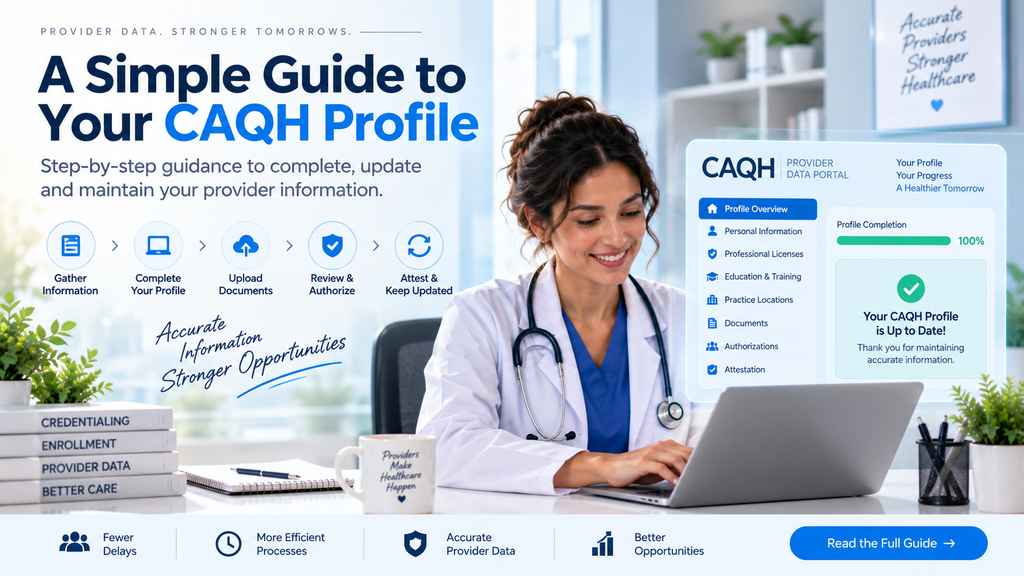
Step 1: Gather Your Information Before You Begin
The easiest way to complete CAQH profile requirements efficiently is to gather relevant information before beginning.
Depending on the provider’s circumstances, this may include:
- NPI information
- State professional licenses
- Education and training history
- Residency or fellowship information
- Employment history
- Current and previous practice locations
- Board certifications
- Professional liability insurance information
- Hospital affiliations, where applicable
- Supporting credentialing documents
Before entering information, providers should compare their available records and identify details that need updating.
Employment dates should be accurate, practice locations should reflect current arrangements, and license information should match the most recent professional documentation.
Preparing information in advance can make CAQH profile completion more efficient and reduce interruptions caused by missing records.
Step 2: Review Your Existing CAQH Profile
Providers who already have a profile should not assume that previously entered information remains current.
Professional circumstances can change over time. A provider may renew a license, change employers, join a new practice, add a service location, receive a new certification, or update professional liability coverage.
Reviewing existing information is therefore an essential part of CAQH profile completion.
The CAQH Provider Data Portal provides the official platform and resources for providers managing their professional information.
The most effective approach is to compare profile information against current professional records. Providers should pay particular attention to dates, addresses, professional affiliations, practice details, and documents with expiration periods.
Rather than treating CAQH as a one-time administrative requirement, providers should include profile reviews within their broader provider credentialing process.
Step 3: Enter Accurate Professional Information
Professional information is one of the most important parts of a CAQH profile.
Providers should carefully review their:
- Legal and professional name
- Professional identifiers
- License details
- Education and training
- Employment history
- Practice locations
- Board certifications
- Professional liability information
Information should remain consistent with supporting records wherever applicable.
For example, employment history should contain accurate dates, and practice information should reflect the provider’s current professional circumstances. If a provider changes organizations or locations, those updates should be made rather than waiting until the next CAQH reattestation cycle.
Maintaining accurate information throughout the year can reduce the amount of work required during future reviews.
For organizations managing multiple providers, tracking profile updates, documents, payer requirements, and credentialing timelines can become increasingly complex. A structured approach to provider credentialing and insurance enrollment can help practices organize these interconnected administrative responsibilities.
Step 4: Review Practice Location Information
Practice location information requires particular attention because providers may work at multiple facilities or experience changes in their professional arrangements.
A provider may join a new organization, leave an existing practice, add another service location, or change group affiliations. When these changes occur, relevant profile information should be reviewed and updated.
Accurate practice information is important because provider data may be used during multiple administrative and credentialing workflows.
Rather than waiting until the next CAQH attestation, providers should review their information when significant professional changes occur. Keeping information current throughout the year can reduce the likelihood of outdated records remaining in the profile.
For larger healthcare organizations, this can become more challenging when multiple providers have different locations, documentation requirements, and credentialing timelines.
Step 5: Upload and Maintain Supporting Documents
Entering information into profile fields is only one part of CAQH profile completion.
Providers also need to maintain supporting documentation. Depending on the provider’s circumstances, this may include professional licenses, professional liability insurance documentation, registrations, and other applicable records.
Before uploading or retaining a document, providers should confirm that it is:
- Current
- Complete
- Legible
- Unexpired
- Consistent with the information in the profile
Expired documentation is one of the most common administrative issues providers should monitor.
Uploading a document once does not eliminate the need to replace it when it expires. A practical approach is to track document expiration dates and prepare updated records before existing documentation becomes outdated.
This type of document management is also important during insurance credentialing and enrollment. Providers preparing to work with new payers should understand the wider steps involved in how to get credentialed with insurance companies and ensure their CAQH information remains aligned with their supporting records.
Step 6: Review Authorization Settings
A complete profile does not necessarily mean that every relevant organization can access the information.
Providers should review authorization settings and ensure that appropriate organizations have access where required.
Before considering the CAQH profile complete, review:
- Which organizations currently have access
- Whether relevant organizations have been authorized
- Whether existing authorization settings remain appropriate
Authorization should also be reviewed when professional relationships change.
For example, if a provider joins a new organization or begins a credentialing process with another participating entity, the provider may need to review whether the relevant organization can access the necessary information.
This step can easily be overlooked because the profile itself may appear complete. However, maintaining accurate provider information and managing appropriate access are separate parts of effective profile management.
Step 7: Complete CAQH Attestation
Before completing CAQH attestation, providers should carefully review all relevant information.
Attestation involves reviewing profile information and confirming that it accurately reflects the provider’s current professional circumstances.
Before attesting, review:
- Personal information
- Professional identifiers
- Education and training
- Employment history
- Licenses and certifications
- Practice locations
- Professional liability information
- Supporting documentation
- Authorization settings
Providers should correct identified errors before completing the process.
This review is particularly important for providers who have maintained a profile for several years. Information entered during the original setup may no longer reflect current employment, practice locations, insurance coverage, or professional qualifications.
A thorough review before CAQH attestation can reduce the risk of outdated information remaining in the provider record.
How to Maintain Your CAQH Profile Throughout the Year
The most effective way to manage CAQH attestation is to update relevant information when professional changes occur.
Examples include:
- License renewals
- Employment changes
- New practice locations
- Updated liability insurance
- New board certifications
- Changes in professional affiliations
When information changes, providers should update the relevant sections rather than allowing outdated records to remain until the next re-attestation cycle.
This approach reduces administrative pressure and makes ongoing profile management easier.
Provider credentialing is only one part of a healthcare practice’s wider administrative workload. Teams may also spend significant time managing patient communication, appointment coordination, reminders, intake, and other front-office responsibilities. Healthcare practices looking to reduce repetitive operational work can explore healthcare workflow automation to understand how technology-supported workflows can improve administrative efficiency.
Reducing unnecessary manual work in other areas can give healthcare teams more capacity to focus on important responsibilities such as provider records and credentialing requirements.
Common Mistakes That Can Delay CAQH Profile Completion
Avoiding a few common errors can help providers keep their profiles accurate and prevent unnecessary delays during credentialing and payer-related processes.
Leaving Information Incomplete
Providers may complete the most obvious sections but overlook another area requiring attention.
A complete review before CAQH attestation can help identify missing information and reduce unnecessary follow-up.
Keeping Expired Documents
Professional licenses and supporting documents can expire.
Providers should monitor expiration dates and replace documentation when necessary rather than assuming that an older upload will remain current.
Allowing Information to Become Inconsistent
Professional records should remain consistent.
Changes in employment, practice locations, licenses, or professional liability information should be reflected in the relevant profile sections.
Overlooking Authorization Settings
A profile may contain accurate information but still require authorization review before an appropriate organization can access it.
Delaying CAQH Reattestation
Waiting until the final deadline can create unnecessary administrative pressure.
Maintaining information throughout the year makes the CAQH re-attestation process easier and reduces the number of changes that need to be addressed at once.
CAQH as Part of the Wider Credentialing Process
Maintaining an accurate CAQH profile is important, but it is only one part of a provider’s wider credentialing and insurance participation process.
Insurance payers and healthcare organizations may have separate requirements for credentialing, contracting, provider enrollment, and participation approval.
This means providers should not assume that completing a CAQH profile automatically completes every payer-related requirement.
Practices often need to coordinate provider information across CAQH, payer applications, supporting documentation, enrollment requirements, and renewal timelines. Managing these responsibilities becomes more complicated as a practice grows or adds providers.
A structured credentialing workflow can help reduce missed deadlines, duplicated administrative work, and unnecessary follow-up. This is particularly important for organizations managing several provider profiles simultaneously.
Conclusion
To complete CAQH profile requirements, providers need more than accurate initial data entry.
The process involves reviewing professional information, maintaining practice details, updating supporting documentation, managing authorization settings, completing CAQH attestation, and keeping the profile current through regular CAQH reattestation.
The most effective approach is to treat profile management as an ongoing responsibility.
Update information when professional circumstances change. Monitor document expiration dates. Review authorization settings. Complete the required review and attestation process on time.
For individual providers, consistent profile maintenance can make professional information easier to manage. For larger healthcare organizations, structured credentialing workflows and efficient administrative processes can help reduce missed updates, duplicated work, and avoidable delays.
A completed CAQH profile is important. A consistently maintained profile can be even more valuable.
Frequently Asked Questions
The information required can vary depending on the provider’s circumstances but may include professional identification information, licenses, education and training history, employment information, practice locations, professional liability details, and supporting documentation.
The time required depends on the complexity of the provider’s professional history and whether current documentation is readily available. Providers with multiple practice locations, extensive employment histories, or additional professional credentials may require more time to review their information.
CAQH attestation involves reviewing and confirming the accuracy of profile information. CAQH reattestation is the recurring process of reviewing the profile again and confirming that the information remains current.