Why do some practices begin seeing TRICARE patients as network providers sooner than others? The difference often comes down to how well providers prepare for credentialing and enrollment. Incomplete applications, outdated information, or missing documents can create delays during the review process. TRICARE provider credentialing helps providers meet applicable requirements for participation, while network providers also agree with the applicable regional contractor. The process may include confirming eligibility, completing certification requirements, submitting provider information, and completing credentialing activities. Requirements can vary by provider type, specialty, region, and regional contractor. This guide explains TRICARE credentialing, certification, network participation, documentation, enrollment, and the role of regional contractors.
What Is TRICARE Provider Credentialing?
TRICARE provider credentialing is part of the process used to review healthcare providers and organizations seeking participation in the TRICARE program and, where applicable, the regional provider network. Credentialing generally involves reviewing professional qualifications and other information required under applicable TRICARE and contractor requirements.
A network provider is a TRICARE-authorized provider that has signed a contract with the applicable regional contractor. Network providers agree to the contractor’s network requirements and generally handle claims according to their network agreement.
For healthcare organizations, credentialing involves more than submitting a provider’s name and license number. The process may require the collection and review of information related to:
- Professional licenses.
- Education and training.
- Professional qualifications.
- Practice information.
- Malpractice or liability information.
- Provider documentation.
- Applicable certifications.
- Network participation requirements.
The requirements can differ depending on the provider category and regional contractor. For this reason, providers should review the requirements that apply to their specific practice before beginning the TRICARE provider application.
TRICARE Certification vs. TRICARE Provider Credentialing
TRICARE certification and TRICARE provider credentialing are closely related, but they are not the same process. Understanding the difference is important because a provider may meet requirements to be TRICARE-authorized without necessarily becoming a contracted network provider.
| TRICARE Certification | TRICARE Provider Credentialing |
|---|---|
| Confirms that a provider meets applicable TRICARE requirements to provide covered services. | Verifies a provider’s qualifications, credentials, and professional information for participation. |
| May involve certification requirements specific to the provider type and TRICARE program. | May include verification of education, training, licensure, board certification, work history, and malpractice information. |
| Focuses on meeting TRICARE certification and participation requirements. | Focuses on evaluating and validating provider qualifications and credentials. |
| Supports eligibility to participate in the applicable TRICARE program. | Supports the credentialing and approval process required for applicable provider participation. |
The official TriWest Provider Certification and Credentialing guidance explains that certified TRICARE-authorized providers may be eligible to render services and submit claims for TRICARE beneficiaries. TriWest also maintains separate credentialing requirements for providers seeking participation in the West Region network.
This distinction is important for providers because TRICARE authorization alone does not automatically mean network participation. According to TRICARE, a network provider is a TRICARE-authorized provider that has signed a contract with the applicable regional contractor.
Who Can Apply for TRICARE Provider Participation?
TRICARE works with a wide range of healthcare professionals, facilities, and provider organizations. Eligibility and participation requirements depend on the provider category and applicable TRICARE regulations.
Healthcare providers and organizations seeking participation may include:
- Physicians.
- Behavioral health professionals.
- Allied healthcare providers.
- Clinics and medical practices.
- Ancillary providers.
- Healthcare facilities.
- Specialty providers.
- Other eligible provider types.
Before beginning a full network application, providers should confirm that their provider type and services are eligible for the applicable participation pathway. Requirements can also vary between provider categories, which means one provider’s documentation or certification process may not apply to another.
Providers should also remember that each regional contractor manages its own provider network. A provider seeking network participation should therefore follow the requirements of the contractor responsible for the region in which the provider is seeking participation. TRICARE maintains separate provider networks for the East and West regions.
Documents Required for TRICARE Provider Credentialing
Providers seeking TRICARE network participation may need to submit documentation that verifies their professional qualifications, licensure, experience, and eligibility. Requirements can vary by provider type, specialty, region, and the applicable TRICARE regional contractor. Having current and complete documents ready can help reduce administrative delays during credentialing and enrollment.
| Document | Why It Matters |
|---|---|
| Current professional license | Confirms the provider is legally authorized to practice in the applicable state. |
| NPI and provider information | Helps identify the provider and maintain accurate enrollment records. |
| Education and training records | Verifies the provider’s professional education and required training. |
| Board certification, if applicable | Confirms specialty qualifications where certification is required or applicable. |
| Work history | Supports verification of professional experience and employment history. |
| Malpractice/professional liability information | Provides information about current liability coverage and professional history. |
| CAQH information, where applicable | Supports accurate provider data and credentialing verification. |
| Additional certification or specialty documentation | May be required based on provider type, specialty, or applicable TRICARE requirements. |
| Completed credentialing/application forms | Provides the information needed to review and process the provider’s participation request. |
Why Accurate Documentation Matters
Complete and current documentation helps credentialing teams verify provider qualifications and process applications efficiently. Missing, outdated, or inconsistent information may result in requests for clarification or additional documentation, which can extend the overall credentialing timeline. Providers should review their information carefully before submission and keep credentials, licenses, certifications, and other relevant records current throughout the participation period.
Simplify Your TRICARE Credentialing
Streamline credentialing and enrollment with expert support from application to approval.
Get Started TodayStep-by-Step TRICARE Provider Credentialing Process
The exact TRICARE provider credentialing process can differ based on the provider type and regional contractor. However, providers can generally expect the following stages when pursuing TRICARE authorization and network participation.
Step 1: Confirm Your Provider Participation Path
The first step is to determine whether you are seeking TRICARE authorization, non-network participation, network participation, or another provider-specific pathway.
Providers should review the requirements applicable to their professional category before submitting documentation. Not every provider type follows the same application process, and some specialties may have additional requirements.
Confirming the appropriate participation pathway before beginning can help practices organize the correct information and avoid completing the wrong application.
Step 2: Complete TRICARE Certification Requirements
TRICARE certification establishes that a provider meets applicable requirements to become TRICARE-authorized. Certification requirements can depend on the provider type and applicable regulations.
For example, the West Region contractor provides separate information for provider certification and network credentialing. Providers should therefore review the requirements that apply specifically to their category rather than assuming one process applies to every provider.
Certification and network participation should be treated as separate stages. A provider pursuing network participation may need to complete additional credentialing and contracting requirements.
Step 3: Create or Update Your Provider Information
Credentialing requires accurate professional and practice information. Providers should review their existing records and update information that may have changed before beginning the application process.
The information commonly reviewed includes:
- Professional licenses.
- Education and training.
- Work history.
- Practice locations.
- Professional liability information.
- Provider identification details.
- Other information required by the contractor.
Maintaining accurate provider information from the beginning can reduce the amount of administrative follow-up required later in the process.
Step 4: Complete Your CAQH Provider Data Portal Information Where Required
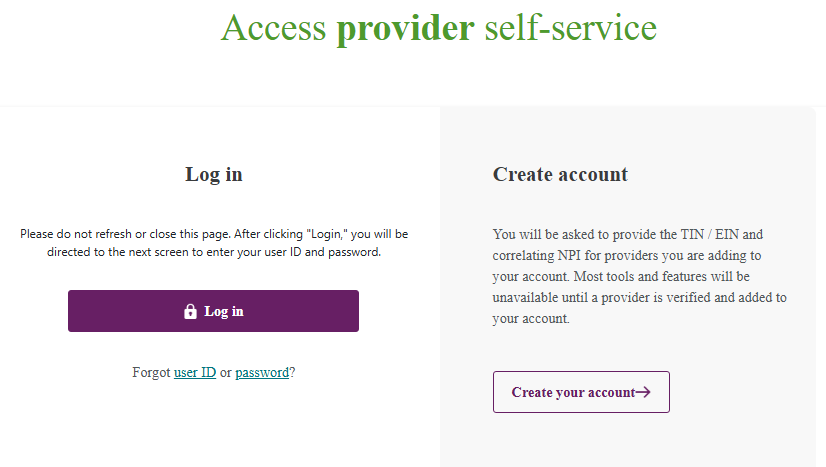
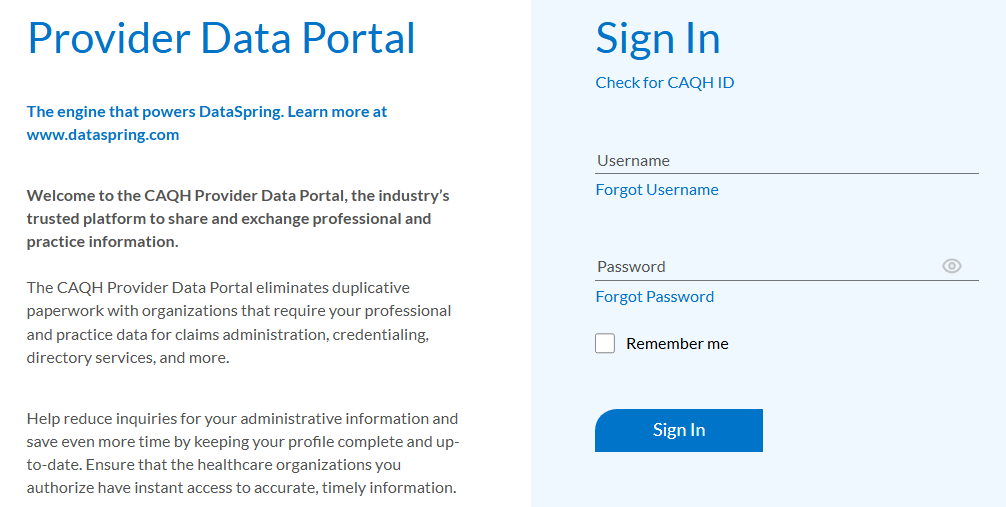
The CAQH Provider Data Portal is used by healthcare providers and participating organizations to maintain and share professional and practice information. Providers can manage their profile information and authorize participating organizations to access the data where applicable.
Before relying on CAQH information for credentialing, providers should review their profile carefully and ensure that relevant documentation and professional information are current.
Particular attention should be given to:
- Professional history.
- Practice locations.
- Licensure information.
- Professional liability information.
- Supporting documentation.
- Provider contact details.
Providers should also follow the regional contractor’s instructions regarding whether and how CAQH information is used within the specific credentialing process.
Step 5: Submit the TRICARE Provider Application or Contract Request
Once the provider has identified the correct participation pathway, the next step is to submit the applicable provider application or network request.
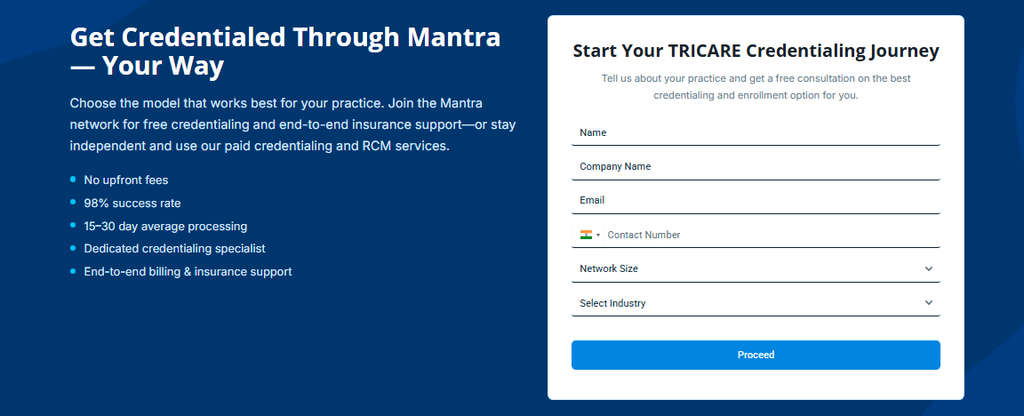
For providers seeking to join the TriWest TRICARE network in the West Region, TriWest directs interested providers to complete a Provider Contract Request through its network participation process.
The contractor may then review the request and provide further instructions based on the provider type and network requirements.
Providers in other regions should follow the process established by the applicable regional contractor rather than assuming that the West Region workflow applies universally.
Step 6: Submit Supporting Documentation
After the initial request or application, providers may need to submit additional documentation that is not already available through an approved information source or provider profile.
Supporting information may include professional records, certification documents, practice details, or other documentation requested during the review.
Before submission, providers should check that documents are:
- Current.
- Complete.
- Clearly legible.
- Consistent with the provider application.
- Submitted in the requested format.
A complete and organized submission can help credentialing teams review the provider’s information more efficiently.
Step 7: Credentialing and Verification Review
The credentialing process involves reviewing the provider’s qualifications and confirming information according to applicable standards and requirements.
TriWest states that its provider credentialing process follows URAC credentialing standards in addition to applicable federal regulations and TRICARE requirements.
Depending on the provider category and credential being reviewed, the process may involve verification of professional information and additional follow-up where information is incomplete or requires clarification.
Providers should respond promptly to requests for additional information and maintain accurate records throughout the review process.
Step 8: Contractor Review and Network Decision
Once the applicable information has been submitted and reviewed, the regional contractor determines the next steps in the provider’s participation process.
The review can depend on factors such as:
- Provider eligibility.
- Completeness of documentation.
- Credentialing requirements.
- Provider type.
- Specialty requirements.
- Regional network needs.
- Applicable contracting criteria.
A provider should not assume network participation until the applicable contractor has completed its review and communicated the outcome.
Step 9: Network Agreement and Provider Enrollment
For providers approved for network participation, the process can include entering into a formal agreement with the regional contractor.
TRICARE defines a network provider as a TRICARE-authorized provider that has signed a contract with the regional contractor. This contractual relationship distinguishes network providers from TRICARE-authorized non-network providers.
After the applicable agreement and enrollment requirements are completed, the provider can move toward participation according to the contractor’s established process and effective dates.
Step 10: Maintain Provider Information and Prepare for Future Reviews
Provider credentialing and enrollment are ongoing administrative responsibilities. Licenses, practice locations, professional liability coverage, certifications, and other provider information can change after initial approval.
Healthcare organizations should maintain a structured process for monitoring provider records and updating information when changes occur.
Important information to monitor may include:
- License renewals.
- Practice location changes.
- Professional certifications.
- Provider employment changes.
- Professional liability information.
- Future credentialing or recredentialing requirements.
Maintaining accurate provider records throughout the lifecycle can make future credentialing activities easier to manage.
How Long Does TRICARE Provider Credentialing Take?
TRICARE provider credentialing timelines vary by provider type, specialty, region, and application completeness. The process may involve certification, application submission, credential verification, and applicable network participation requirements.
Delays can occur due to missing or outdated information, incomplete documents, or additional verification. Keeping licenses, certifications, provider information, CAQH data where applicable, and supporting documents current can help minimize delays and keep the process moving efficiently.

TRICARE Regional Differences: East and West
TRICARE provider participation is organized through regional contractor networks. Each region has its own provider network, and providers should follow the process established by the contractor responsible for the relevant region.
The core objective of credentialing remains similar: ensuring that providers meet applicable requirements before participating under the relevant TRICARE arrangement. However, application instructions, contractor portals, network participation processes, and provider communications may differ.
For example, TriWest provides dedicated West Region guidance for provider certification, credentialing, delegated providers, and network participation.
Providers operating in more than one region should confirm the requirements applicable to each region. Participation or processing with one contractor should not automatically be treated as a substitute for completing the requirements established by another contractor.
How MantraComply Can Support TRICARE Provider Credentialing
Healthcare organizations need more than individual applications and documents to manage provider credentialing effectively. They also need organized workflows, accurate provider information, consistent documentation management, and visibility into credentialing and enrollment activities.
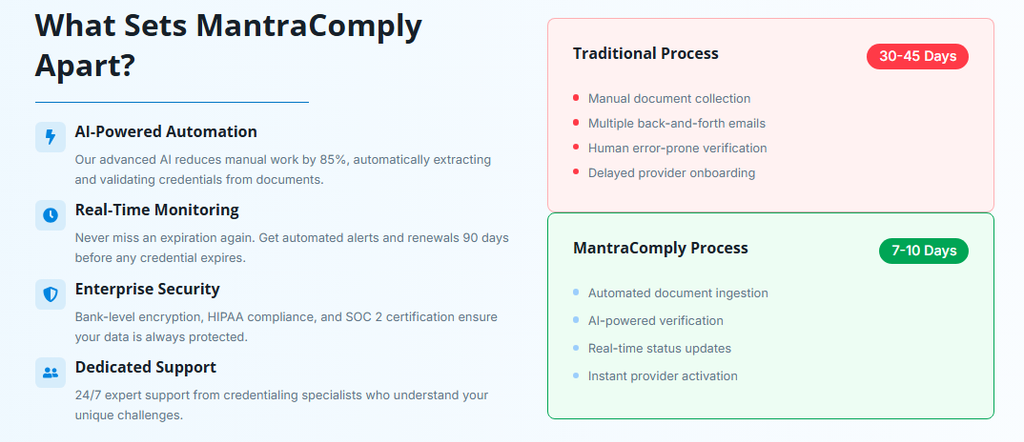
MantraComply can support healthcare organizations across different stages of the provider lifecycle, including:
- Application coordination.
- Document management.
- Provider information tracking.
- Credentialing workflow support.
- Provider enrollment assistance.
- Monitoring upcoming review requirements.
A structured approach can help reduce administrative burden while giving internal teams better visibility into provider documentation, credential status, and enrollment requirements.
Healthcare organizations looking for broader support can explore credentialing and enrollment services to understand how structured workflows can support complex provider credentialing and enrollment requirements.
Accelerate Your Network Approval
Get expert support to simplify credentialing and enrollment.
Conclusion
TRICARE provider credentialing involves more than completing a single application. Providers and healthcare organizations may need to navigate certification, professional information management, documentation review, credentialing, regional contractor requirements, network contracting, and ongoing provider maintenance. Understanding the difference between TRICARE authorization and network participation is an important starting point.
For organizations managing multiple practitioners, a structured credentialing and enrollment process can help maintain accurate provider information throughout the lifecycle. By preparing documentation early, following the requirements of the applicable regional contractor, and maintaining complete provider records, healthcare teams can approach TRICARE provider participation with greater administrative clarity.
Frequently Asked Questions
Processing times commonly range from 60 to 120 days once a complete application and verified CAQH profile are submitted. Specialty, region, and how quickly a provider responds to follow-up requests all affect where a given file falls within that range.
Certification confirms that a provider meets TRICARE’s baseline licensing and regulatory requirements, allowing that provider to bill as an authorized, non-network provider. Credentialing is the more thorough process required to join the network, verifying education, board certification, malpractice history, and professional background before granting in-network status.
Yes. Both Humana Military and TriWest use CAQH ProView as part of the credentialing process. Providers must create a complete profile, authorize their regional contractor to view it, and keep the profile re-attested on a regular schedule, since an outdated attestation can delay the review.
Not always. Network status changes over time and by region. As of 2026, Humana Military has limited new East Region applications mostly to specialty categories such as autism services, psychiatry, mental health, and substance abuse treatment, so providers should confirm current openings before applying.
Recredentialing generally occurs every 36 months, consistent across both the East and West regions. Providers should also maintain their CAQH re-attestation on its own separate 120-day cycle throughout the entire period between recredentialing reviews.
View Sources
- Humana Military. TRICARE Certification and Network Information . Accessed 10/3/2026.
- Humana Military. TRICARE Provider Handbook . Accessed 10/3/2026.
- Humana Military. Provider Resources . Accessed 10/3/2026.
- MantraComply. Healthcare Credentialing Services . Accessed 10/3/2026.
- MantraComply. MantraComply . Accessed 10/3/2026.