Joining the Elevance Health provider network requires healthcare professionals to meet applicable eligibility, credentialing, and enrollment requirements. The process may involve CAQH ProView registration, professional licence verification, education and training reviews, employment history checks, and liability insurance documentation. Providers participating in applicable Anthem networks must also authorise access to their CAQH information and ensure their applications are complete and accurate. Requirements may vary by specialty, location, provider type, and network. Understanding the application process and preparing the necessary documents can help reduce administrative delays. This guide covers Elevance Health provider credentialing and enrollment, including eligibility, documentation, application steps, timelines, and ongoing credential maintenance.
What Is Elevance Health Provider Credentialing?
Elevance Health provider credentialing involves evaluating healthcare professionals’ qualifications, licenses, and professional backgrounds before they join an applicable provider network. The process helps determine whether practitioners meet the required professional and regulatory standards.
Depending on the provider type and network, credential verification may include education, specialist training, board certification, hospital privileges, liability insurance, work history, and malpractice history. Requirements can vary by specialty, organisation, and location.
Providers should review Anthem’s official credentialing guidance to understand the applicable requirements. Healthcare organisations managing multiple practitioners can use credentialing and enrollment solutions to organise provider records and streamline administrative workflows.
Elevance Health Provider Credentialing vs. Elevance Health Provider Enrollment
Credentialing and enrollment are connected processes, but they serve different purposes.
| Credentialing | Enrollment |
|---|---|
| Evaluates a provider’s professional qualifications and eligibility. | Completes administrative and participation requirements for network membership. |
| Includes verification of licenses, education, training, and professional history. | May include contracts, tax information, NPI details, and provider setup. |
| Determines whether the provider meets applicable credentialing standards. | Supports participation in the relevant plan, network, or product. |
| May involve credentialing committee review. | May include agreements, system loading, and participation confirmation. |
Credentialing approval does not necessarily mean that every contracting and enrollment requirement has been completed. For example, the official Anthem provider network application page provides information about joining the network and the credentialing requirements that apply to participating providers.
Providers should confirm that credentialing, contracting, enrollment, and participation setup are complete before beginning services as an in-network provider.
Who Is Eligible for Elevance Health Provider Credentialing?
Eligibility depends on the applicable Elevance Health-affiliated plan, state, specialty, and provider category. Anthem states that it credentials licensed healthcare professionals with whom it intends to contract and market services to members.
Potential applicants may include:
- Physicians and medical specialists
- Nurse practitioners and other advanced practice professionals
- Behavioral health providers
- Allied healthcare professionals
- Individual practitioners
- Provider groups
- Healthcare facilities
- Other eligible healthcare professionals and organizations
The exact list of eligible provider types can differ by network. For example, behavioral health providers may need to follow the requirements of the relevant Carelon Behavioral Health network. Providers can review the Carelon Behavioral Health provider network application information to understand the applicable process.
Before applying, confirm whether your specialty and practice location are eligible, whether the network is accepting new providers, and whether a group agreement or additional participation requirements apply.
Basic Requirements for Elevance Health Provider Credentialing
Applicants should prepare complete and accurate information before beginning the credentialing process. Although requirements vary by network, Anthem identifies several common application elements.
Current Professional License – Providers must maintain a valid professional license in each state where they provide services to members. License numbers, expiration dates, names, and state information should match the application and supporting documentation.
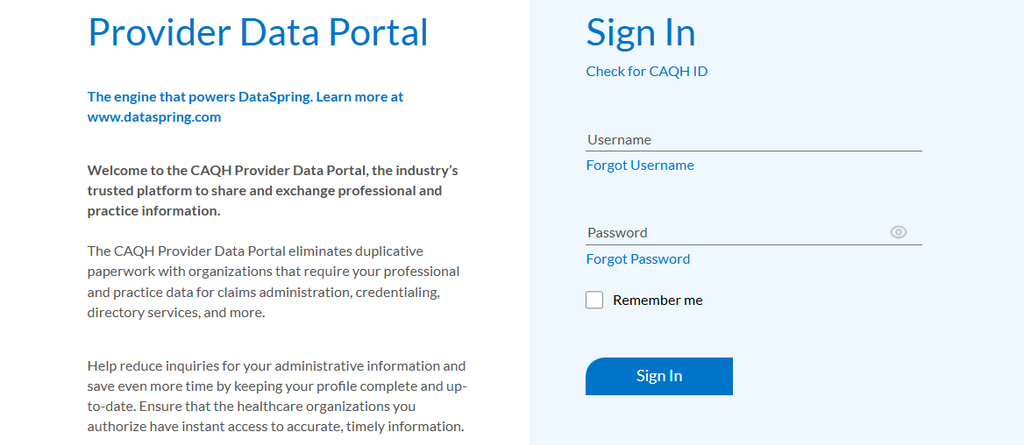
Updated CAQH Profile – Anthem uses CAQH ProView for applicable practitioner credentialing. Providers must complete their CAQH profile and authorize Anthem to access their information. If you already have a CAQH account, review your profile before applying. You can access the CAQH ProView portal to update your professional information, supporting documents, and authorization settings.
Education and Specialty Training – Your education, residency, fellowship, and specialty training details should support the specialty for which you are applying. Additional documentation may be requested depending on your provider type and network.
Professional Liability Insurance – Applicants must maintain current professional liability insurance that meets the requirements of the applicable plan and jurisdiction. Insurance information should include accurate coverage dates and policy details.
Complete Work History – Anthem’s credentialing requirements include five years of work history in month-and-year format. Applicants may also need to explain employment gaps, claims, sanctions, or other relevant application responses.
Providing a complete work history and consistent date ranges can help reduce the need for additional clarification.
Documents Required for Elevance Health Provider Credentialing
The exact documentation checklist depends on the provider type, specialty, and network. The following documents are commonly required or relevant for individual practitioner credentialing.
| Required Document | Why It Matters |
|---|---|
| Completed credentialing application | Provides the information required for credentialing review. |
| Current professional license | Confirms authorization to practice in the applicable state. |
| CAQH ProView file and authorization | Allows the payer to access and verify credentialing information. |
| Education and training details | Supports verification of professional qualifications and specialty. |
| Board certification or professional training records | Verifies specialty credentials or applicable professional training. |
| DEA or CDS certificate | Confirms controlled substance registration, where applicable. |
| Professional liability insurance | Verifies current malpractice coverage and policy details. |
| Current CV or work history | Documents professional experience and required employment dates. |
| Hospital privilege information | Confirms current hospital privileges, where applicable. |
| NPI and tax information | Supports administrative processing and enrollment-related activities. |
Anthem’s credentialing materials also identify primary source verification of professional licenses, training, experience, and competency. Depending on the provider category, the review may include malpractice claims history, sanctions, exclusions, and National Practitioner Data Bank information.
Healthcare organizations should confirm the specific checklist with the applicable network before submitting an application.
Step-by-Step Elevance Health Provider Credentialing Process
The sequence below provides a general framework based on published guidance from Elevance-affiliated plans. The exact application steps, forms, and participation requirements can vary by state and program.
Confirming the correct state plan before starting can help prevent errors such as submitting documents to the wrong entity or assuming that another state’s approval automatically applies.
Step 1: Identify the Appropriate Elevance Health Network
Begin by identifying the specific Elevance Health-affiliated plan or network you want to join. Credentialing and enrollment requirements may vary by state, product, specialty, and provider category.
Visit the applicable official provider website and determine whether you should apply through Anthem, Carelon Behavioral Health, or another affiliated network. Selecting the correct network at the beginning helps prevent application errors and unnecessary follow-ups.
You can also review the Anthem provider forms and guides to locate state-specific resources and administrative documents.
Step 2: Confirm Provider Eligibility
Review the network’s eligibility requirements for your specialty, location, and provider type. Some networks may have separate processes for physicians, behavioral health professionals, ancillary providers, and healthcare facilities.
Confirm whether the network is accepting new providers in your service area. You should also determine whether you need a group agreement, individual participation agreement, or additional documentation before proceeding.
Step 3: Register With CAQH ProView
If you do not already have a CAQH account, register through the official CAQH ProView portal.
Complete the relevant sections of your profile, including:
- Personal and professional information
- Education and training
- Licenses and certifications
- Work history
- Practice locations
- Professional liability insurance
- Hospital privileges
- DEA or CDS information, where applicable
CAQH helps providers maintain credentialing information in a centralized profile that authorized participating organizations can access.
Step 4: Authorize Anthem or the Applicable Network
Creating a CAQH profile is not sufficient if the payer cannot access your information. You must authorize Anthem or the relevant Elevance Health-affiliated organization to review your credentialing profile.
Log in to CAQH and check your authorization settings. Confirm that the correct organization has permission to access your information before submitting your application.
For behavioral health providers, the applicable process may involve Carelon Behavioral Health. Providers should confirm the authorization and documentation requirements for the specific network.
Step 5: Review and Attest to Your CAQH Profile
Review every section of your CAQH profile for accuracy and completeness before submitting or reattesting.
Pay particular attention to:
- License numbers and expiration dates
- Practice addresses
- Education and training dates
- Specialty information
- Employment history
- Professional liability insurance
- Hospital privileges
- DEA or CDS registration
- Explanations for gaps or adverse information
Anthem identifies Initial Application Complete or Reattestation as relevant CAQH statuses for credentialing applications. An incomplete or outdated profile may result in additional requests and delays.
Step 6: Submit the Provider Application
Complete the applicable network participation application and provide any information that is not included in your CAQH profile.
Depending on your provider type and network, the application may require:
- Provider and practice details
- Tax identification information
- NPI information
- Specialty and service details
- Contracting information
- Additional supporting documents
Review the application carefully before submitting it. Make sure all mandatory fields are completed, the information matches your CAQH profile, and the form is signed and dated where required.
Organizations seeking support with application management can explore MantraComply’s healthcare credentialing and enrollment solutions to manage relevant credentialing and payer enrollment workflows.
Step 7: Complete Primary Source Verification
After receiving the application, the credentialing team verifies relevant information through primary sources.
The review may include:
- Professional license verification
- Education and training verification
- Board certification
- Hospital privileges
- DEA or CDS registration
- Professional liability insurance
- Work history
- Sanctions and exclusions
- Malpractice claims history
Anthem’s provider manuals describe the verification of information related to a provider’s legal authority to practice, training, experience, and competency.
If information obtained during verification differs from the submitted application, the provider may need to provide clarification or additional evidence.
Step 8: Respond to Additional Information Requests
The credentialing department may contact you if the application contains missing, expired, or inconsistent information. Respond promptly and provide clear explanations where requested.
Common issues include:
- Expired professional licenses
- Missing insurance certificates
- Incomplete work history
- Unexplained employment gaps
- Incorrect practice locations
- Missing hospital privilege information
- Incomplete CAQH authorization
- Unanswered application questions
Maintaining a centralized document folder and tracking each request can help your team respond within the required timeframe.
Step 9: Complete a Site Review, If Applicable
Certain providers may need to complete a site review. Anthem’s published credentialing requirements state that applicants must allow a site review within 30 days of the request, where applicable.
Site review requirements can depend on the provider type, location, specialty, and applicable regulations. Confirm whether a review applies to your practice and prepare the required information in advance.
Step 10: Complete the Credentialing Review
After the required verification activities are completed, the application proceeds through the applicable credentialing review process.
The credentialing team or committee evaluates the application against the network’s standards. If further information is required, the application may remain pending until the requested documentation or explanation is received.
Providers should maintain communication with the credentialing department and monitor their application status throughout this stage.
Step 11: Complete Contracting and Enrollment
Credentialing approval does not necessarily complete the entire enrollment process. Depending on the network, you may need to sign a participation agreement, provide tax information, confirm practice details, and complete administrative setup.
Enrollment-related activities may include:
- Contract execution
- Provider record creation
- Practice and location setup
- Product or network participation confirmation
- NPI and tax information review
- Provider directory information
Review the agreement carefully and confirm the effective date, participating products, locations, and specialties before beginning in-network services.
Step 12: Maintain Your Credentials After Approval
Credentialing responsibilities continue after network approval. Keep your CAQH profile, licenses, liability insurance, practice addresses, and other professional information updated.
Anthem states that it recredentials network providers every three years. If your CAQH profile is expired or missing information during recredentialing, you may need to update the profile before the process can be completed.
Maintaining accurate information throughout the year can make future recredentialing and provider record updates easier to manage.
How Long Does Elevance Health Provider Credentialing Take?
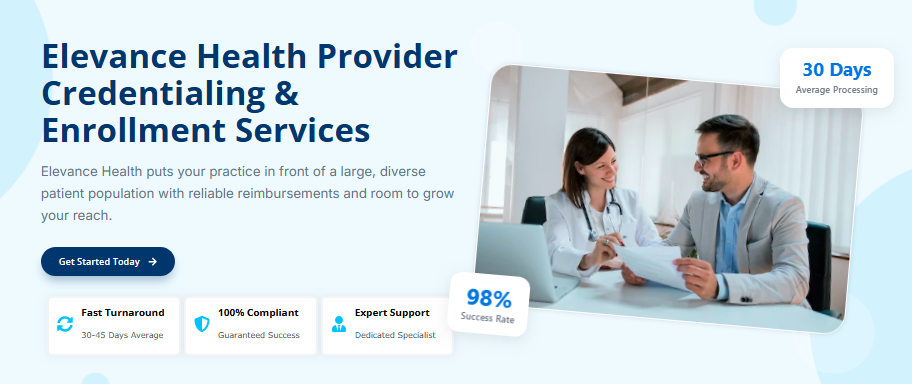
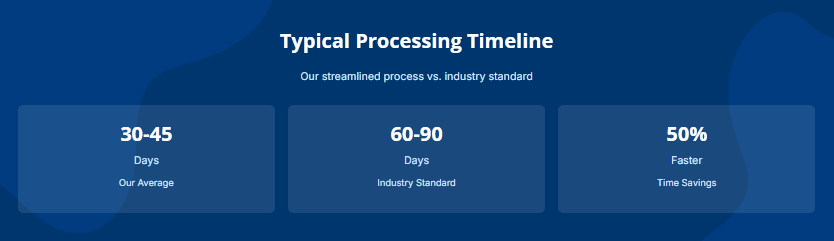
Elevance Health provider credentialing timelines vary by network, provider type, and application completeness. Anthem states that credentialing typically takes 45 days from receipt of a completed CAQH application, although this timeframe may differ across affiliated networks.
Missing documents, verification issues, and delayed responses can extend processing times. Contracting and enrollment may also require additional time after credentialing, so providers should prepare documents in advance, maintain an updated CAQH profile, and respond promptly to information requests.
Elevance Health Provider Credentialing Services
Credentialing services help healthcare providers and organizations manage the administrative requirements associated with payer participation. This support can be particularly valuable for provider groups that manage multiple practitioners, locations, and renewal deadlines.
Depending on the service provider, credentialing support may include:
- CAQH profile preparation and maintenance
- Payer credentialing application support
- Document collection and tracking
- License and insurance monitoring
- Provider enrollment coordination
- Recredentialing support
- Provider roster management
Organizations should confirm the scope of services, payer coverage, turnaround expectations, and responsibilities before engaging a credentialing company.
How MantraComply Can Help With Elevance Health Credentialing
Managing credentialing manually can involve multiple applications, document updates, follow-ups, and renewal deadlines. MantraComply provides healthcare credentialing and enrollment solutions designed to help organizations manage these workflows more systematically.
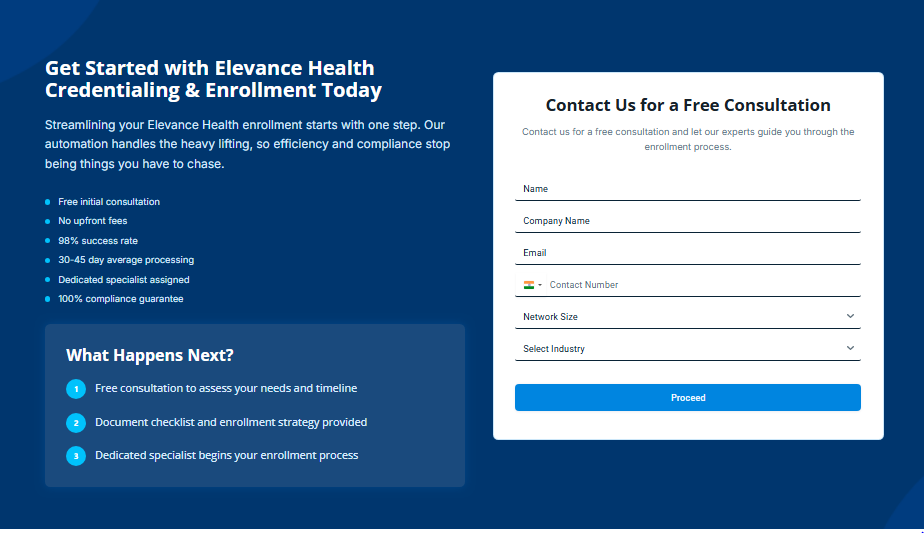
Through MantraComply’s healthcare credentialing services, organizations can explore support for credentialing-related administrative tasks and payer enrollment activities.
MantraComply can help with:
- Credentialing workflow management: Organize provider applications and monitor progress across credentialing stages.
- Document tracking: Maintain visibility into licenses, insurance policies, and other required documents.
- Payer enrollment coordination: Support administrative tasks associated with provider enrollment.
- Provider group management: Use provider group credentialing and enrollment solutions to manage multi-provider workflows.
- Renewal monitoring: Track document expiration dates and support timely updates.
- Centralized operations: Improve visibility into pending tasks, application status, and follow-ups.
Organizations interested in exploring the platform can get started with MantraComply and review the services relevant to their provider credentialing requirements.
Conclusion
Completing the Elevance Health provider credentialing process requires accurate CAQH information, current professional documentation, and timely responses to verification requests. The process may include credentialing review, contracting, and enrollment, with requirements varying by network, state, specialty, and provider type.
Preparing the required documents, reviewing your application carefully, and maintaining updated provider information can help reduce avoidable delays. Healthcare credentialing platforms can also support organizations in managing applications, document tracking, payer enrollment, and ongoing credential maintenance.
Frequently Asked Questions
Processing times vary by state, program, provider type, application completeness, and the requirements of the applicable plan. Providers should use the timeframe provided by the specific plan rather than rely on a universal Elevance timeline.
Providers can create and maintain a CAQH ProView profile for credentialing purposes. The profile should be kept complete, accurate, current, and attested according to CAQH’s applicable requirements.
Recredentialing is generally required every three years for applicable providers, although the exact cycle can vary by plan, program, provider type, contract, or regulatory requirement. Providers should track their applicable recredentialing date and respond to requests promptly.
Credentialing verifies a provider’s qualifications against the applicable requirements. Network participation and contracting are separate activities that may follow or overlap with credentialing, depending on the plan and program.
Not necessarily. Credentialing with one Elevance-affiliated plan should not be assumed to establish participation with another. Providers expanding into a new state should confirm whether a separate application, credentialing review, or other participation requirements apply.
View Sources
- MantraComply. Elevance Health Provider Credentialing. Accessed 20/10/2026.
- Elevance Health. Official Website. Accessed 20/10/2026.
- Anthem. Join the Anthem Provider Network. Accessed 20/10/2026.
- Carelon. Official Website. Accessed 20/10/2026.