Are you planning to join the Evernorth Behavioral Health provider network? Credentialing requires meeting network requirements, submitting accurate provider information and supporting documents, and completing the applicable credentialing and contracting steps.
Evernorth Behavioral Health follows a separate participation process from Cigna’s medical network, with requirements varying for individual providers, clinics, and facilities.
What Is Evernorth Provider Credentialing?
Evernorth provider credentialing is the process through which behavioral health providers are reviewed for participation in the Evernorth network.
The review may involve professional licenses, education and training, work history, professional liability coverage, specialty information, practice details, and other qualifications relevant to network participation. Evernorth’s requirements can differ according to provider type, state, and network.
Where applicable, providers may also use CAQH ProView to maintain standardized credentialing information. Keeping CAQH data complete and current can help ensure that the information available to the payer is consistent with the provider’s application and supporting documents.
Credentialing is also different from simply becoming visible in a provider directory. Once participation is active, providers should review their directory information and make sure details such as specialty, location, and contact information are accurate.
For organizations managing several payer relationships, a centralized credentialing and enrollment platform can help bring provider data, documentation, applications, and deadlines into one workflow.
Evernorth Provider Credentialing vs. Cigna Medical Credentialing
Evernorth and Cigna are closely associated, which can make their provider processes easy to confuse. However, Evernorth Behavioral Health and Cigna’s medical network have different participation pathways.
| Evernorth Behavioral Health | Cigna Medical Network |
|---|---|
| Focuses on behavioral health network participation | Focuses on medical network participation |
| Applies Evernorth Behavioral Health requirements | Applies Cigna medical network requirements |
| Has provider-specific behavioral health pathways | Uses the applicable Cigna medical-network process |
| Requirements can vary by provider category and state | Requirements depend on the applicable medical network |
| Participation does not automatically establish Cigna medical participation | Participation does not automatically establish Evernorth participation |
This distinction matters when a behavioral health professional works within a medical practice or organization. The provider should determine which network agreement applies and whether individual or delegated credentialing is required before submitting another application.
Providers seeking participation in both networks should treat them as separate processes and confirm the requirements that apply to each.
Who Is Eligible for Evernorth Provider Credentialing?
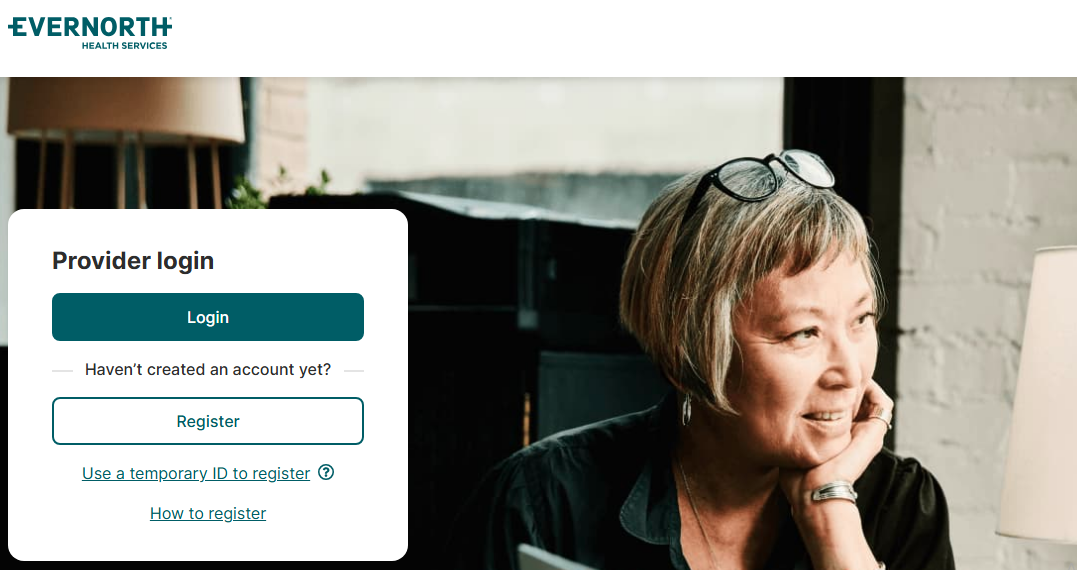
Evernorth’s provider network process distinguishes between individual providers, clinics, and facilities. Each category can have different participation requirements and application procedures.
Individual Providers
Individual behavioral health providers may include:
- Psychologists
- Psychiatrists
- Therapists
- Counselors
- Other eligible behavioral health professionals
An individual provider should first determine whether direct participation is required or whether the provider is already covered through a group, clinic, or delegated credentialing arrangement.
A provider working within an organization should confirm who holds the Evernorth network agreement and who is responsible for credentialing before submitting an individual application. A group contract does not automatically mean every clinician follows the same credentialing pathway.
Clinics
Clinics and group practices may follow a separate credentialing pathway from individual practitioners.
Before applying, the organization should confirm its provider category, network arrangement, service locations, and the requirements applicable to its structure.
Facilities
Facilities providing behavioral health services can also seek network participation, subject to Evernorth’s applicable requirements.
Facility applications may involve additional licensing, certification, liability insurance, accreditation, or other organizational documentation.
Because the process can vary by provider category and location, applicants should verify the applicable Evernorth instructions before preparing their submission.
Basic Requirements for Evernorth Provider Credentialing
Preparing the credentialing file before submitting an application can help reduce back-and-forth with the payer.
Depending on the provider category, requirements may include:
- Active professional license
- NPI
- Current W-9
- Practice and service-location information
- Specialty information
- Education and training details
- Professional liability insurance
- General liability insurance, where applicable
- Work history
- DEA registration, where applicable
- Board certification, where applicable
- CAQH information, where applicable
- Other supporting credentials requested by Evernorth
Evernorth’s published requirements for individual providers include an active license, W-9, education and specialty information, five consecutive years of work history, current liability coverage, and applicable DEA registration.
Providers should also review expiration dates before submitting their application. An otherwise complete credentialing file can still require additional follow-up if a license, insurance policy, or other credential is outdated.
For CAQH-related requirements, providers should keep their profile accurate and authorize Evernorth to access the information when required.
Documents Required for Evernorth Provider Credentialing
The documentation required depends on whether the applicant is an individual provider, clinic, or facility. The following list covers common documentation rather than a universal checklist.
| Document / Information | Why It Matters |
|---|---|
| Professional License | Confirms current authority to practice |
| NPI | Identifies the provider or organization |
| W-9 | Provides required tax information |
| CAQH Profile | Supports credentialing information where applicable |
| Education & Training Information | Documents professional qualifications |
| Work History | Supports review of professional experience |
| Professional Liability Insurance | Demonstrates applicable malpractice coverage |
| DEA Registration | Verifies controlled-substance authority where applicable |
| Board Certification | Documents specialty credentials where applicable |
| Current CV / Resume | Provides professional history where required |
| Facility License / Certification | Supports organizational eligibility |
| Accreditation Documentation | May be required for applicable facilities |
| Service Location Information | Identifies locations where services are provided |
| Additional Supporting Documents | Addresses provider- or network-specific requirements |
Evernorth’s published credentialing requirements specifically identify documentation such as licenses, W-9 information, work history, liability coverage, education, DEA registration, and other supporting information.
Step-by-Step Evernorth Provider Credentialing Process
The Evernorth provider credentialing process can differ according to provider type, state, network arrangement, and current application instructions. The steps below provide a practical framework for navigating the process.
Step 1: Determine Your Provider Type
Start by identifying whether the application is for an individual provider, clinic, or facility.
This determines which application pathway and supporting documentation are likely to apply. Using the wrong pathway can create unnecessary administrative work before the application even reaches credentialing review.
Step 2: Confirm the Applicable Network
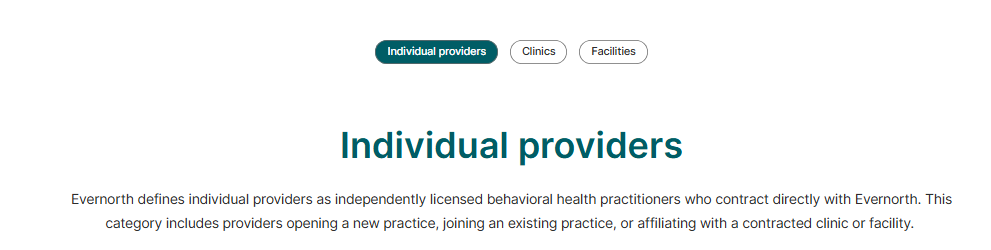
Determine whether the provider needs to participate in Evernorth Behavioral Health, Cigna’s medical network, or both.
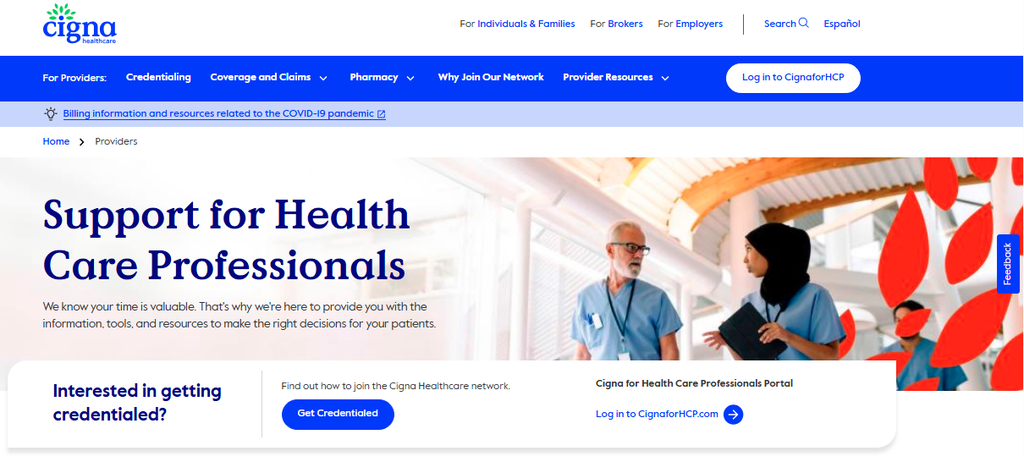
Providers working within existing medical practices should also confirm whether their behavioral health services fall under an existing arrangement or require separate Evernorth participation.
Evernorth’s materials specifically recognize different circumstances for behavioral health providers working within participating Cigna medical practices.
Step 3: Check Existing Network Participation
Before submitting a new credentialing application, verify whether the provider is already participating in the Evernorth network.
Checking participation first can prevent duplicate applications and help determine whether the provider needs to complete a new credentialing process.
For providers working through a group or organization, this is also the point to confirm whether credentialing is handled directly or through a delegated arrangement.
Step 4: Review Current Evernorth Requirements
Credentialing requirements can change according to provider type, state, network, and Evernorth’s current application process.
Review the current Evernorth provider instructions before gathering documents or submitting an application. This is particularly important when application availability or submission requirements have changed.
Step 5: Prepare Your Provider Information
Gather the information needed for the applicable application before beginning the submission.
This may include:
- Legal and professional information
- NPI
- Practice addresses
- Specialty
- Education
- Work history
- Licensure
- Insurance information
- W-9
- DEA registration, where applicable
- CAQH information, where applicable
Preparing the file in advance can make the application process easier and reduce the likelihood of incomplete submissions.
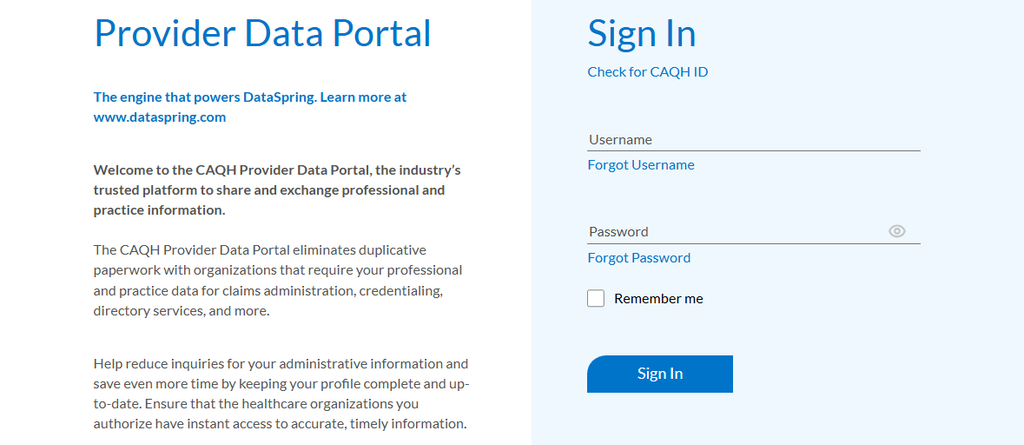
Step 6: Complete CAQH Requirements, Where Applicable
If CAQH is part of the applicable Evernorth credentialing pathway, make sure the provider’s CAQH ProView profile is complete and current.
Review professional history, licenses, practice locations, specialty information, and other relevant fields before authorizing Evernorth to access the profile.
Step 7: Complete the Applicable Evernorth Application
Complete the application applicable to the provider category.
Evernorth uses different processes for individual providers, clinics, and facilities. The information requested can therefore vary according to the applicant’s structure and network requirements.
Review all entries before submission to make sure the application matches the supporting documentation.
Step 8: Submit Supporting Documentation
Submit the documents required for the applicable credentialing review.
These can include professional licenses, liability insurance, W-9 information, work history, education, DEA registration, board certification, and other provider-specific documentation.
Current and consistent documentation can reduce the need for additional clarification during review.
Step 9: Complete Credentialing Verification
After submission, Evernorth reviews the application and performs the applicable credentialing verification.
The review can include independent verification of information submitted by the provider and assessment of qualifications required for network participation.
Providers should remain available throughout this stage in case additional information is required.
Step 10: Respond to Additional Information Requests
Evernorth may request clarification, missing documents, or additional information during the credentialing process.
Responding promptly is important because Evernorth states that an application may be closed if requested information is not provided.
Keeping a complete record of submitted documents and payer correspondence can make these follow-ups easier to manage.
Step 11: Complete Contracting and Participation Requirements
Credentialing review is not necessarily the final step in joining the Evernorth network.
Once the applicable credentialing requirements have been completed, providers may need to complete contracting and participation requirements, including reviewing and signing the relevant agreement or fee schedule.
Providers should wait for the appropriate confirmation of network participation before representing themselves as participating providers.
Step 12: Verify Provider and Directory Information
After participation becomes active, review the provider information associated with the network.
Check details such as:
- Provider name
- Specialty
- Practice location
- Contact information
- Service location
- Network participation
Evernorth emphasizes the importance of accurate provider-directory information because members rely on provider listings when searching for in-network behavioral health services.
How Long Does Evernorth Credentialing Take?
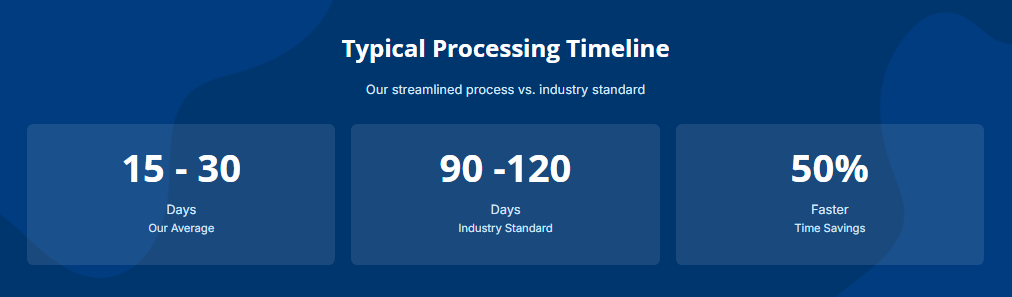
Evernorth does not provide one identical processing period for every provider category. The timeline can depend on the provider type, application completeness, verification requirements, documentation, state requirements, and the applicable network process.
For facility applications, Evernorth’s published guidance states that the network-participation process can take up to 90 days, or longer where required by law. Other provider categories may have different processing experiences.
Evernorth Provider Credentialing Services
Managing Evernorth credentialing manually can become increasingly difficult as practices add providers, locations, and payer relationships.
A credentialing service can help organize:
- Provider applications
- CAQH information
- Licenses and certifications
- Liability insurance
- Supporting documents
- Application status
- Payer correspondence
- Expiration dates
- Credentialing deadlines
- Recredentialing activities
A centralized process is particularly useful for organizations that manage several providers simultaneously and need visibility into which applications are pending, complete, or awaiting payer action.
How MantraComply Can Help With Evernorth Credentialing
MantraComply helps healthcare organizations organize the administrative side of Evernorth provider credentialing and other payer workflows in one place.
- CAQH & Provider Data – Keep provider information and credentialing data organized so teams can maintain accurate records across payer workflows.
- Application Management – Manage application requirements, supporting documentation, submissions, and follow-ups through a centralized workflow.
- Document Management – Centralize licenses, insurance certificates, certifications, and other provider credentials instead of managing them across disconnected files and emails.
- Application Tracking – Track credentialing progress and identify outstanding requirements or payer requests that need attention.
- Expiration Monitoring – Keep visibility into provider licenses, insurance policies, certifications, and other time-sensitive credentials.
- Multi-Payer Management – Manage Evernorth alongside other payer credentialing and enrollment workflows without maintaining a separate manual tracking system for each payer.
Explore MantraComply’s healthcare credentialing and enrollment platform to see how credentialing automation can simplify provider operations.
Conclusion
Evernorth provider credentialing involves several connected stages, from identifying the correct provider category and network to preparing an application, submitting credentials, completing verification, fulfilling contracting requirements, and maintaining accurate provider information.
The process can differ substantially between individual providers, clinics, and facilities, so applicants should confirm the current requirements before beginning. CAQH may also be part of the credentialing workflow where applicable.
Another important distinction is that completing an application does not automatically establish network participation. Providers need to complete the applicable credentialing and contracting requirements and receive the appropriate participation confirmation.
For organizations managing multiple providers and payers, credentialing and enrollment automation can provide a more organized way to manage applications, provider documents, payer communication, and ongoing credentialing requirements.
Frequently Asked Questions
Evernorth’s current network guidance states that facility applications can take up to 90 days to complete, or longer where required by law. The timeframe for other provider types depends on the applicable application pathway, provider type, application completeness, and verification requirements.
There is no charge for providers to submit information to the CAQH credentialing database. Providers should keep their CAQH information complete and current and follow the applicable CAQH re-attestation requirements.
The application requirements depend on the provider type and current Evernorth network process. Evernorth provides separate materials for individual providers, clinics, and facilities, so applicants should use the current instructions applicable to their provider category.
If you need an application-status update, use the contact information provided by Evernorth for the applicable provider type. Delays may occur when additional documentation, missing information, or clarification is required. For facility applications, Evernorth directs applicants to its designated facility recruitment contact.
No. Evernorth Behavioral Health and Cigna’s medical network have separate participation processes. Providers seeking participation in both should confirm and complete the requirements applicable to each network.
View Sources
- Evernorth. Join the Evernorth Behavioral Health Network . Accessed 10/5/2026.
- Evernorth. Evernorth Behavioral Health Administrative Guidelines . Accessed 10/5/2026.
- CAQH. CAQH ProView . Accessed 10/5/2026.
- CAQH. CAQH ProView Provider Credentialing . Accessed 10/5/2026.
- MantraComply. Healthcare Credentialing Services . Accessed 10/5/2026.
- MantraComply. MantraComply . Accessed 10/5/2026.