“Can I submit one application to join every Blue Cross Blue Shield plan?” No – and understanding why is essential for a successful BCBS credentialing process.
Blue Cross Blue Shield consists of independently operated local companies, each managing its own provider network, credentialing requirements, contracting, and participation. Credentialing with one Blue plan does not automatically establish participation with another.
This guide covers BCBS Provider Credentialing and Enrollment step by step, including eligibility, requirements, required documents, the credentialing process, timelines, and how credentialing services can simplify payer management.
What Is Blue Cross Blue Shield Provider Credentialing?
Blue Cross Blue Shield provider credentialing is the process local BCBS companies use to verify a healthcare provider’s qualifications for network participation. It may include reviewing:
- Professional license and education
- Training and board certification
- Work history
- Malpractice coverage
- DEA or controlled-substance registration, when applicable
- Sanctions and disciplinary history
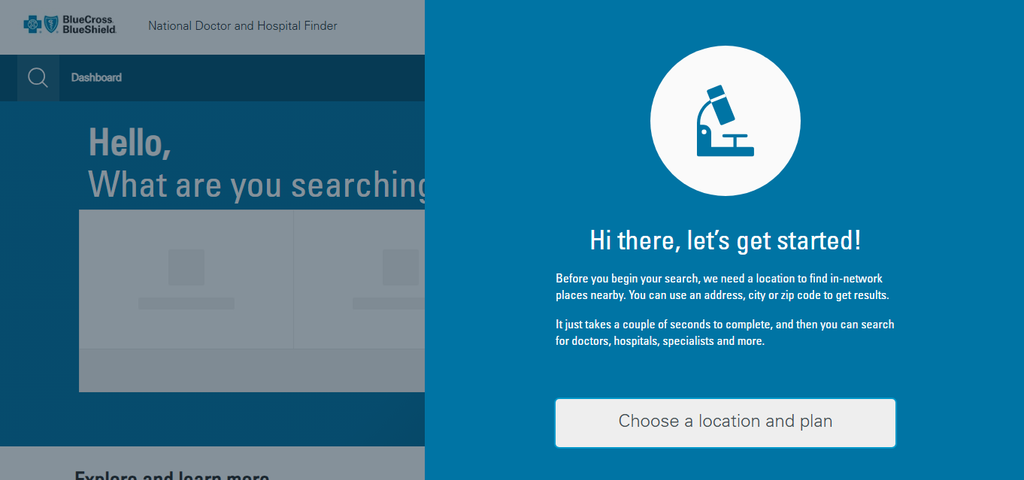
Because BCBS plans operate independently, credentialing with one local Blue plan does not automatically apply to another. Credentialing also differs from contracting: credentialing verifies qualifications, while contracting establishes the provider’s participation with the health plan.
For organizations managing multiple payers, a credentialing and enrollment platform can help centralize provider data, documents, applications, and payer requirements.
BCBS Provider Credentialing vs. BCBS Provider Enrollment
Credentialing and enrollment are closely connected, but they serve different purposes.
Credentialing verifies a provider’s professional qualifications. Provider enrollment generally focuses on establishing the provider’s payer relationship and completing the administrative requirements associated with participation and billing.
| BCBS Credentialing | BCBS Provider Enrollment |
|---|---|
| Verifies provider qualifications | Establishes the provider’s payer relationship |
| Reviews licenses, education, training, and professional history | Completes applicable enrollment requirements |
| Includes primary-source verification | Establishes administrative and billing information |
| May use CAQH ProView | May involve payer-specific forms and systems |
| Results in a credentialing decision | Supports network participation and billing setup |
The exact sequence varies among local Blue plans. Some plans may handle credentialing and enrollment as related or concurrent activities, while others may treat them as separate stages.
Therefore, a provider should not assume that completing credentialing automatically means that every enrollment or contracting requirement has been completed.
For practices managing several payer relationships, MantraComply’s healthcare credentialing services can help coordinate credentialing, enrollment, documentation, and ongoing payer requirements.
Who Is Eligible for BCBS Provider Credentialing?
BCBS credentialing can apply to both individual healthcare professionals and organizations seeking participation with a local Blue plan.
Professional Providers
Depending on the local plan and network, eligible professional providers can include:
- Physicians
- Nurse practitioners
- Physician assistants
- Behavioral health providers
- Chiropractors
- Podiatrists
- Optometrists
- Other specialty providers
The exact provider types and network requirements are determined by the applicable local BCBS company.
Organizational and Facility Providers
Organizations and facilities may also need to complete credentialing or related network participation requirements.
These can include:
- Hospitals
- Healthcare facilities
- Ancillary providers
- Diagnostic organizations
- Rehabilitation facilities
- Other institutional providers
Organizational credentialing generally requires information about the facility itself and may involve additional licensure, accreditation, and organizational documentation.
Group practices should also understand that having a group contract does not necessarily mean that every individual practitioner is automatically credentialed. Individual providers may still need their own credentialing files unless the organization participates in an applicable delegated credentialing arrangement.
For practices operating across multiple states, start by identifying the appropriate local Blue company through the Blue Cross Blue Shield local company directory.
Basic Requirements for BCBS Provider Credentialing
Before beginning a BCBS provider credentialing application, providers should make sure their professional and practice information is complete, current, and consistent.
Depending on the local plan and provider type, common requirements may include:
- Active professional license
- NPI
- CAQH ProView profile
- Current malpractice insurance
- Board certification information, when applicable
- Education and training information
- Professional work history
- Practice locations
- Hospital affiliations, when applicable
- DEA or CDS registration, when applicable
- Tax identification information
- Group information
- Current provider contact information
Many local Blue plans use CAQH ProView as part of professional credentialing. CAQH allows providers to maintain standardized information and authorize participating organizations to access their profiles.
Complete and properly attest the CAQH ProView profile before the applicable BCBS plan attempts to access it.
Keeping information consistent across CAQH, licenses, malpractice insurance, NPI records, and payer applications can help reduce avoidable clarification requests.
Documents Required for BCBS Provider Credentialing
Having your documents ready before beginning the application can make BCBS provider credentialing more efficient.
| Document Checklist | Why It Matters |
|---|---|
| CAQH ProView Profile | Provides standardized provider information for credentialing |
| Professional License | Verifies authorization to practice |
| NPI Information | Identifies the individual provider or organization |
| Malpractice Insurance Face Sheet | Verifies current professional liability coverage |
| Certificate of Insurance | Provides evidence of applicable insurance coverage |
| Board Certification | Supports specialty verification when applicable |
| Education & Training Records | Verifies professional qualifications |
| CV / Work History | Documents professional experience |
| DEA Registration | Supports verification for applicable prescribing providers |
| CDS Registration | May be required where controlled-substance registration applies |
| W-9 / Tax Information | Supports payer enrollment and payment setup |
| Hospital Affiliations | Provides applicable affiliation information |
| Practice Information | Confirms locations, specialty, and contact details |
CAQH’s provider guidance includes information such as professional licenses, malpractice insurance, work history, DEA or CDS certificates, and other credentialing data within the ProView profile. Requirements can still vary by local BCBS plan and provider type.
Get Ready for BCBS Enrollment!
Simplify your enrollment process with expert credentialing and provider enrollment support.
Step-by-Step BCBS Provider Credentialing Process
Forms, portals, and requirements can vary by local Blue plan. However, most professional provider credentialing workflows follow a similar sequence.
Step 1: Identify the Governing Local BCBS Plan
Before submitting an application, determine which Blue Cross Blue Shield company manages the network for your practice location.
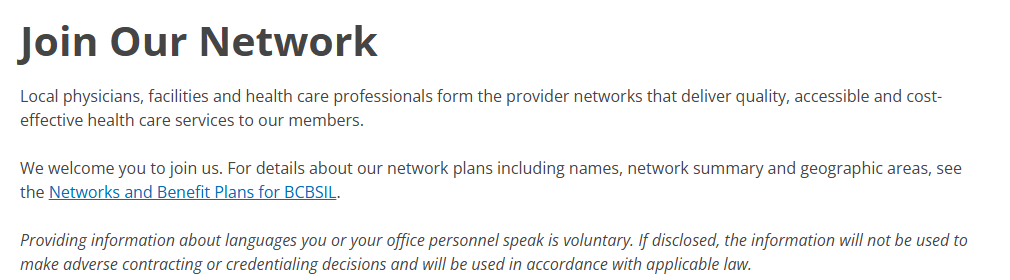
This is the most important first step because the local Blue plan-not the national Association-generally manages provider credentialing and network participation.
Use the BCBS local company directory to identify the appropriate Blue company.
Do not assume that a form or application used by one BCBS plan will apply to another.
Step 2: Check Network Need
Before investing time in a complete application, determine whether the local Blue plan is accepting providers in your specialty and geographic area.
Network participation can depend on factors such as:
- Specialty
- Practice location
- Existing network capacity
- Member demand
- Network requirements
- Product or network type
The applicable local plan determines whether a provider is needed in a particular area or specialty.
Checking network requirements first can prevent providers from spending time preparing an application without understanding the plan’s current participation criteria.
Step 3: Register With CAQH ProView
For applicable professional providers, CAQH ProView is often a central part of BCBS credentialing.
If you do not already have a CAQH profile, register through CAQH ProView.
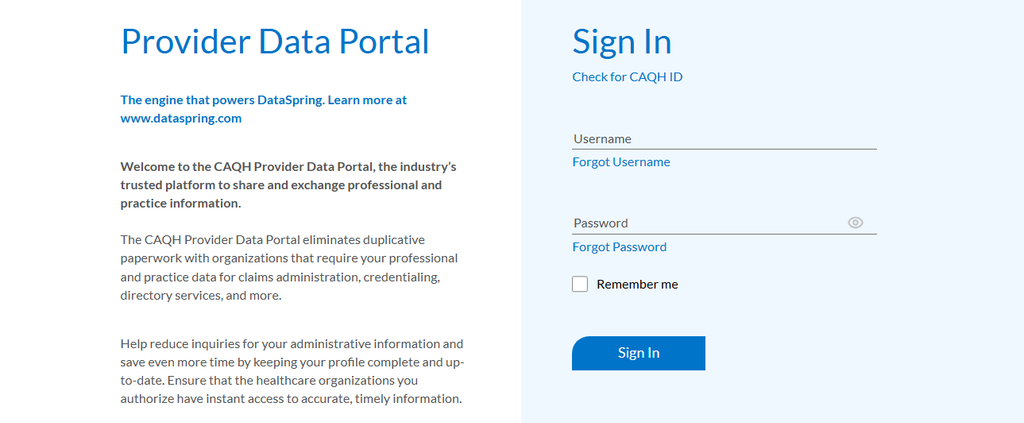
Your profile should contain current information about:
- Professional licenses
- Education
- Training
- Work history
- Malpractice coverage
- Practice locations
- Professional credentials
CAQH ProView allows providers to maintain their credentialing information electronically and control which participating organizations can access it.
The key is to treat CAQH as an ongoing provider record, not a one-time form.
Step 4: Authorize the Local BCBS Plan’s Access
Completing your CAQH profile is only part of the process.
If the local Blue plan uses CAQH, the provider must authorize that plan to access the profile. CAQH allows providers to authorize specific organizations to receive their information.
Before submitting the BCBS application, verify that:
- Your CAQH profile is complete
- Required information is current
- Your profile is attested
- The applicable BCBS plan has access
Failing to authorize access can leave a payer without the information it needs to begin or complete the credentialing review.
Step 5: Submit the Local BCBS Application
Once your provider information is ready, complete the application or network participation request required by the applicable Blue plan.
The application may request:
- Provider name
- NPI
- Specialty
- CAQH ID
- Practice address
- Group information
- Tax ID
- Hospital affiliations
- Contact information
The exact application and submission method depend on the local BCBS company.
For that reason, providers should always follow the current instructions published by their specific Blue plan rather than relying on a BCBS application from another state.
Step 6: Provide Supporting Documents
The local plan may request documentation supporting the information in the credentialing file.
Depending on the provider and plan, this can include:
- Current professional license
- Malpractice insurance
- DEA registration
- CDS registration
- Board certification
- Education and training documentation
- Work history
- Hospital affiliation information
- Other provider-specific documents
Respond promptly to every request.
An application can remain incomplete while the plan waits for missing documentation, clarification, or an updated document.
Maintaining a centralized provider credentialing document management workflow can help teams keep licenses, insurance documents, certifications, and other credentials organized.
Step 7: Complete Primary-Source Verification
After the application is sufficiently complete, the applicable BCBS plan or credentialing verification organization performs primary-source verification.
Depending on the provider and plan, verification may involve:
- State licensing boards
- Training institutions
- Board-certification organizations
- Malpractice carriers
- Other applicable credentialing sources
The purpose is to confirm that information in the provider’s file matches information maintained by the source.
This is why accuracy across CAQH and supporting documents matters.
Step 8: Credentialing Committee Review
Once the required verification is complete, the provider’s file moves through the applicable credentialing review process.
The review may consider:
- Licensure
- Education and training
- Professional history
- Malpractice information
- Sanctions
- Disciplinary history
- Other applicable credentialing criteria
The committee structure and review schedule vary by local BCBS company.
This local variation is one of the reasons providers should not expect one universal BCBS credentialing timeline.
Step 9: Receive the Credentialing Decision
After the review, the provider receives notification of the credentialing outcome.
Keep your credentialing contact information current throughout the process. Many payer communications are sent electronically, so an outdated email address can result in missed requests or delayed notification.
Maintain copies of:
- Application confirmations
- Credentialing correspondence
- Approval notices
- Contracting documents
- Effective-date information
These records can also make future recredentialing easier.
Step 10: Complete BCBS Provider Enrollment
Once credentialing has been completed, the provider may need to complete applicable BCBS provider enrollment activities.
Enrollment can include:
- Provider identification
- Billing information
- Group affiliation
- Participation records
- Contract information
- EFT/ERA setup, where applicable
- Other payer-specific administrative requirements
The exact order varies by local plan. Some BCBS companies may manage credentialing and enrollment concurrently, while others may treat them as separate stages.
This is why credentialing teams should track both statuses independently.
Step 11: Complete Contracting and Network Participation
If a participation agreement is required, the provider or authorized representative must complete the applicable contracting process.
The agreement may establish:
- Network participation
- Provider responsibilities
- Applicable reimbursement terms
- Administrative requirements
- Effective date
- Other network conditions
A credentialing approval should not automatically be interpreted as the effective date of network participation.
Wait for the local Blue plan’s confirmation before representing the provider as active in-network.
Step 12: Verify Your BCBS Directory Listing
After participation becomes active, review your provider directory listing.
Check:
- Provider name
- Specialty
- Practice address
- Phone number
- Group affiliation
- Network status
- New-patient status, where displayed
A directory error can affect how members find and select a provider.
If the information is incorrect, follow the local BCBS plan’s provider-data correction process.
How Long Does BCBS Provider Credentialing Take?
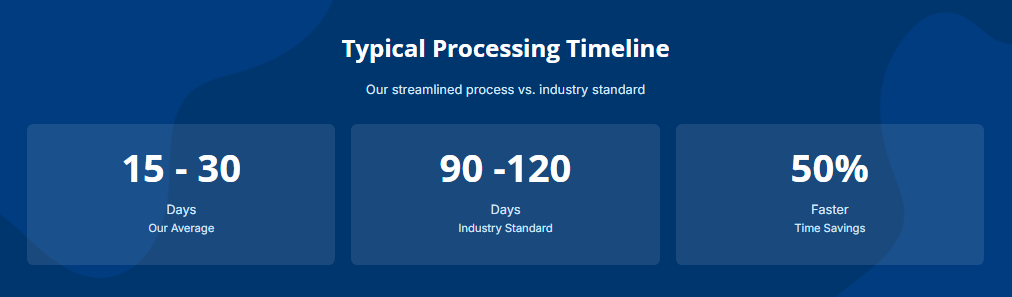
There is no single nationwide BCBS credentialing timeline. Since individual Blue Cross Blue Shield companies manage their own credentialing processes, processing times can vary by local plan, provider type, specialty, and application requirements.
The process may take longer when applications are incomplete or when the payer needs additional documents, clarification, or verification. An outdated or incomplete CAQH profile can also create avoidable delays.
BCBS Provider Credentialing Services
Managing BCBS credentialing manually can become challenging when a practice works with multiple providers, locations, or local Blue plans.
A dedicated credentialing service can help organizations manage:
- CAQH profiles
- BCBS applications
- Provider documents
- License expirations
- Malpractice insurance
- Application status
- Payer follow-ups
- Enrollment requirements
- Contracting milestones
- Directory information
- Recredentialing dates
For multi-state organizations, this matters because each local Blue plan can have its own requirements and workflow.
MantraComply’s provider group credentialing solution helps centralize provider and group data, credentialing workflows, payer enrollment, roster management, and ongoing monitoring.
How MantraComply Can Help With BCBS Credentialing
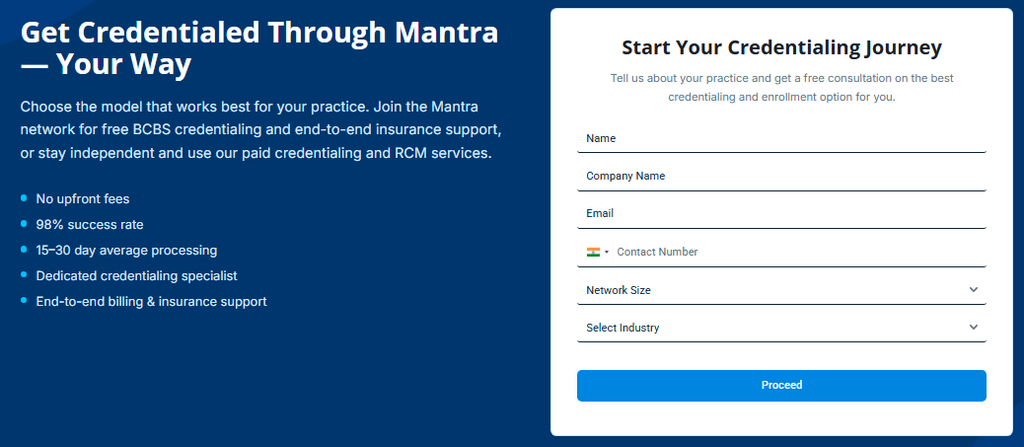
Managing BCBS Provider Credentialing and Enrollment across multiple local plans can be time-consuming. MantraComply centralizes credentialing, payer enrollment, provider data, documents, and ongoing monitoring in one workflow.
- CAQH Management: Keep provider information organized and current.
- Application Preparation: Prepare payer-specific applications using centralized provider data.
- Document Management: Manage licenses, malpractice insurance, certifications, and expiration dates.
- Payer Enrollment: Coordinate enrollment alongside credentialing in one system.
- Application Tracking: Monitor applications, payer requests, follow-ups, and outstanding requirements.
- Ongoing Monitoring: Maintain visibility into provider credentials and recredentialing requirements.
With MantraComply’s credentialing & enrollment platform, organizations can streamline BCBS credentialing and other payer workflows while reducing manual administrative work.
Conclusion
BCBS Provider Credentialing is managed at the local Blue plan level within the broader Blue Cross Blue Shield system. The process generally involves identifying the correct plan, confirming network requirements, completing CAQH ProView where applicable, submitting the required application and documents, and completing credentialing, enrollment, and contracting requirements.
For providers expanding across states, it is important to remember that credentialing with one BCBS plan does not automatically apply to another. Each local Blue plan should be managed as a separate payer relationship.
For organizations managing multiple providers and payers, healthcare credentialing automation can help centralize applications, documents, provider data, and recredentialing requirements, reducing repetitive administrative work.
Frequently Asked Questions
BCBS provider credentialing timelines vary by local plan, and the time required can depend on the plan’s review schedule, application completeness, verification requirements, and how quickly outstanding information is provided.
No. CAQH ProView registration is free, and there’s no ongoing fee – the real investment is the time spent keeping the profile current.
Recredentialing requirements vary by local BCBS plan, so providers should confirm the applicable recredentialing cycle directly with each plan in which they participate.
Credentialing verifies a provider’s qualifications with a specific local plan. Enrollment sets up the billing relationship and results in a signed participation contract. Depending on the local plan, credentialing and enrollment may be handled concurrently or as separate stages.
No. Each local Blue Cross Blue Shield company reviews and approves providers independently, so expanding into a new state generally means starting a fresh BCBS provider application with that state’s plan.
View Sources
- Blue Cross Blue Shield Association. Find Your Local Blue Cross and Blue Shield Company . Accessed 10/5/2026.
- Blue Cross Blue Shield Association. Blue Cross Blue Shield . Accessed 10/5/2026.
- CAQH. CAQH ProView . Accessed 10/5/2026.
- CAQH. CAQH ProView Provider Credentialing . Accessed 10/5/2026.
- MantraComply. Healthcare Credentialing Services . Accessed 10/5/2026.
- MantraComply. MantraComply . Accessed 10/5/2026.