Can healthcare providers submit one application and become credentialed with every Health Net plan? Not necessarily. Health Net credentialing requirements vary by product, provider type, network, and participation arrangement. Completing credentialing with one Health Net plan or product does not automatically confirm participation across every Health Net network.
This guide explains Health Net provider credentialing and enrollment, including eligibility, basic requirements, required documents, the step-by-step credentialing process, timelines, California AB 1041 updates, and how credentialing services can simplify payer management.
What Is Health Net Provider Credentialing?
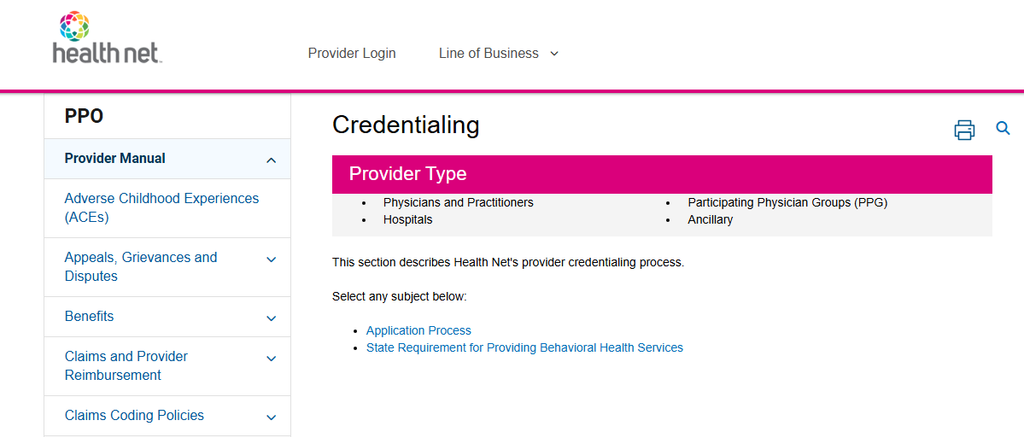
Health Net provider credentialing is the process of verifying healthcare professionals’ qualifications, licenses, training, work history, and other relevant credentials before they participate in an applicable provider network. The review helps determine whether practitioners meet the professional and regulatory standards required for network participation.
The process may involve submitting a credentialing application, providing supporting documentation, completing primary-source verification, and meeting applicable network requirements. Specific procedures can vary by provider type, specialty, location, and Health Net plan. Credentialing approval may also be separate from contracting and enrollment, so providers should confirm the requirements for their intended network before beginning the application.
Health Net Provider Credentialing vs. Health Net Provider Enrollment
Credentialing and enrollment are connected processes, but they serve different purposes. The table below highlights the key differences:
| Health Net Provider Credentialing | Health Net Provider Enrollment |
|---|---|
| Verifies a provider’s professional qualifications and eligibility for network participation. | Establishes the provider’s payer relationship and completes administrative participation requirements. |
| Professional qualifications, work history, licenses, and clinical credentials. | Payer records, billing information, participation details, and administrative setup. |
| Reviewing licenses, education, training, malpractice insurance, and professional history. | Completing payer enrollment, billing details, group affiliations, and applicable administrative requirements. |
| Determines whether the provider meets the applicable credentialing requirements. | Supports the provider’s participation and administrative activation with the payer. |
| May occur before or alongside enrollment, depending on the Health Net product and provider type. | May occur after or concurrently with credentialing, depending on the applicable payer workflow. |
| Confirmation of the provider’s credentialing status or decision. | Completion of applicable payer enrollment and participation requirements. |
| Credentialing approval does not necessarily confirm that enrollment, contracting, or billing setup is complete. | Enrollment completion does not replace required professional credentialing or verification. |
Healthcare organizations should track credentialing, enrollment, contracting, and activation separately to avoid assuming that credentialing approval automatically makes a provider active in-network.
MantraComply’s healthcare credentialing services can help organizations coordinate provider credentialing, enrollment, documentation, and ongoing payer requirements.
Who Is Eligible for Health Net Provider Credentialing?
Health Net credentialing may apply to individual healthcare professionals and organizational providers seeking participation in an applicable network.
Professional Providers
Depending on the Health Net product, network, and provider specialty, eligible professional providers may include:
- Physicians
- Nurse practitioners
- Physician assistants
- Behavioral health professionals
- Chiropractors
- Podiatrists
- Optometrists
- Other eligible specialty providers
Eligibility requirements vary by provider type, specialty, location, and applicable network. Providers should confirm the requirements for the specific Health Net product they intend to join.
Organizational and Facility Providers
Organizations and facilities may also need to complete credentialing or related participation requirements. These may include:
- Hospitals
- Healthcare facilities
- Diagnostic organizations
- Ancillary providers
- Rehabilitation facilities
- Group practices
- Other institutional providers
Organizational credentialing may require additional information about the facility, including applicable licenses, accreditation, ownership details, and organizational documentation.
A group contract does not necessarily mean that every individual practitioner is automatically credentialed. Individual providers may still need separate credentialing files unless an applicable delegated credentialing arrangement is in place.
Basic Requirements for Health Net Provider Credentialing
Before beginning the Health Net provider credentialing process, providers should ensure that their professional and practice information is complete, accurate, and consistent across all records.
Depending on the provider type and applicable Health Net requirements, common requirements may include:
- Active professional license
- National Provider Identifier (NPI)
- CAQH ProView profile, when applicable
- Current malpractice insurance
- Education and training information
- Board certification information, when applicable
- Professional work history
- Practice locations
- Hospital affiliations, when applicable
- DEA or controlled-substance registration, when applicable
- Tax identification information
- Group practice information
- Current contact information
- Accurate disclosure of sanctions or disciplinary history
CAQH ProView
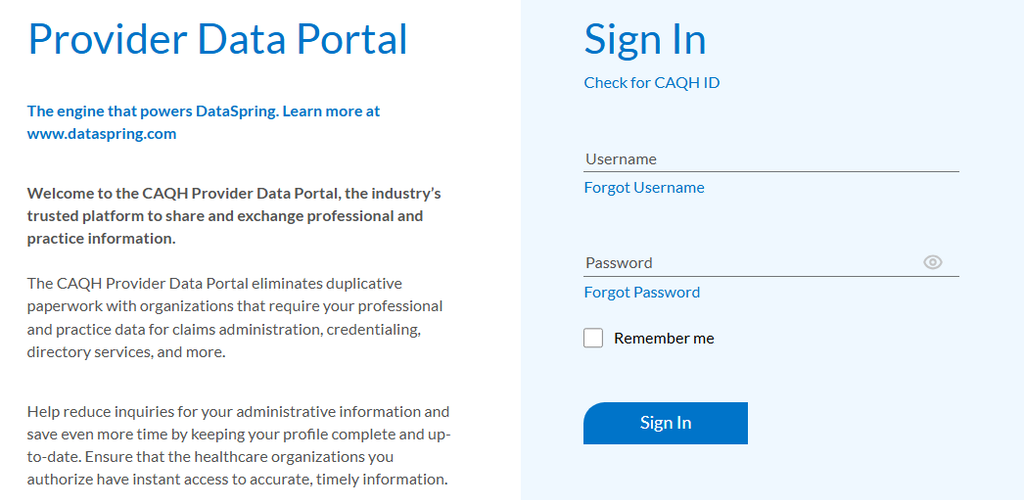
Many healthcare payers use CAQH ProView to collect and maintain standardized provider information. Where applicable, providers should keep their CAQH profiles complete, current, and properly attested.
Information in CAQH should be consistent with the provider’s licenses, insurance documents, NPI records, and payer applications. Inconsistencies can lead to clarification requests and delays.
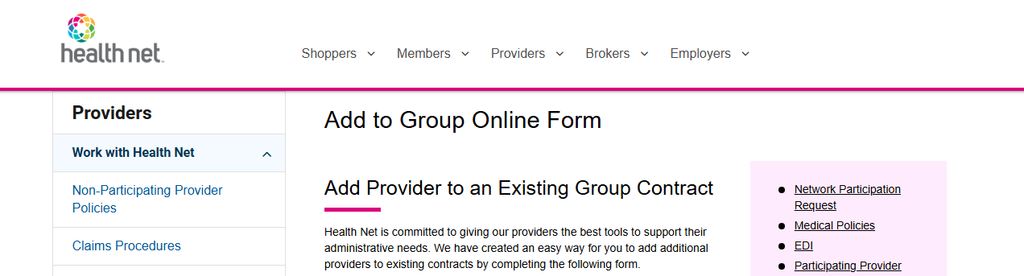
Providers can access CAQH ProView to manage their credentialing information and authorize participating organizations to access their profiles.
Documents Required for Health Net Provider Credentialing
Preparing supporting documents before starting the application can help reduce avoidable delays.
Depending on the provider type and applicable Health Net product, requested documents may include:
| Document | Purpose |
|---|---|
| Professional license | Confirms current authorization to practice. |
| NPI information | Identifies the healthcare provider. |
| CAQH profile | Provides standardized credentialing information, when applicable. |
| Malpractice insurance | Confirms professional liability coverage. |
| DEA registration | Verifies controlled-substance authorization, when applicable. |
| CDS registration | Confirms applicable controlled-substance registration. |
| Board certification | Supports specialty qualifications, when applicable. |
| Education and training records | Verifies professional preparation. |
| Work history | Documents professional experience and activity. |
| Hospital affiliations | Confirms relevant institutional relationships. |
| Practice information | Identifies locations and contact details. |
| Tax identification details | Supports enrollment and billing processes. |
| Disclosure information | Supports review of sanctions or disciplinary matters. |
The exact documentation requirements may differ according to the provider’s specialty, professional status, organizational structure, and applicable Health Net network.
Step-by-Step Health Net Credentialing Process
These ten steps track what Health Net has laid out for practitioners on its Medi-Cal and commercial lines, folding in the CAQH-first requirements that AB 1041 is phasing in through 2028.
Step 1: Identify the Applicable Health Net Product
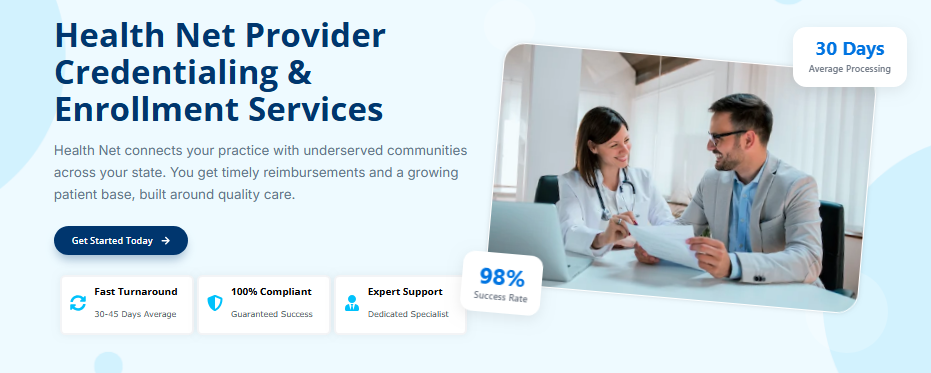
Before submitting an application, identify the specific Health Net product or network relevant to the provider or organization.
Requirements may differ between commercial products, government-sponsored programs, delegated arrangements, and other network participation structures.
Confirm:
- Applicable Health Net product
- Provider specialty
- Practice location
- Network participation requirements
- Whether the request concerns credentialing, enrollment, contracting, or all three
Starting with the correct product can help prevent the submission of an unsuitable application.
Step 2: Confirm Provider Eligibility
Review the applicable participation requirements before preparing the application.
Confirm that the provider meets the relevant requirements for:
- Professional licensure
- Specialty
- Practice location
- Network participation
- Professional liability coverage
- Education and training
- Other provider-specific qualifications
Network participation may depend on the payer’s current requirements and the provider’s circumstances. Providers should not assume that meeting general credentialing requirements guarantees network acceptance.
Step 3: Locate the Correct Health Net Application
Identify the current application, portal, or submission instructions for the applicable Health Net product.
The application may request information such as:
- Provider name
- NPI
- Specialty
- CAQH ID, when applicable
- Practice address
- Group affiliation
- Tax identification information
- Hospital affiliations
- Contact information
Always follow the current instructions provided for the applicable Health Net network. Using an outdated form or an application intended for another product may lead to additional clarification or resubmission.
Step 4: Create or Update Your CAQH Profile
For applicable professional providers, CAQH ProView may be an important part of the credentialing process.
If the provider does not have a CAQH profile, follow the applicable CAQH registration process. If a profile already exists, review and update the information before the payer accesses it.
Check that the profile includes current information about:
- Professional licenses
- Education
- Training
- Work history
- Malpractice coverage
- Practice locations
- Professional credentials
- Disclosure information, when required
CAQH should be treated as an ongoing provider record rather than a one-time form.
Step 5: Authorize Health Net’s Access to CAQH
Completing a CAQH profile may not be sufficient by itself. Where CAQH is used, the provider must follow the applicable authorization process so the relevant payer can access the profile.
Before submission, verify that:
- The CAQH profile is complete.
- Required information is current.
- The profile has been attested.
- The applicable Health Net organization has the required access.
- Any requested updates have been completed.
Failure to authorize access or maintain the profile can prevent the payer from obtaining the information needed for credentialing review.
Step 6: Submit the Health Net Application
After provider information and supporting documents are ready, submit the required Health Net application through the designated process.
Review the application carefully before submission. Confirm that:
- Provider information is accurate.
- Practice addresses are current.
- NPI and tax information are consistent.
- Specialty information is correct.
- CAQH information is current, when applicable.
- Supporting documents are complete.
- Required attestations and signatures have been provided.
Keep a copy of the submitted application and any confirmation received.
Step 7: Provide Supporting Documents
Health Net may request documents to validate information included in the provider’s credentialing file.
These documents may include:
- Current professional license
- Malpractice insurance
- DEA or CDS registration
- Board certification
- Education and training documentation
- Professional work history
- Hospital affiliation information
- Other provider-specific records
Respond promptly to requests for additional documentation. An application may remain incomplete while the payer is waiting for missing information, clarification, or updated documents.
A centralized provider credentialing document management workflow can help teams organize licenses, insurance documents, certifications, and expiration dates.
Step 8: Complete Primary-Source Verification
Once the application is sufficiently complete, the applicable credentialing process may include primary-source verification.
Verification may involve checking information with:
- State licensing boards
- Educational institutions
- Board-certification organizations
- Malpractice insurance providers
- Other applicable credentialing sources
The purpose of primary-source verification is to confirm that the information in the provider’s file corresponds with information maintained by the source.
Accurate and consistent information across CAQH, supporting documents, and payer applications can help reduce clarification requests.
Step 9: Respond to Additional Information Requests
During the review, Health Net may request clarification or additional information.
Possible requests may concern:
- Missing documents
- Employment gaps
- License details
- Malpractice coverage
- Practice locations
- Disclosure information
- Inconsistent provider data
Review all requests carefully and respond within the applicable deadline. Delayed responses can extend the overall processing period.
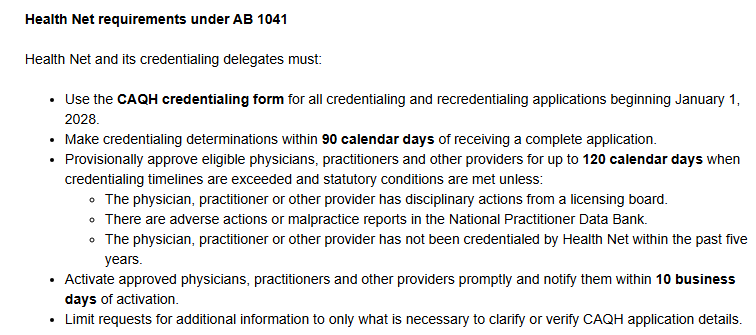
Beginning January 1, 2028, California AB 1041 includes requirements concerning the submission of applicable credentialing and recredentialing applications through CAQH, along with specific response requirements for certain permitted additional-information requests. The exact applicability should be assessed based on the relevant Health Net product and provider circumstances.
Step 10: Complete Any Required Site Review
Some providers or facilities may be subject to additional site review or other network-specific requirements.
Whether a site review is necessary depends on the applicable payer requirements, provider type, specialty, location, and network arrangement.
If a review is required, ensure that the relevant practice or facility information is accurate and that any requested documentation is available.
Step 11: Complete Credentialing Review
After the required verification and documentation steps are completed, the provider’s file moves through the applicable credentialing review process.
The review may consider:
- Professional licensure
- Education and training
- Work history
- Malpractice coverage
- Sanctions
- Disciplinary history
- Provider-specific qualifications
- Other applicable credentialing criteria
The review process and decision-making structure may vary according to the applicable Health Net product and credentialing arrangement.
Step 12: Receive the Credentialing Decision
After the review, the provider or authorized representative receives notification of the credentialing outcome.
Maintain accurate contact information throughout the process so that important payer communications are not missed.
Keep copies of:
- Application confirmations
- Credentialing correspondence
- Additional-information requests
- Approval or decision notices
- Contracting documents
- Effective-date information
These records can support future recredentialing and payer follow-up activities.
Step 13: Complete Contracting and Provider Enrollment
After credentialing, the provider may need to complete additional contracting or enrollment activities.
These may include:
- Participation agreements
- Provider identification
- Billing information
- Group affiliation
- Contract information
- Participation records
- EFT or ERA setup, when applicable
- Other payer-specific administrative requirements
The exact order of credentialing, enrollment, and contracting may vary. Providers should confirm when participation becomes effective before representing themselves as active in-network providers.
How Long Does Health Net Provider Credentialing Take?
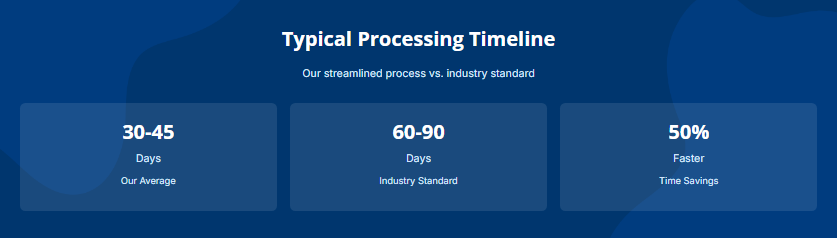
Health Net credentialing timelines depend on provider type, application completeness, and verification requirements. Under applicable California AB 1041 processes, receipt and completeness must generally be communicated within 10 business days, with a credentialing decision made within 90 calendar days of receiving a complete application, subject to applicable requirements. Eligible providers may qualify for provisional approval for up to 120 days under specified conditions.
These timelines do not include contracting, enrollment, or provider activation, which may require additional time. Missing documents, verification delays and incomplete applications can extend the process. Health Net identifies October 2026 as its operational alignment target, while CAQH submission requirements are scheduled to apply from January 1, 2028, subject to statutory provisions and exceptions.
California AB 1041: Health Net Credentialing Updates
California Assembly Bill 1041 introduces important changes to provider credentialing requirements, including processing timelines, application notifications, provisional approval, and the use of the Council for Affordable Quality Healthcare (CAQH) credentialing form.
Health Net has published guidance outlining its operational readiness for these requirements. Providers should understand the following key changes and prepare their credentialing information accordingly.
Key AB 1041 Requirements
What Providers Should Do
To prepare for these requirements, providers should:
- Maintain an accurate and complete CAQH profile.
- Keep licenses, malpractice insurance, work history, and other supporting documents current.
- Respond promptly to requests for clarification or additional information.
- Track application submission, completeness confirmation, credentialing decisions, and activation separately.
- Confirm contracting and enrollment requirements before beginning to bill under the Health Net network.
The requirements may vary depending on the Health Net product, provider type, network arrangement, and applicable regulatory exceptions. Providers should review Health Net’s official guidance and confirm the requirements that apply to their specific participation arrangement.
Source: Health Net’s AB 1041 Credentialing Guidance
Health Net Credentialing for Organizational Providers
Organizational providers may have additional requirements beyond those applicable to individual practitioners.
Depending on the organization and network, documentation may include:
- Organizational licenses
- Accreditation information
- Facility details
- Ownership information
- Tax identification information
- Group NPI
- Practice locations
- Applicable provider rosters
- Professional liability coverage
- Individual practitioner information
Organizations should confirm whether individual practitioners must complete separate credentialing and whether a delegated credentialing arrangement applies.
Maintaining group and individual provider information in a centralized system can help reduce duplicate administrative work and improve visibility into payer participation.
Health Net Provider Credentialing Services
Managing Health Net credentialing manually can become challenging when an organization works with multiple providers, specialties, or locations.
A credentialing service can support teams with:
- CAQH profile management
- Application preparation
- Provider document management
- License and certification tracking
- Malpractice insurance monitoring
- Payer follow-ups
- Application status tracking
- Enrollment coordination
- Contracting milestones
- Provider roster management
- Recredentialing deadlines
For organizations managing multiple payer relationships, MantraComply’s provider group credentialing solution can help centralize provider data, credentialing workflows, payer enrollment, and ongoing monitoring.
How MantraComply Can Help With Health Net Credentialing
Managing Health Net provider credentialing and enrollment across providers and payer requirements can be time-consuming. MantraComply helps organizations organize credentialing-related information and coordinate administrative workflows through a centralized platform.
Key capabilities may include:
- CAQH Management: Organize provider information and support ongoing profile maintenance.
- Application Preparation: Use centralized provider data to support payer-specific applications.
- Document Management: Manage licenses, malpractice insurance, certifications, and expiration dates.
- Payer Enrollment: Coordinate enrollment activities alongside credentialing workflows.
- Application Tracking: Monitor application progress, payer requests, follow-ups, and outstanding requirements.
- Ongoing Monitoring: Maintain visibility into credential expirations and recredentialing requirements.
- Provider Group Management: Organize information for multiple providers, locations, and payer relationships.
With MantraComply’s credentialing and enrollment platform, healthcare organizations can streamline Health Net credentialing workflows and reduce repetitive administrative tasks.
Conclusion
Health Net provider credentialing involves verifying provider qualifications, submitting the applicable application, completing primary-source verification, and fulfilling related contracting and enrollment requirements. The exact process and timeline depend on the Health Net product, provider type, network arrangement, and applicable regulatory requirements.
Healthcare organizations should maintain accurate provider information, keep CAQH profiles updated where applicable, organize supporting documents, and track each credentialing application independently. California AB 1041 also introduces specific requirements for applicable commercial credentialing processes, making it important to review current payer guidance and regulatory deadlines.
For organizations managing multiple providers and payer relationships, healthcare credentialing automation can help centralize provider data, applications, documents, and ongoing credentialing requirements.
Frequently Asked Questions
For applicable Health Net commercial credentialing, the plan must reach a determination within 90 calendar days of receiving a complete application beginning in October 2026. Eligible applicants may receive provisional approval if the applicable statutory deadline is missed, subject to the law’s exceptions. Medi-Cal managed care participation follows separate requirements.
No. CAQH ProView is free. For applicable Health Net commercial lines, credentialing and recredentialing applications will be required to go exclusively through CAQH beginning January 1, 2028.
Beginning January 1, 2028, providers will have 10 business days to respond to permitted requests for additional information under applicable AB 1041 requirements. Until then, providers should follow the deadline specified in the Health Net request.
Not necessarily. Providers should confirm their current Health Net credentialing and participation status with the plan. Under AB 1041, a provider who has not been credentialed by the plan within the previous five years may be excluded from the statutory provisional-approval provision if the applicable 90-day determination deadline is missed.
Credentialing checks a provider’s qualifications and ends in a determination. Enrollment happens after that approval, finalizing the contract and billing setup before the provider goes active.
View Sources
- MantraComply. Health Net Provider Credentialing. Accessed 20/10/2026.
- Health Net. Provider Network Participation. Accessed 20/10/2026.
- Health Net Provider Library. Credentialing Application Process and Timelines. Accessed 20/10/2026.
- MantraComply. Healthcare Credentialing and Enrollment. Accessed 20/10/2026.