Which Molina state plan reviews your provider credentialing application—Texas, Michigan, Florida, or another Molina market? The answer can influence your application requirements, submission process, documentation, and overall timeline.
Molina Provider Credentialing is not one nationwide process. Molina Healthcare operates through state-specific health plans and product lines, including Medicaid managed care, Medicare Advantage, and Marketplace plans. As a result, credentialing requirements can vary according to the state, product line, provider type, and applicable regulatory standards.
Many professional providers use CAQH ProView as part of the credentialing process. However, CAQH requirements and submission methods may differ between Molina markets. This guide explains Molina provider credentialing and enrollment, eligibility requirements, required documents, the step-by-step process, expected timelines, common mistakes, and how credentialing services can support healthcare organizations.
What Is Molina Provider Credentialing?
Molina Provider Credentialing is the process used to verify whether a healthcare professional or organization meets the qualifications required to participate in an applicable Molina provider network.
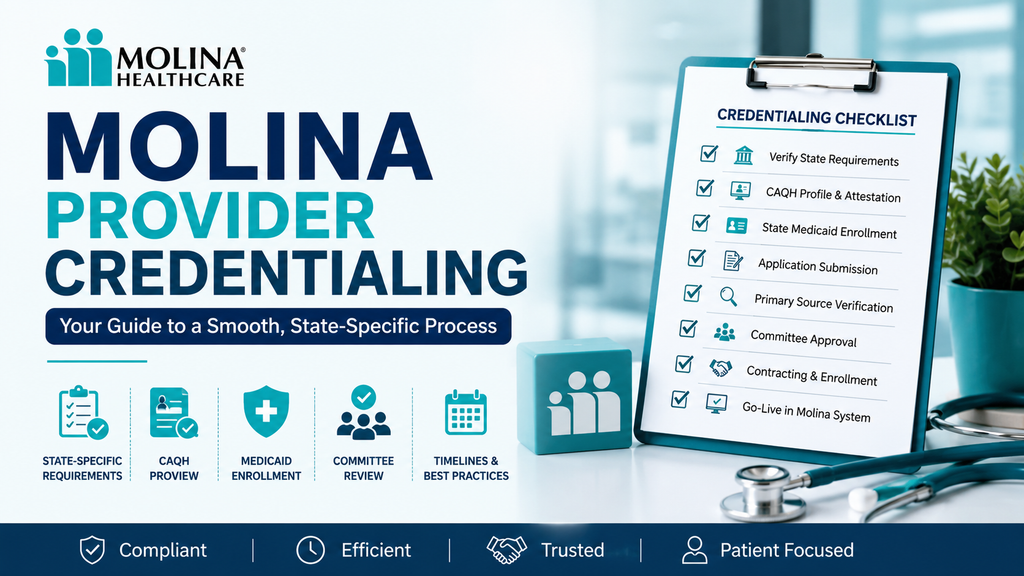
The credentialing process may involve reviewing and verifying:
- Professional licenses
- Education and training
- Board certification, where applicable
- Professional work history
- Malpractice coverage and history
- Sanctions and exclusions
- Practice location information
- Professional qualifications
- State-specific participation requirements
Molina’s credentialing process may differ depending on the applicable state plan, product line, provider type, and regulatory requirements.
For example, a provider applying to participate in a Molina Medicaid managed care network may follow a different pathway from a provider seeking participation in a Medicare Advantage or Marketplace network.
Molina’s state-specific structure is important because credentialing with one Molina state plan does not automatically transfer to another state. In some situations, approval may also not extend automatically across different product lines within the same state.
Providers should therefore identify the correct Molina health plan and product line before beginning the application.
Credentialing verifies a provider’s qualifications, but completing credentialing does not necessarily mean that the provider is active for claims billing, fully enrolled, or listed in the applicable provider directory.
Molina Provider Credentialing vs. Molina Provider Enrollment
Molina provider credentialing and Molina provider enrollment are closely related but distinct parts of the payer participation process.
Credentialing focuses on reviewing and verifying a provider’s professional qualifications. Enrollment and participation setup may involve establishing the provider’s relationship with the applicable Molina plan, loading information into payer systems, confirming effective dates, and completing product-specific participation requirements.
| Molina Provider Credentialing | Molina Provider Enrollment |
|---|---|
| Reviews and verifies the provider’s professional qualifications. | Establishes the provider’s administrative participation with the payer. |
| May include license, education, training, malpractice, and professional history verification. | May include system setup, provider data loading, effective dates, and participation requirements. |
| Determines whether the provider meets applicable credentialing standards. | Helps establish the operational relationship needed for participation and reimbursement. |
| May be managed by the Molina state plan or an applicable state system. | May involve Molina state-specific forms, systems, or other applicable payer processes. |
| Does not automatically confirm active network participation. | Does not replace credentialing where credentialing is required. |
A provider may be credentialed but not fully enrolled, activated, or loaded into the applicable Molina systems. Similarly, submitting a provider application does not automatically establish active network participation.
For Medicaid product lines, active state Medicaid enrollment may be required before Molina can begin its credentialing review. The exact prerequisite depends on the state and applicable Molina plan.
Understanding the difference between credentialing, enrollment, contracting, and activation can help providers track their actual application status more accurately.
Who Is Eligible for Molina Provider Credentialing?
Molina credentialing may apply to individual healthcare professionals, group practices, facilities, and other healthcare organizations seeking participation in an applicable Molina network.
Eligibility and application requirements vary by state, provider type, and product line.
Professional Providers
Professional providers who may need to complete Molina credentialing include:
- Physicians
- Nurse practitioners
- Physician assistants
- Behavioral health providers
- Other non-physician clinicians
- Mid-level providers subject to supervision requirements
- Other eligible specialty providers
Some mid-level providers may need to provide information about a supervising physician or supervisory arrangement when required by state law, Molina policy, or the applicable product line.
Providers should confirm the requirements for their professional category before submitting an application.
Institutional and Ancillary Providers
Molina credentialing may also apply to organizations such as:
- Facilities
- Health delivery organizations
- Group practices
- Institutional providers
- Other eligible healthcare organizations
Organizational providers may need to complete a separate application in addition to individual practitioner credentialing.
A group’s existing participation does not necessarily eliminate the need for individual credentialing for each practitioner. Similarly, a new provider joining an existing group may still need to complete an individual credentialing process, depending on the applicable Molina state plan and provider type.
Basic Requirements for Molina Provider Credentialing
Before starting the Molina credentialing process, providers should ensure that their information is complete, current, and consistent across all records.
Depending on the state plan and provider type, common requirements may include:
- Active professional license
- National Provider Identifier (NPI)
- CAQH ProView profile, where applicable
- Current malpractice insurance information
- Education and training history
- Professional work history
- Board certification information, where applicable
- Practice location details
- Group affiliation information
- Tax identification information
- Medicare or Medicaid information, where applicable
- State Medicaid enrollment information, where required
- Supervising physician information for applicable providers
- Current provider contact information
Providers should compare their CAQH ProView profile with their license records, malpractice policy, NPI information, practice locations, and other supporting documents before submitting an application.
Consistent information can help reduce unnecessary verification requests and application delays.
Documents Required for Molina Provider Credentialing
The documents required for Molina Provider Credentialing depend on the applicable state plan, product line, provider type, and whether the application is for an individual practitioner or an organization.
Providers should confirm the exact document checklist issued by the relevant Molina plan before submitting their application.
| Document Category | Examples |
|---|---|
| Professional Licensure | Current professional license and applicable state licenses |
| NPI Information | Individual or organizational NPI details |
| CAQH Information | CAQH identification number, profile information, and current attestation, where required |
| Malpractice Insurance | Current professional liability insurance information and coverage details |
| Education and Training | Medical education, residency, fellowship, and relevant training information |
| Professional History | Work history, practice history, and explanations for applicable gaps |
| Board Certification | Board certification details, where applicable |
| Medicaid Enrollment | Active state Medicaid or Medicaid identification number, where required |
| Practice Information | Practice addresses, contact information, specialties, and office details |
| Group Information | Group name, group NPI, tax identification information, and affiliation details |
| Supervision Documentation | Supervising physician information or related documentation for applicable providers |
| Organizational Documents | Facility, group practice, or health delivery organization documents, where required |
Not every provider will need to submit every document listed above. Some Molina plans may obtain information through CAQH, while others may request additional state-specific forms or supporting documentation.
Document Preparation Tips
Before submitting your Molina provider application:
- Confirm that all professional licenses are active and current.
- Check that your CAQH information matches your application.
- Review malpractice coverage dates and policy details.
- Verify practice locations and contact information.
- Prepare state Medicaid enrollment information, where applicable.
- Organize facility or group documents if applying as an organization.
- Respond promptly to requests for missing or updated information.
Step-by-Step Molina Provider Credentialing Process
The Molina Healthcare credentialing process can vary by state plan, product line, provider type, and applicable state requirements. The following steps provide a general framework for navigating the process.
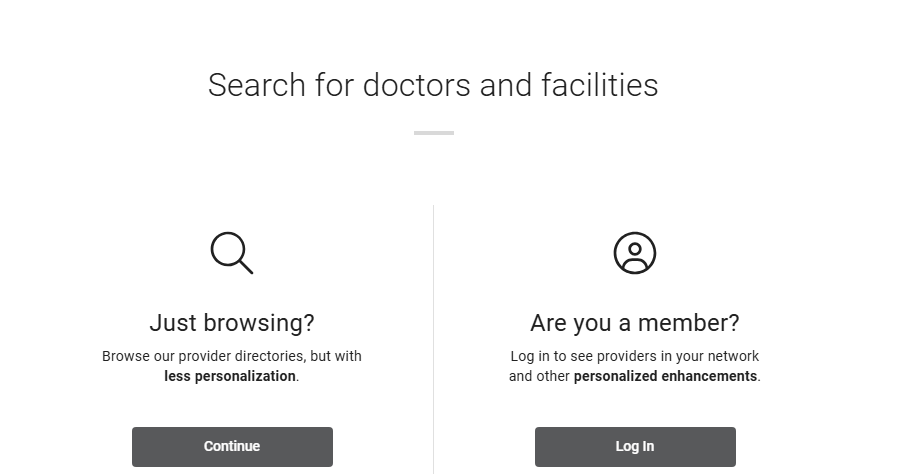
Step 1: Identify the Correct Molina State Plan
Start by identifying the Molina state plan that serves your location and supports the product line in which you want to participate.
Confirm whether you are applying for:
- Medicaid managed care
- Medicare Advantage
- Marketplace coverage
- Another applicable Molina product line
Do not assume that a credentialing application or process used in one state will apply to another Molina market.
Before submitting your application, review the applicable Molina provider resources and confirm the correct state-specific instructions, contact information, and application pathway.
Step 2: Confirm State Medicaid Enrollment, Where Applicable
For Molina Medicaid managed care participation, determine whether active enrollment with the state Medicaid program is required before beginning the Molina credentialing process.
Some states require providers to have an active state Medicaid identification number before Molina can open or review a credentialing file. For example, an active state Medicaid ID may be a prerequisite in Mississippi.
Because Medicaid enrollment rules vary by state, providers should verify their enrollment status with the relevant state Medicaid program before submitting their Molina application.
Step 3: Submit the Initial Molina Network Participation Request
If you are not already contracted with the applicable Molina plan, identify the process for initiating a network participation request.
The exact process may vary by state. Depending on the market, the initial request may require information such as:
- Provider name
- Specialty
- NPI
- CAQH identification number
- Professional license information
- Tax identification details
- Practice address
- Group information
- Medicare or Medicaid information
- Primary contact details
An initial network participation request is not the same as credentialing approval. It begins the process of determining the appropriate participation and application pathway.
Providers should follow the instructions supplied by the applicable Molina state plan rather than assuming that one universal Molina network application is used nationwide.
Step 4: Register With CAQH ProView
Many Molina state plans use CAQH ProView as part of the professional credentialing process.
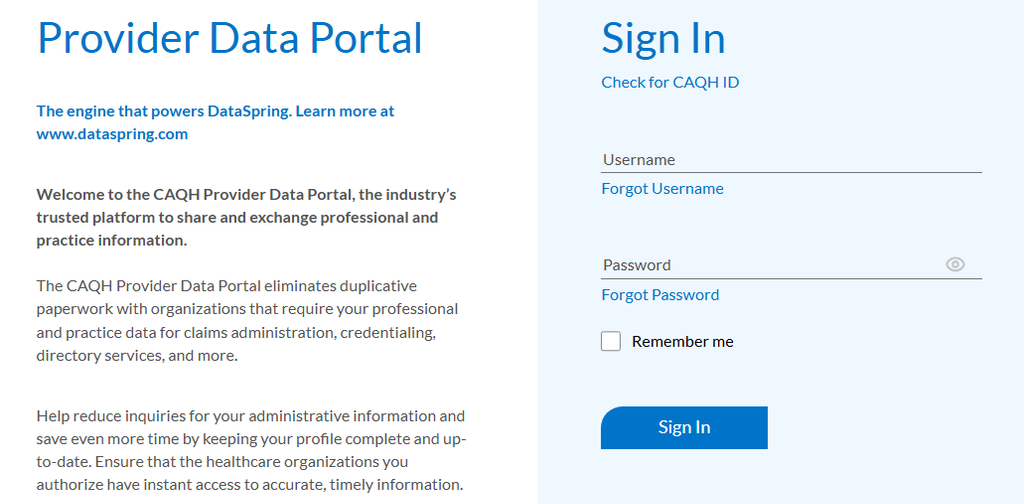
If applicable, create or update your CAQH ProView profile with accurate information about:
- Professional licenses
- Education
- Training
- Employment history
- Malpractice coverage
- Practice locations
- Professional credentials
- Specialty information
An incomplete or outdated CAQH profile can result in additional requests for information. Providers should review their profiles regularly and ensure that the information matches their Molina application and supporting documents.
CAQH requirements are not necessarily identical across all Molina plans. Some state plans or provider types may require separate applications, state-specific forms, or alternative submission methods.
Step 5: Authorize Molina Access and Complete Attestation
Where required, authorize the applicable Molina plan to access your CAQH profile.
Providers should also confirm that their CAQH profile is properly attested within the timeframe required by the applicable plan. Some Molina plans require attestation within the previous 120 days.
Because access and attestation requirements may vary, review the instructions provided by the specific Molina state plan before submitting your information.
Keep the profile current throughout the credentialing process and update it whenever relevant information changes.
Step 6: Submit the Molina Provider Application
Complete the practitioner or organizational application required by the applicable Molina plan.
The application pathway may depend on:
- State
- Product line
- Provider type
- Whether the provider is an individual or organization
- Whether the provider is already contracted
- Whether CAQH information is available and current
Some Molina plans may provide separate instructions for professional providers, facilities, health delivery organizations, and group practices.
Review every field before submission. Information in the application should match the provider’s CAQH profile, licenses, malpractice coverage, and other supporting records.
Step 7: Submit Additional Supporting Documentation
Depending on the applicable plan and provider type, Molina may request documentation beyond the CAQH profile.
Additional documents may include:
- State-specific forms
- Professional license copies
- Malpractice insurance documents
- Education and training records
- Organizational documentation
- Supervision information
- Medicaid enrollment information
- Other provider-specific credentials
Facilities and health delivery organizations may need to submit organizational documents in addition to individual practitioner information.
Responding quickly to requests for missing or expired documents can help prevent unnecessary interruptions in the application process.
Step 8: Complete Primary-Source Verification
Once the application is sufficiently complete, the applicable Molina state plan conducts primary-source verification.
Verification may include reviewing:
- Professional licensure
- Education and training
- Board certification
- Malpractice history
- Professional qualifications
- Sanctions and exclusions
- Other credentials required for the provider type
Primary-source verification confirms whether the information provided in the application is accurate and supported by the relevant source.
To reduce follow-up requests, providers should ensure that names, license numbers, dates, addresses, and professional history details are consistent across their records.
Step 9: Complete Credentialing Committee Review
The applicable credentialing committee reviews the provider’s file against Molina’s credentialing standards and relevant state requirements.
The review may consider:
- Verification results
- Professional qualifications
- Licensure status
- Malpractice information
- Provider type
- Applicable network participation requirements
- State-specific rules
The timing and sequence of committee review may vary. Providers should follow the instructions and communication provided by the applicable Molina state plan.
Step 10: Receive Notification and Complete Contracting
After the credentialing review, Molina provides the applicable notification regarding the credentialing decision.
Depending on the state plan, the next steps may include:
- Completing a provider agreement
- Countersigning a contract
- Confirming participation details
- Completing administrative setup
- Establishing the applicable effective date
Credentialing and contracting may not always occur in the same order. In some markets, contracting may begin before credentialing is complete.
Providers should follow the sequence specified by their Molina state plan and should not assume that credentialing approval alone confirms active network participation.
Step 11: Complete Directory Loading and Confirm the Effective Date
After the applicable credentialing and contracting requirements have been completed, the provider or facility may be loaded into Molina’s systems as an in-network participant.
The effective date depends on the applicable state plan. Some Molina plans indicate that the effective date corresponds to the completion of credentialing and is included in the credentialing notification.
Providers should confirm:
- Credentialing decision
- Contract status
- Participation effective date
- Claims system status, where applicable
- Provider directory information
Do not represent yourself as an active in-network provider until the applicable Molina plan confirms participation and the effective date.
Step 12: Verify the Provider Directory Listing
After activation, review your Molina provider directory listing for accuracy.
Check the following information:
- Provider name
- Specialty
- Practice address
- Phone number
- Group affiliation
- Office locations
- Other demographic information
An incorrect directory listing can create confusion for members searching for participating providers. Report inaccurate information to Molina promptly to help reduce directory-related issues.
How Long Does Molina Provider Credentialing Take?
There is no single nationwide Molina credentialing timeline that applies to every provider, state, and product line.
Processing time may depend on:
- Applicable Molina state plan
- Product line
- Provider type
- Application completeness
- CAQH profile status
- Primary-source verification
- Documentation requests
- State Medicaid enrollment requirements
- Credentialing committee schedules
- Contracting and participation procedures
Providers should use the published timeframe or guidance for the applicable Molina plan instead of relying on a general national estimate.
Recredentialing is generally conducted regularly, but the specific interval can vary according to the state plan, provider type, and regulatory requirements. Providers should confirm the applicable recredentialing schedule directly with the relevant Molina plan.
Molina Credentialing for Group Practices and Facilities
Group practices and health delivery organizations may need to complete organizational credentialing in addition to individual practitioner credentialing.
The applicable Molina plan may request information related to:
- Organization details
- Group NPI
- Tax identification information
- Practice locations
- Facility information
- Organizational licenses
- Ownership or management information
- Individual practitioner affiliations
Each practitioner may still need to complete an individual credentialing process, even when joining an existing group.
Organizations operating across multiple states should avoid assuming that one group application will satisfy every Molina state plan’s requirements. Instead, they should confirm the applicable group, roster, organizational, and individual provider procedures for each market.
Molina Provider Credentialing Services
Managing Molina credentialing manually can become challenging when a practice has multiple providers, locations, specialties, and payer relationships.
A provider credentialing and enrollment solution can help healthcare organizations organize and monitor activities such as:
- CAQH profile management
- Provider application preparation
- Document collection
- License and insurance expiration tracking
- Payer communications
- Application status monitoring
- Contracting milestones
- Provider directory updates
- Recredentialing deadlines
Credentialing services can be especially useful for organizations working with multiple Molina state plans because each plan may have its own requirements, timelines, and submission procedures.
However, credentialing services cannot sign contracts or complete provider attestations on behalf of the provider. Providers must remain involved in activities that require their own authorization, signature, or attestation.
How MantraComply Can Help With Molina Credentialing and Enrollment
Managing Molina Provider Credentialing and Enrollment requires ongoing attention beyond the initial application. Healthcare organizations must maintain provider information, monitor document expiration dates, respond to payer requests, and track recurring credentialing requirements.
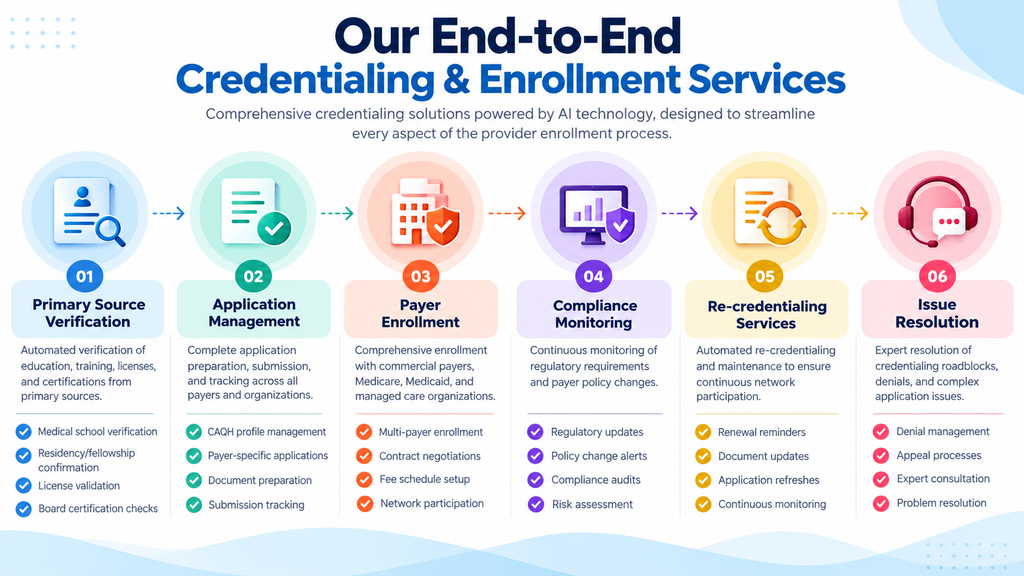
MantraComply’s credentialing and enrollment platform can help healthcare organizations centralize credentialing and enrollment workflows.
- Recredentialing Management: Track recurring requirements and maintain updated provider records through a credentialing management workflow.
- CAQH Management: Maintain accurate provider information and reduce discrepancies across payer applications.
- Application Preparation: Organize state-specific Molina requirements and streamline application submissions.
- Document Management: Store licenses, certifications, malpractice insurance, and other documents while tracking expiration dates.
- Payer Enrollment: Coordinate credentialing, enrollment, participation requirements, and effective dates.
- Application Tracking: Monitor application progress, outstanding requirements, and payer follow-ups.
Conclusion
Molina Provider Credentialing and Enrollment is a state-specific process that varies by plan, product line, provider type, and applicable regulations. Providers should follow the correct sequence, from confirming state Medicaid enrollment and maintaining CAQH information to submitting documents, completing verification, and confirming network activation.
After approval, providers must continue updating CAQH records, monitoring licenses and malpractice coverage, responding to payer requests, and completing recredentialing requirements. For organizations managing multiple providers, healthcare credentialing automation can centralize applications, documents, and payer communications.
Frequently Asked Questions
There is no single national Molina credentialing timeline. The timeframe can vary by state plan, product line, provider type, documentation completeness, and verification requirements. Providers should check the applicable Molina plan’s current guidance for the most accurate timeframe.
CAQH requirements vary by state and provider type. Many Molina plans use CAQH ProView for individual practitioners, while providers without an updated and attested CAQH profile may need to submit a separate practitioner application. Some markets also use state-specific portals or credentialing vendors.
Recredentialing generally occurs on a recurring cycle, but the applicable interval can vary by state plan, provider type, and regulatory requirements. Keeping the CAQH profile current throughout the cycle can help reduce avoidable delays.
No. Molina’s credentialing process varies by state. In Ohio, for example, Ohio Medicaid’s Provider Network Management system handles Medicaid provider enrollment and credentialing functions, while Molina remains the managed care organisation. Providers should confirm the applicable state and Molina requirements before applying.
No. Molina’s credentialing process varies by state. In Ohio, for example, Ohio Medicaid’s Provider Network Management system handles Medicaid provider enrollment and credentialing functions, while Molina remains the managed care organisation. Providers should confirm the applicable state and Molina requirements before applying.