Joining a Point32Health network involves more than submitting a provider application. Healthcare providers must determine the applicable health plan, complete the required contracting and enrollment forms, maintain accurate credentialing information, and satisfy applicable network requirements.
Point32Health is the parent organization of Harvard Pilgrim Health Care and Tufts Health Plan. Its provider guidance separates contracting, credentialing, and enrollment into distinct processes, helping applicants understand which stage they are completing.
This guide explains the Point32Health provider credentialing and enrollment process, from eligibility and documentation to application submission, verification, approval, and ongoing provider information maintenance.
What Is Point32Health Provider Credentialing?
Point32Health provider credentialing is the process of verifying a healthcare provider’s professional qualifications and determining whether the provider meets applicable health plan and accreditation requirements.
According to Point32Health’s contracting and credentialing guidance, practitioners who are marketed in the health plan’s provider directory generally need to be credentialed to be considered in-network. Facilities, including hospitals, laboratories, ambulatory surgical centers, and other listed facility types, may also require credentialing.
Credentialing may involve reviewing:
- Professional licenses and certifications
- Education and training
- Board certification
- Work history
- Hospital admitting privileges or admitting arrangements
- Professional liability insurance
- Practice locations and affiliations
- CAQH information
- Other payer-specific documentation
Credentialing is different from contracting and enrollment. Completing one stage does not necessarily mean that the provider has completed all requirements for active participation.
Point32Health Provider Credentialing vs. Enrollment
Point32Health specifically distinguishes contracting, credentialing, and enrollment. Understanding the differences helps providers communicate with the correct payer department and avoid delays.
| Credentialing | Enrollment |
|---|---|
| Verifies the provider’s professional qualifications. | Establishes the provider’s administrative participation information. |
| Reviews licenses, education, training, and professional history. | Connects practitioners with the contracted entity and relevant tax identification number. |
| May require an updated and authorized CAQH profile. | Requires applicable enrollment forms and provider roster information. |
| Supports compliance with health plan and accreditation requirements. | Enables provider setup for participation and billing under the contracted entity. |
| Includes initial credentialing and recurring recredentialing. | Includes administrative enrollment and updates to provider information. |
Contracting is a separate stage in which the provider or organization requests participation, agrees to applicable terms, and executes a contract. Point32Health states that enrollment occurs after contract execution and submission of a practitioner roster, with practitioners enrolled under the contracted tax identification number.
Point32Health Provider Credentialing Eligibility
Providers seeking participation in Point32Health networks must meet applicable licensing, credentialing, contracting, and documentation requirements. Eligibility varies according to the provider type, specialty, state, and health plan.
Key eligibility requirements include:
- Valid professional license: Providers must hold a current, unrestricted license appropriate to their specialty and practice location.
- Clinical qualifications: Physicians and other practitioners may need board certification, hospital privileges, or an approved alternative coverage arrangement.
- Professional liability insurance: Applicants must maintain malpractice coverage that meets Point32Health’s requirements.
- CAQH profile: Eligible practitioners should maintain an accurate, complete, and attested CAQH ProView profile, including work history, licenses, certifications, and insurance details.
- Facility requirements: Ancillary and facility providers may need state licenses, accreditation certificates, CLIA certification, or relevant inspection reports.
- Behavioral health providers: Behavioral health practitioners and organizations must submit the applicable forms, W-9, CAQH information, and specialty-specific documentation.
Meeting eligibility requirements does not guarantee network participation. Providers must complete the applicable contracting, credentialing, and enrollment processes before billing as participating providers.
Documents Required for Point32Health Provider Credentialing and Enrollment
The required documents depend on the provider category and the Harvard Pilgrim Health Care or Tufts Health Plan arrangement. Point32Health’s official contracting guide identifies an enrollment form, W-9, executed contract, and an accurate, attested CAQH application with relevant professional information as components of a complete application.
| Document Checklist | Why It Matters |
|---|---|
| Letter of Intent, if applicable | Initiates the request to contract with the applicable health plan. |
| Provider Enrollment Form | Collects the information required to begin the provider enrollment process. |
| W-9 Form | Supports tax identification and payment-related records. |
| Executed Provider Contract | Documents the agreed contractual relationship with the health plan. |
| CAQH Profile | Provides standardized credentialing information for review, where applicable. |
| Professional License | Verifies authorization to practice. |
| Board Certification Details | Supports confirmation of specialty qualifications. |
| Hospital Privileges or Admitting Arrangements | Documents relevant hospital affiliations or admitting arrangements. |
| Professional Liability Insurance | Confirms current malpractice coverage. |
| Five-Year Work History | Supports review of professional employment and training history. |
| NPI and Tax Identification Information | Helps maintain accurate provider and billing records. |
| Practice and Group Affiliation Details | Connects the provider to the appropriate service location and contracted entity. |
| Additional Provider-Type Forms | Meets specific requirements for behavioral health, ancillary providers, facilities, or other categories. |
For example, Point32Health’s behavioral health instructions require an applicable ancillary practitioner or facility form, a W-9, and a credentialing application submitted through CAQH ProView. The instructions also identify additional state Medicaid screening and enrollment requirements where applicable.n has arrived, and applicants are notified by email when a submission is incomplete rather than left to assume progress is being made.
Step-by-Step Point32Health Credentialing Process
Joining the Point32Health provider network involves more than submitting an application. Providers must complete a credentialing process that verifies licensure, education, training, work history, and other professional qualifications before participation is approved. Following each step carefully helps create a complete application and supports a smoother credentialing experience.
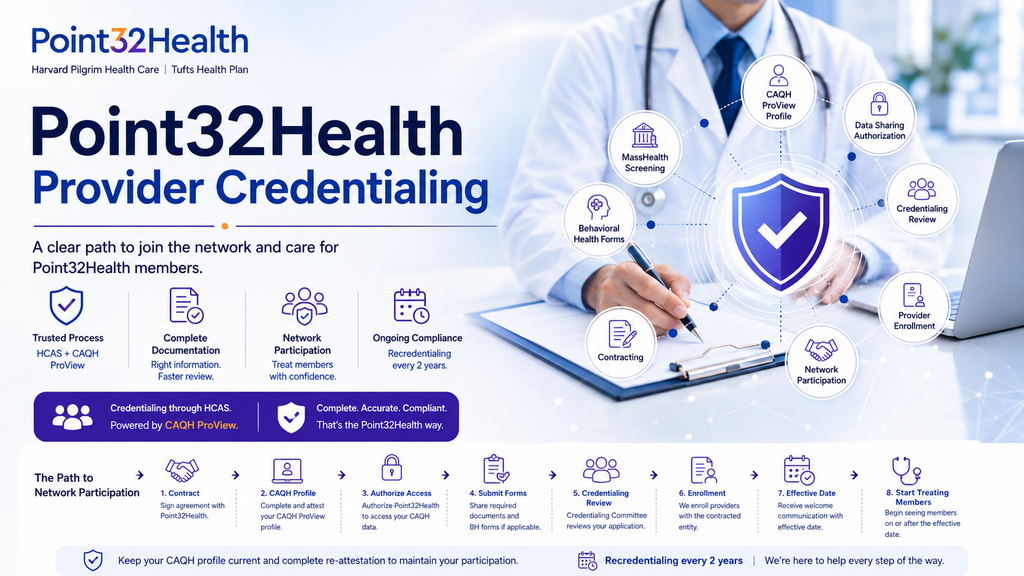
Step 1: Identify the Applicable Health Plan
Determine whether you are applying to a Harvard Pilgrim Health Care network, a Tufts Health Plan network, or another applicable Point32Health arrangement.
Review the Point32Health provider network plans and select the relevant provider category and plan instructions.
Step 2: Identify Your Provider Category
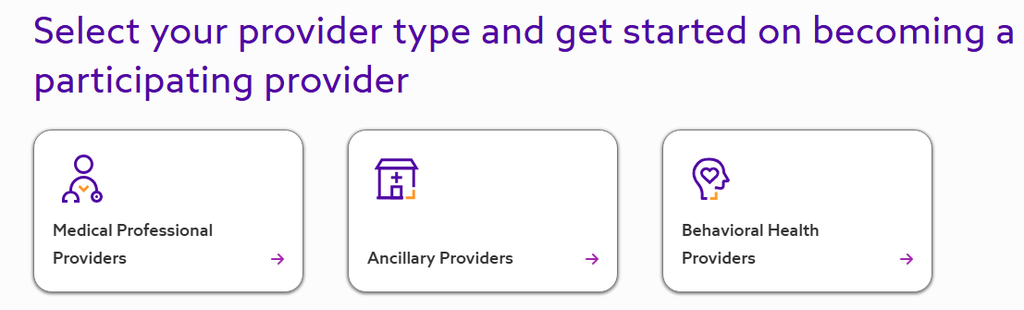
Point32Health provides different instructions for medical professional providers, ancillary providers, behavioral health providers, and facilities.
For example:
- Medical professional providers may need a letter of intent, enrollment forms, and a W-9.
- Ancillary providers may need an ancillary contracting and credentialing application and supporting facility documentation.
- Behavioral health providers must follow the applicable behavioral health forms and CAQH requirements.
Use the appropriate Point32Health provider forms instead of assuming that one application applies to every provider type.
Step 3: Initiate the Contracting Process
Point32Health’s contracting guide identifies two main contracting activities:
- Submit a request to contract, including a letter of intent and the applicable application.
- Sign the agreement after the contractual terms have been agreed upon.
The contract is an important part of network participation, but it does not replace credentialing or enrollment requirements.
Step 4: Prepare Your Provider Information
Gather the information required for your application, including:
- Provider name and professional credentials
- NPI and tax identification information
- Practice locations
- Specialty and board certification
- License details
- Group affiliations
- Hospital privileges or admitting arrangements
- Liability insurance
- Work history
- CAQH profile details
Check that the information matches across the application, CAQH profile, W-9, and supporting documents.
Step 5: Complete or Update Your CAQH Profile
Point32Health instructs providers to maintain an accurate and fully updated CAQH profile. The official guidance highlights malpractice insurance, hospital privileges, admitting arrangements, and current attestation as important areas to review.
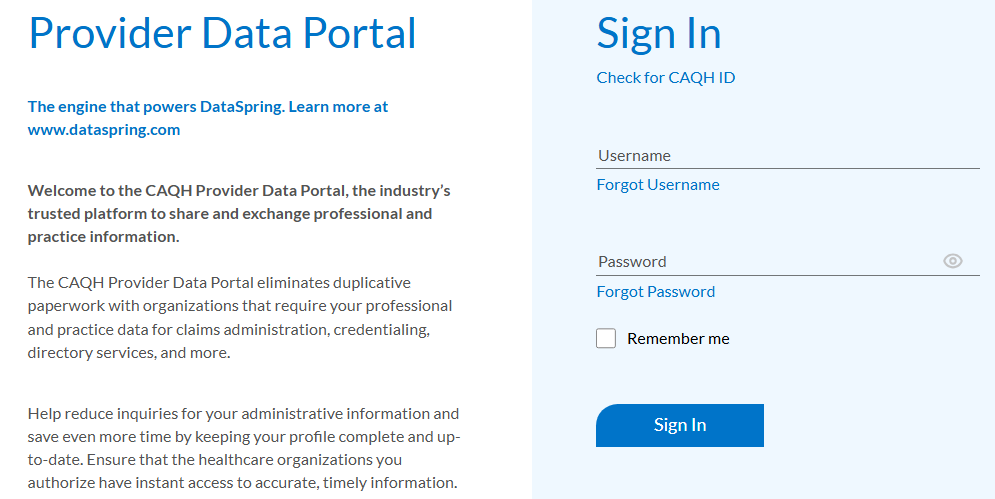
Before authorizing access, verify that:
- The professional license information is current.
- Liability insurance documents are updated.
- Hospital privileges or admitting arrangements are listed correctly.
- The five-year work history is complete.
- The profile has been attested to recently.
- Point32Health has been authorized to access the required information.
Step 6: Submit the Applicable Enrollment Forms
Complete the enrollment forms associated with your provider type and health plan.
Point32Health’s medical professional instructions identify different forms for Harvard Pilgrim Health Care and Tufts Health Plan, while ancillary and behavioral health providers have separate documentation and submission requirements.
Review all fields before submission and retain a copy of the completed application.
Step 7: Submit Supporting Documentation
Submit the required supporting documents through the method specified in the applicable instructions. Missing or inconsistent information may delay review.
A structured credentialing document management workflow can help teams organize documents, monitor expiration dates, and prepare applications before submission.
Step 8: Complete Credentialing Verification
Where credentialing is required, Point32Health reviews professional information and supporting documentation according to the applicable process.
Its Harvard Pilgrim provider manual states that initial applications are reviewed by the Harvard Pilgrim Credentialing Committee and that discrepancies identified during verification are communicated to the clinician, including information about the right to review and correct erroneous information.
Respond promptly to any request for clarification or additional documentation.
Step 9: Complete Provider Enrollment
Point32Health explains that, after contract execution and submission of a practitioner roster, its teams work on practitioner enrollment. Practitioners must be enrolled under the tax identification number of the contracted entity to bill claims under that entity.
Confirm that the provider has been associated with the correct group, tax ID, billing NPI, and applicable practice locations.
Step 10: Confirm Participation and Effective Details
Before beginning to bill as a participating provider, confirm the applicable participation status and effective information.
Review:
- Contract status
- Credentialing decision
- Enrollment status
- Group affiliation
- Tax ID and billing NPI
- Approved practice locations
- Applicable network or plan
Do not rely solely on application submission or contract signing as confirmation that all participation and billing setup requirements are complete.
Step 11: Maintain Provider Data and Recredentialing Requirements
After enrollment, continue maintaining accurate provider information. Point32Health advises providers to review and verify directory information at least every 90 days, including practice location, phone number, hours, and whether the provider is accepting new patients.
Providers should also monitor recredentialing requests, license renewals, CAQH attestations, and changes in group affiliation.
How Long Does Point32Health Provider Credentialing Take?
Point32Health’s provider pages state that certain initial requests, including medical professional, ancillary, and behavioral health applications, should allow 45 days for processing. This is a stated processing allowance for those requests, not a universal guarantee for every credentialing, contracting, or enrollment case.
The overall timeline may vary based on:
- Provider type and health plan
- Completeness of the application
- CAQH profile status
- Verification requirements
- Contract execution
- Provider roster submission
- Additional documentation requests
- State-specific requirements
For planning purposes, providers should begin early and confirm the current processing instructions with the applicable Point32Health team.
How Point32Health Credentialing Support Services Can Help
Credentialing support services can help healthcare organizations organize the administrative tasks involved in Point32Health participation.
Key areas of support include:
- Provider Data Management: Organize licenses, NPIs, specialties, practice locations, and affiliations.
- Document Management: Track required documents, expiration dates, and missing information.
- CAQH Coordination: Monitor profile readiness, updates, and attestation requirements.
- Application Tracking: Track submissions, payer requests, follow-ups, and status updates.
- Contracting and Enrollment Coordination: Help teams organize the relationship between contracting, credentialing, and enrollment stages.
- Recredentialing Support: Prepare for recurring credentialing and provider information updates.
- Directory Data Maintenance: Support the review of provider information and changes that may affect directory accuracy.
These services support administrative organization but do not replace the payer’s official requirements or the provider’s responsibility to submit accurate information.
How MantraComply Can Support Point32Health Provider Credentialing and Enrollment
MantraComply can support healthcare organizations with provider credentialing and enrollment workflows for Point32Health-related plans, including Harvard Pilgrim Health Care and Tufts Health Plan.
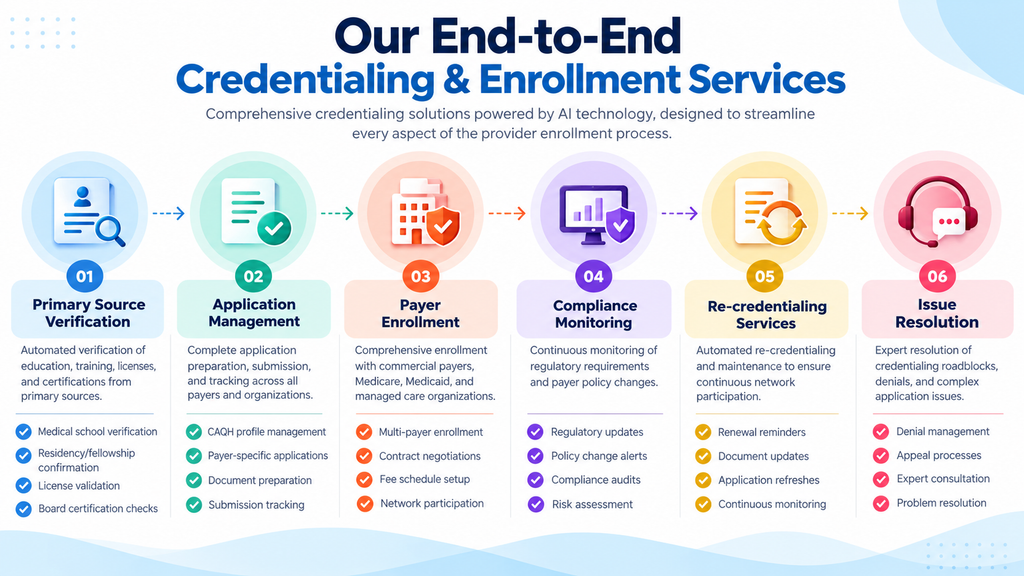
Relevant service areas include:
- Centralized Provider Information: Organize licenses, NPI numbers, specialties, and practice locations.
- CAQH Profile Management: Support the organization of credentialing profile information and attestation tracking.
- Document Management: Track supporting documents, expiration dates, and application readiness.
- Enrollment Workflow Tracking: Monitor forms, submissions, payer follow-ups, and outstanding requests.
- Recredentialing Support: Maintain provider records and prepare for recurring credentialing requirements.
- Administrative Visibility: Improve coordination between credentialing, billing, operations, and provider management teams.
You can link this section to your existing Harvard Pilgrim Health Care Provider Credentialing & Enrollment Services page.
You can also connect readers to your Tufts Health Plan Provider Credentialing and Enrollment page for related Point32Health plan information
Conclusion
Point32Health provider credentialing and enrollment involve several connected stages, including contracting, credentialing, and enrollment. Providers must select the appropriate health plan, submit accurate documentation, maintain their CAQH profile when required, and complete enrollment before billing under the contracted entity.
Point32Health’s official guidance identifies separate processes for medical professionals, ancillary providers, behavioral health providers, and facilities. It also emphasizes accurate CAQH information and ongoing provider data maintenance.
A structured provider credentialing and enrollment workflow can help organizations organize documentation, track applications, and manage ongoing provider requirements.
Frequently Asked Questions
Point32Health states that credentialing and contracting can generally take one to two months, although incomplete applications can extend the timeframe. Behavioral health requests have a separate 45-day processing guideline.
Yes. Applicants seeking initial affiliation with Point32Health are credentialed through the HCAS process, which relies on CAQH ProView as its central data repository. A completed CAQH profile alone isn’t sufficient, though -explicit authorization for Point32Health to access that data is a separate required step.
Clinicians cannot provide services for Point32Health members as participating providers until the Credentialing Committee approves them for network participation. Providers should use the confirmed effective date as the start of network participation.
Partially. Behavioral health applicants need to complete specific Point32Health enrollment forms in addition to submitting a credentialing application through CAQH ProView, making it a two-part submission rather than a CAQH-only process.
Harvard Pilgrim-affiliated clinicians are recredentialed every two years on a date-of-birth cycle. Providers should maintain an accurate CAQH profile and complete required re-attestation to avoid interruptions in the credentialing process.