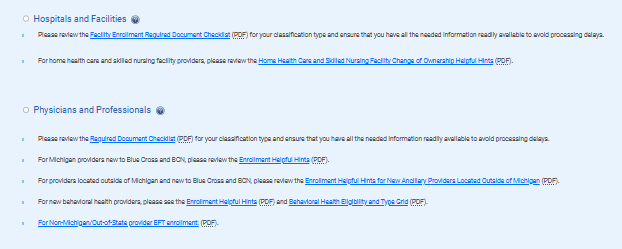
“BCBSM uses different processes and tools for professional practitioners, groups, facilities, and organizational providers. Professional practitioners use the CAQH Provider Data Portal for applicable credentialing information, while facilities and organizational providers use the Provider Data Management tool in Availity Essentials for relevant data updates and attestations.
Credentialing and enrollment should be managed as connected but distinct activities. Providers must confirm that their participation status is active for the applicable network before providing services that they expect to be reimbursed as in-network services. BCBSM advises providers to allow 30 days for processing before requesting an enrollment or credentialing status update.
This article provides a practical overview of the process while directing providers to official BCBSM resources for current requirements.
What Is BCBS of Michigan Provider Credentialing?
BCBS of Michigan provider credentialing is the process of verifying a healthcare provider’s qualifications, licenses, professional information, and other applicable requirements before network participation is established.
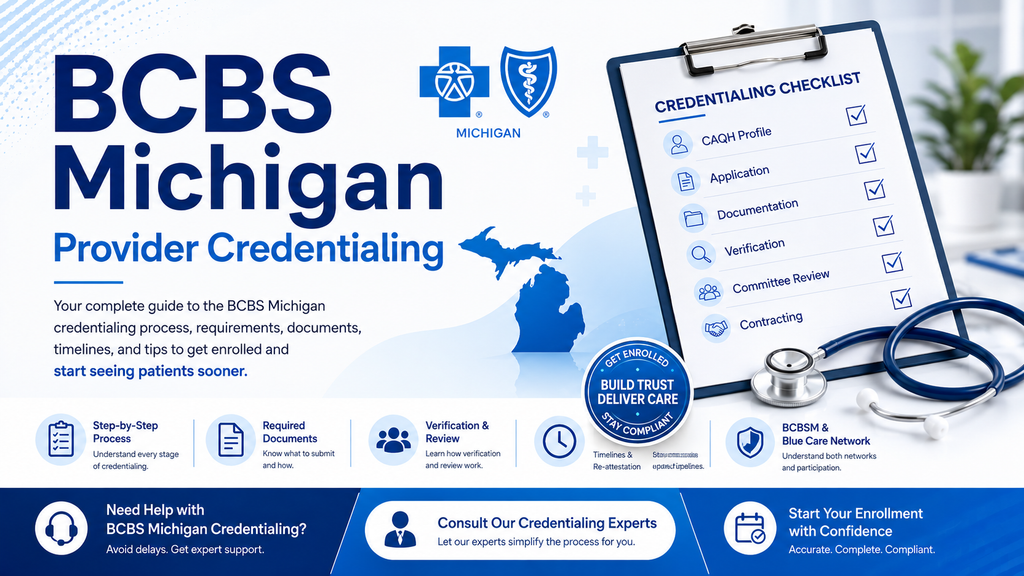
According to BCBSM’s official provider resources, credentialing verifies whether a provider has the appropriate license, education, insurance, and other qualifications required for the relevant provider type.
Credentialing information may include:
- Professional licenses and certifications
- Education and training
- Specialty and professional qualifications
- Practice locations
- Professional liability insurance
- Work history and other credentialing details
- Provider identifiers
- Group or organizational affiliations
The exact requirements depend on the provider category and applicable BCBSM program. Completing a credentialing-related activity does not automatically confirm active participation in every network or product.
BCBS of Michigan Provider Credentialing vs. Enrollment
Although credentialing and enrollment are closely related, they serve different purposes.
| Credentialing | Enrollment |
|---|---|
| Verifies the provider’s professional qualifications and credentials. | Establishes the provider’s participation and administrative information with the payer. |
| Focuses on licenses, education, training, specialty, and other professional requirements. | Includes provider identifiers, group affiliation, practice locations, and billing-related information. |
| Determines whether the provider meets applicable credentialing requirements. | Supports the provider’s participation in the applicable network or payer arrangement. |
| May involve CAQH profile review and credentialing verification. | May involve payer enrollment requests, contracting, and provider data updates. |
| Requires ongoing maintenance of credentialing information. | Requires ongoing updates to enrollment and provider participation information. |
| Completion does not automatically guarantee active network participation. | Active participation should be confirmed through the payer’s enrollment and network status process. |
BCBSM’s enrollment and credentialing guidance states that the full process includes both enrollment and credentialing. Providers should check their profile and confirm that they are listed as “Active” in the relevant network status column before providing services for which network reimbursement is expected.
Understanding these distinctions helps organizations track each stage accurately and avoid assuming that completing one task means the entire process is finished.
BCBS of Michigan Provider Credentialing Eligibility
BCBSM credentialing eligibility depends on the provider’s qualifications, specialty, provider category, and applicable network requirements. Potential applicants may include:
- Physicians
- Primary care providers
- Specialists
- Psychologists and behavioral health professionals
- Nurse practitioners
- Physician assistants
- Other eligible professional practitioners
- Hospitals and facilities
- Ancillary providers
- Organizational providers
BCBSM identifies professional practitioners and organizational providers as separate categories for data management and attestation purposes. Providers should review the applicable BCBSM provider resources before beginning the process.
Providers Joining an Existing Medical Group
A practitioner joining an existing medical group should confirm whether they need initial credentialing, enrollment, group affiliation, or a provider information update. The group’s existing relationship with BCBSM does not necessarily mean that every individual practitioner’s requirements have already been completed.
Organizations should verify the practitioner’s:
- Credentialing status
- CAQH profile
- Group affiliation
- Practice locations
- Provider identifiers
- Applicable enrollment requirements
Direct-Contracted Providers
Providers seeking direct participation should identify the appropriate BCBSM network and follow the applicable contracting, credentialing, and enrollment instructions. Requirements may differ for individual practitioners, groups, facilities, and other organizational providers.
Applicants should use official BCBSM resources to confirm the correct submission pathway and current requirements. They should not assume that credentialing review alone establishes contractual participation.
Documents Required for BCBS of Michigan Provider Credentialing and Enrollment
The required documentation depends on the provider type and application pathway. Professional practitioners should maintain applicable credentialing information through CAQH, while facilities and organizational providers should follow BCBSM’s instructions for Availity Essentials Provider Data Management.
Common information may include:
| Document Checklist | Why It Matters |
|---|---|
| Completed Provider Enrollment Application | Provides the payer with the essential information required to process the provider’s enrollment request. |
| Active Professional License | Verifies that the provider is legally authorized to practice in the applicable state and specialty. |
| NPI (National Provider Identifier) | Identifies the provider for healthcare transactions, claims processing, and payer records. |
| CAQH Provider Profile | Supports credentialing by providing current provider information and documentation. |
| Board Certification Documents | Confirms specialty certification and supports verification of the provider’s professional qualifications. |
| Education and Training Records | Supports verification of specialty education and professional training, including residency or fellowship where applicable. |
| Malpractice Insurance Certificate | Confirms that the provider maintains the required professional liability coverage. |
| Work History and CV | Allows the payer to review the provider’s professional experience and identify potential gaps in employment or practice history. |
| CAQH Reattestation Certificate | Verifies that the provider’s CAQH information remains current and accurate for credentialing and enrollment purposes. |
| Medicare or Medicaid Enrollment Documentation | Helps confirm existing government payer enrollment information and supports applicable payer requirements. |
| Provider W-9 and Tax Identification Information | Supports accurate tax reporting, billing setup, and payment-related processes. |
| Disclosure and Attestation Forms | Allow the provider to disclose relevant professional information and attest that the submitted details are complete and accurate. |
| Collaborating or Supervising Provider Documentation (if applicable) | May be required for certain provider types and practice arrangements to document applicable supervision or collaboration. |
Before submitting an application, providers should confirm the current documentation requirements for their specific category.
Important Document Preparation Tips
Healthcare organizations should:
- Review all provider information for accuracy.
- Confirm that licenses and supporting records are current.
- Update CAQH information where applicable.
- Check practice locations and group affiliations.
- Maintain copies of submitted documentation.
- Track payer correspondence and follow-up requests.
- Complete required attestations on time.
BCBSM requires professional practitioners, facilities, and organizational providers to attest to five key data elements every 90 days: name, specialty, address, telephone number, and digital contact information. Professional practitioners must attest to other credentialing and licensing-related data every 120 days.
BCBS of Michigan Provider Credentialing and Enrollment: Step-by-Step Process
The following steps provide a practical overview of the BCBSM credentialing and enrollment workflow. The exact process may differ depending on the provider category, network, and type of request.
Step 1: Identify the Provider Type and Applicable Network
Begin by identifying the provider’s category and the BCBSM network or product involved. Confirm whether the request concerns a new provider, group affiliation, facility enrollment, demographic update, or another administrative change.
Review:
- Provider type and specialty
- Individual or organizational status
- Practice and service locations
- Group affiliation
- Applicable network
- Credentialing and enrollment requirements
This initial review helps organizations select the correct application pathway.
Step 2: Register for the Required Provider Systems
Determine which systems are required for the provider’s application or data update. BCBSM uses CAQH for professional practitioner credentialing information and Availity Essentials for certain facility and organizational provider data management activities.
Professional practitioners should maintain their CAQH information and authorize the applicable health plan to access required data. Organizational providers should confirm that the appropriate Availity access and user roles are available.
Step 3: Submit the Appropriate Credentialing or Enrollment Request
Submit the relevant application, participation request, or change transaction based on the provider’s category. Before submission, verify that the information is complete and consistent across the provider’s records.
Organizations should review:
- Provider and organization names
- NPI and other identifiers
- Specialty and practice details
- Group affiliations
- Locations and contact information
- Required supporting documentation
The submission process may differ for professional practitioners, groups, facilities, and other organizational providers.
Step 4: Create or Update the CAQH Profile
Professional practitioners should create or update their CAQH Provider Data Portal profile when the applicable BCBSM process requires it. The profile should contain accurate information about professional qualifications, licenses, practice locations, and other credentialing details.
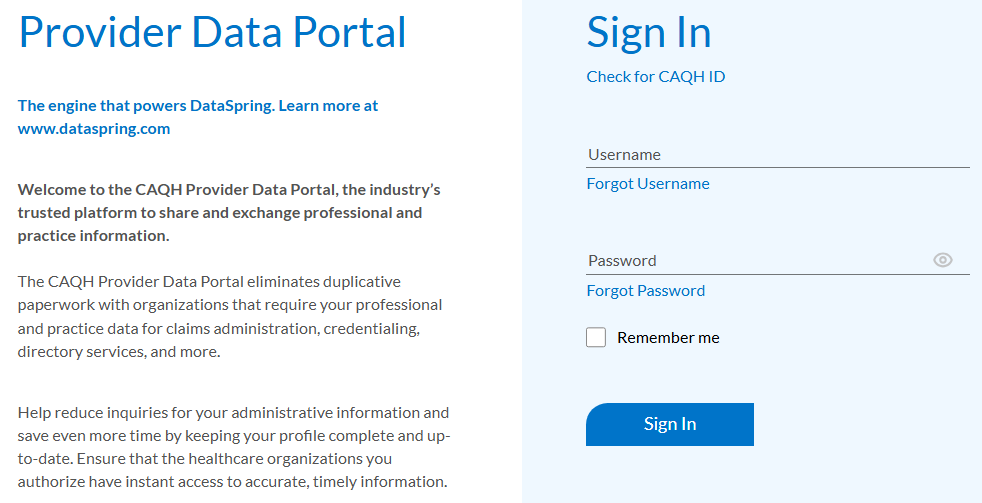
BCBSM’s provider guidance identifies recurring attestation requirements. Its materials state that professional practitioners must attest to certain data elements every 90 days and other credentialing-related data every 120 days.
Providers should avoid waiting until an application is submitted to identify outdated or incomplete information.
Step 5: Submit the Required Credentialing Documentation
Provide the documentation required for the relevant provider type. Professional practitioners may use CAQH to provide credentialing information, while organizational providers may need to follow separate documentation and provider data management instructions.
Before submission, check that:
- All required fields are completed.
- Supporting documents are current.
- Information is consistent across records.
- Any requested authorizations are provided.
- The correct provider or organization is associated with the request.
Incomplete or inconsistent information may result in follow-up requests and additional administrative work.
Step 6: Complete Credentialing Review and Verification
During credentialing review, BCBSM evaluates the information submitted through the applicable process. The nature of the review depends on the provider category and credentialing requirements.
Providers should be prepared to respond to requests involving licenses, professional qualifications, practice information, or other supporting records. Credentialing review should be distinguished from the later contracting and enrollment activities that may be required before participation is finalized.
Step 7: Respond to Additional Information Requests
Payers may request clarification or additional information when submitted records are incomplete, inconsistent, or require further review.
Common administrative issues include:
- Missing supporting documentation
- Outdated CAQH information
- Inconsistent practice addresses
- Incorrect group affiliation
- Incomplete provider data
- Unresolved licensing or credentialing information
Credentialing teams should track each request, assign responsibility, record the response date, and retain confirmation of submission where available.
Step 8: Complete Contracting Activities
After the applicable credentialing requirements have been addressed, providers may need to complete contracting activities. Contracting requirements depend on the network and participation arrangement.
Organizations should confirm that the applicable agreement, amendment, or affiliation process has been completed before treating the provider as fully participating. Credentialing status and contractual participation status should be tracked separately.
Step 9: Complete Provider Enrollment Activities
Enrollment activities may include reviewing provider identifiers, group affiliations, practice locations, billing information, and other administrative details. The specific requirements depend on the provider type and the transaction being submitted.
A credentialing team should verify whether any additional enrollment action is needed after credentialing review and contracting. Do not assume that completion of a credentialing-related task automatically confirms active participation for every network or product.
Step 10: Verify Provider Data and Directory Information
Accurate provider data is important for directory listings, referrals, authorizations, claims administration, and patient access.
Review information such as:
- Provider name
- Specialty
- Practice address
- Telephone number
- Digital contact information
- Group affiliation
- Practice status
- Office details
- Provider identifiers
BCBSM’s attestation guidance requires recurring data validation. Professional practitioners, facilities, and organizational providers should follow the applicable attestation process and deadlines.
Step 11: Monitor Credentialing Status and Follow Up
A centralized tracker can help credentialing teams monitor applications and identify outstanding tasks. Useful tracking fields may include:
- Provider name
- NPI
- Specialty
- Application date
- CAQH status
- Documentation status
- Follow-up requests
- Contracting status
- Enrollment status
- Provider data updates
- Recredentialing deadlines
Regular status reviews help organizations maintain visibility across multiple provider records and reduce the risk of missed administrative requirements.
Step 12: Complete Ongoing Recredentialing and Attestation
Credentialing maintenance continues after the initial process. Providers and organizations must maintain accurate information and complete required attestations or recredentialing activities within the applicable timeframes.
BCBSM’s provider data attestation materials describe recurring attestation requirements for professional practitioners, facilities, and organizational providers. Organizations should monitor the requirements relevant to their provider category and maintain a process for timely updates.
How Long Does BCBS of Michigan Provider Credentialing Take?
The time required for BCBSM credentialing and enrollment can vary depending on the provider type, application completeness, documentation, verification requirements, contracting arrangements, and any additional information requests.
Factors that may affect processing include:
- Completeness of the application
- Accuracy of CAQH information
- Availability of required documentation
- Provider category
- Network and contracting requirements
- Additional verification requests
- Enrollment or affiliation changes
- Timeliness of provider responses
BCBSM’s publicly available materials describe specific data attestation schedules, but these schedules should not be interpreted as a guaranteed end-to-end credentialing or enrollment turnaround time. Providers should confirm current processing expectations directly through the applicable BCBSM resources and submission channel.
How BCBS of Michigan Credentialing Support Services Can Help
Managing BCBSM credentialing and enrollment involves more than submitting an initial application. Healthcare organizations may need to coordinate provider information, documentation, CAQH updates, enrollment activities, and ongoing data maintenance.
Credentialing support services may help with:
- Provider information collection
- Credentialing application preparation
- CAQH profile monitoring
- Documentation organization
- License and insurance tracking
- Application completeness reviews
- Follow-up request management
- Provider data updates
- Enrollment coordination
- Attestation deadline monitoring
- Recredentialing support
- Status reporting
External support does not replace the provider’s responsibility to provide accurate information or complete payer-required attestations. However, a structured workflow can improve visibility, clarify ownership, and help organizations manage multiple provider records consistently.
How MantraComply Can Support BCBS of Michigan Provider Credentialing and Enrollment
BCBS of Michigan provider credentialing and enrollment may involve multiple administrative activities, including provider data management, documentation preparation, CAQH maintenance, follow-up coordination, and ongoing compliance monitoring.
MantraComply’s credentialing and enrollment services can support healthcare organizations with structured administrative workflows across the credentialing lifecycle.
Potential areas of support include:
- Provider application coordination
- Credentialing document organization
- CAQH profile assistance
- Application completeness reviews
- License and insurance expiration tracking
- Provider information management
- Credentialing status monitoring
- Follow-up request coordination
- Enrollment assistance
- Recredentialing and attestation deadline monitoring
- Provider record maintenance
A centralized process can help organizations track outstanding requirements, coordinate internal responsibilities, and maintain better visibility into provider application status. Healthcare organizations should confirm the exact scope of services and ensure that all information submitted to BCBSM is accurate and authorized.
Conclusion
BCBS of Michigan provider credentialing and enrollment involves several connected stages, including identifying the appropriate provider pathway, preparing documentation, maintaining CAQH information where applicable, completing payer-specific processes, and managing ongoing provider data requirements.
The process can differ based on whether the applicant is an individual practitioner, provider group, facility, or organizational provider. Healthcare organizations should use the applicable BCBSM resources and systems, including CAQH and Availity Essentials, according to their provider category and administrative needs.
Maintaining accurate records, monitoring attestation deadlines, responding promptly to information requests, and separating credentialing from contracting and enrollment activities can help organizations manage their payer participation responsibilities more effectively.
With a structured credentialing workflow, providers and healthcare organizations can improve administrative coordination and maintain better oversight of their BCBSM credentialing and enrollment requirements.
Frequently Asked Questions
A complete application may take several weeks or longer to progress through review, verification, credentialing, and contracting. Actual timing can vary based on provider type, application completeness, verification requirements, and contracting.
No. CAQH ProView registration is free, and the ongoing requirement is keeping the profile attested and accurate.
Not necessarily. BCBSM and BCN are related but administratively distinct networks, so providers seeing both commercial and HMO members should confirm what’s actually covered under their file.
Missing signatures or dates can prevent an application from being processed as expected. Review every required document carefully and ensure all required signatures and dates are completed before submission.
Facility and organisational providers may have separate re-attestation requirements through Availity Essentials. Where a 90-day re-attestation applies, providers should track the deadline carefully to keep enrollment information current.