
Getting credentialed with Highmark can feel complicated because the process involves more than simply submitting a provider application. Highmark credentialing requires providers to verify their professional qualifications, maintain accurate provider information, complete the appropriate application, and meet applicable network participation requirements. For professional providers, Highmark uses CAQH ProView as its preferred credentialing system. Providers generally need to keep their CAQH profile current, authorize Highmark to access their information, and submit the required credentialing request. Organizational and facility providers may follow different requirements based on their region and provider type. This guide explains Highmark provider credentialing, required documents, professional and organizational provider requirements, credentialing timelines, and how automation can simplify ongoing credentialing management.
What Is Highmark Provider Credentialing?
Highmark provider credentialing is the process used to verify that a healthcare professional or organization meets Highmark’s requirements for participation in its provider networks.
For professional providers, Highmark relies on CAQH ProView to collect standardized provider information. This can include information related to education, training, licensure, professional qualifications, practice details, and other credentialing data. Highmark describes CAQH ProView as its preferred method for initial professional credentialing.
Providers can review the official Highmark credentialing requirements to understand the current process and access credentialing resources.

Credentialing should not be confused with contracting. Credentialing verifies whether the provider meets the plan’s qualifications, while contracting establishes the provider’s participation agreement with the health plan.
Both pieces matter for network participation.
For practices managing multiple providers or health plans, a centralized credentialing and enrollment platform can make it easier to organize applications, documents, provider data, and renewal deadlines in one place.
Highmark Provider Credentialing vs. Highmark Provider Enrollment
Credentialing and enrollment are often used interchangeably, but they serve different purposes.
Credentialing focuses on verifying a provider’s qualifications and eligibility for participation. Enrollment generally involves registering the provider with a payer so that the provider can participate in the payer’s network and, where applicable, submit claims for reimbursement.
Highmark’s process also involves contracting. A provider can complete credentialing without immediately becoming an active participating provider.
| Credentialing | Enrollment / Contracting |
|---|---|
| Verifies provider qualifications | Establishes payer participation |
| Reviews professional information | Connects the provider to the payer network |
| Uses CAQH for applicable professional providers | Requires applicable payer participation steps |
| Includes primary-source verification | Includes contracting and network activation |
| Must be maintained over time | Must remain active for network participation |
This distinction is particularly important when managing payer credentialing and enrollment across multiple health plans.
For comparison, Medicare has its own provider enrollment process through PECOS, which allows providers and organizations to submit enrollment applications and supporting documents electronically.
Who Is Eligible for Highmark Credentialing?
Highmark credentialing applies to healthcare professionals and organizations seeking participation in applicable Highmark networks.
Professional providers – Professional providers generally use CAQH ProView for the credentialing process. Highmark’s current professional credentialing guidance instructs providers to create or maintain a CAQH profile and then submit the appropriate Highmark credentialing request.
Organizational providers – Organizational or facility providers may include entities such as:
- Hospitals
- Nursing facilities
- Home health agencies
- Diagnostic facilities
- Other ancillary organizations
The application process for organizational providers can vary by region and provider type. Highmark maintains separate organizational credentialing resources for these providers.
Because requirements can change by state, network, and provider type, providers should verify the applicable requirements directly with Highmark before submitting an application.
Basic Requirements for Highmark Credentialing
Before starting a Highmark provider credentialing application, providers should make sure their information is current and consistent across their records.
Common requirements may include:
- Active professional license
- NPI
- CAQH ProView profile, when applicable
- Current practice information
- Specialty information
- Malpractice or liability insurance
- Certificate of insurance, when applicable
- Professional history
- Board certification information, when applicable
- Accurate contact information
- Supporting documentation requested by Highmark
Highmark specifically advises professional providers to keep CAQH information current and authorize Highmark to access the profile.
Providers should also make sure names, addresses, specialties, licenses, and other identifying information are consistent. Data discrepancies can result in additional questions and delay processing.
Documents Required for a Highmark Provider Application
The exact documentation depends on the provider type, specialty, location, and application.
Potential documentation can include:
| Document | Why It Matters |
|---|---|
| CAQH ProView Profile | Provides standardized credentialing information |
| Professional License | Verifies current authorization to practice |
| NPI Information | Identifies the provider |
| Malpractice Insurance | Supports liability verification |
| Certificate of Insurance | Provides applicable coverage information |
| Board Certification | Verifies specialty credentials where applicable |
| CV / Resume | Provides professional history |
| DEA Information | May be required for applicable providers |
| Practice Information | Supports network and directory records |
Highmark’s current credentialing materials indicate that additional documentation may be requested depending on the provider and application.
The best approach is to prepare documents before submission and ensure expiration dates are current.
Get a Free Demo!
Discover a simpler way to manage credentialing and enrollment.
Step-by-Step Highmark Credentialing Process
The Highmark credentialing process involves several steps, from preparing your application to completing credentialing and contracting. Here’s what providers can expect at each stage.
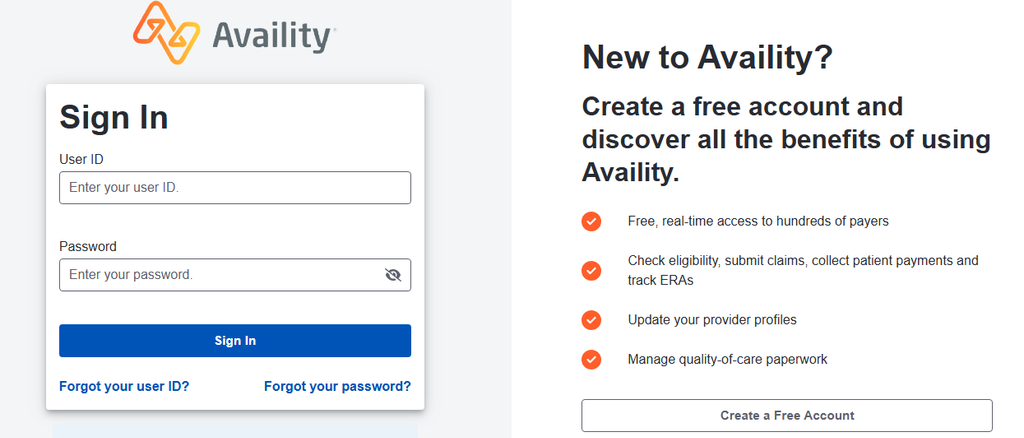
Step 1: Register With CAQH
Professional providers generally begin by creating or maintaining a CAQH ProView profile.
If you do not already have a CAQH ID, you need to complete the CAQH application to obtain one. If you already have a profile, review the information and make sure it is current.
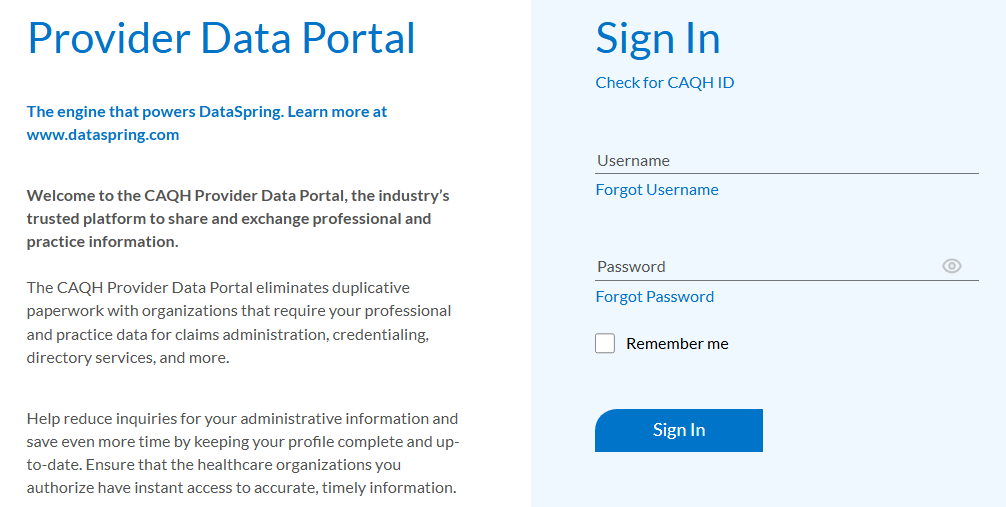
Highmark instructs providers to add Highmark as an authorized plan or grant global authorization so Highmark can access the applicable CAQH information.
Step 2: Confirm Your Practice Information
Before submitting your application, verify that your practice information is accurate.
Check:
- Legal business name
- Practice address
- Billing information
- NPI
- Tax identification information
- Specialty
- Provider contact information
- Credentialing contact information
Accurate provider data is important not only for credentialing but also for directories, claims, and ongoing payer communication.
Highmark’s Provider Data Maintenance resources allow providers to manage certain demographic and practice information through Availity.
Step 3: Submit the Initial Credentialing Request
Once the CAQH profile is ready, the professional provider submits Highmark’s Initial Credentialing Request.
Highmark’s current instructions indicate that providers should include their CAQH ID and complete the required information in the request.
Highmark also provides credentialing status functionality through its provider tools, including Availity for applicable providers.
For organizational providers, the applicable initial application may differ depending on the Highmark region and provider category.
Step 4: Provide Supporting Documentation
Highmark may request additional documents during the credentialing process.
For example, providers may need to provide:
- Proof of malpractice insurance
- Certificate of insurance
- Licensure
- Board certification
- Professional history
- Other provider-specific documentation
Responding quickly is important. Highmark’s provider guidance specifically notes that delays in responding to documentation requests can slow the process.
Step 5: Highmark Reviews the Application
After submission, Highmark reviews the credentialing information and performs the applicable verification process.
For professional providers, Highmark’s credentialing process includes primary-source verification and review of the provider’s qualifications.
If information is incomplete, inconsistent, or requires clarification, Highmark may contact the designated credentialing contact.
This is one reason maintaining an accurate credentialing email address is important.
Step 6: Complete Highmark Contracting in Parallel
Credentialing does not automatically equal network participation.
The provider must also complete the applicable Highmark contracting process.
Highmark explicitly states that providers cannot begin treating Highmark members simply because the credentialing and CAQH applications have been completed. Participation begins after the provider has completed credentialing and contracting and has been notified of acceptance.
Keeping these two workflows moving together can help avoid unnecessary delays.
Step 7: Receive Formal Notification
After the credentialing decision is made, Highmark communicates the applicable outcome to the provider.
Highmark’s provider manual indicates that providers receive notification of adverse decisions within the applicable timeframe, while accepted providers receive communication regarding network participation.
Do not assume that submitting an application—or even completing the credentialing review—means the provider is already active.
Wait for the appropriate notification before treating Highmark members under the network arrangement.
Step 8: Use Availity and Provider Tools
Highmark uses Availity Essentials for several provider-related functions.
Depending on the provider and region, providers may use the portal to manage provider information, review credentialing status, and perform other administrative tasks.
Highmark’s Provider Guide explains that Provider Data Maintenance can be used to view and update practice information and, for applicable users, request or review credentialing status.
Step 9: Check Your Provider Directory Information
Once credentialing and network participation are complete, providers should review their directory information.
Check details such as:
- Provider name
- Specialty
- Practice location
- Phone number
- Office hours
- New-patient status
Incorrect directory information can create problems for patients, referrals, payer communications, and provider data management.
Streamline Your Highmark Provider Enrollment!
Simplify enrollment and credentialing with expert support throughout the process.
Get Started!How Long Does Highmark Credentialing Take?
There is no single guaranteed turnaround time for every Highmark credentialing application.
Processing can vary based on:
- Provider type
- Geographic region
- Application completeness
- CAQH status
- Document verification
- Additional information requests
- Contracting requirements
- Payer processing time
Highmark’s published materials provide process-specific timelines rather than a universal guarantee. Providers should therefore avoid treating a general processing estimate as a guaranteed activation date.
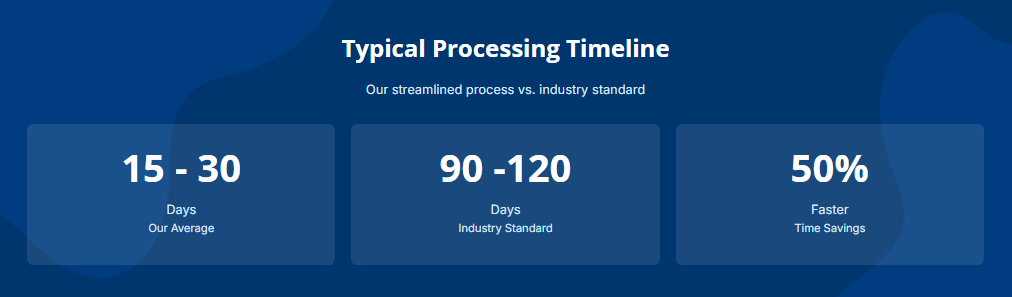
The best way to reduce avoidable delays is to submit complete information, maintain an accurate CAQH profile, respond quickly to requests, and monitor the application status.
Highmark Credentialing Services
Managing Highmark credentialing manually can become difficult when a practice has multiple providers, locations, specialties, or payer relationships.
A credentialing management solution can help organize:
- Provider applications
- CAQH information
- Credentialing documents
- License expirations
- Insurance expirations
- Application status
- Payer communications
- Recredentialing deadlines
For organizations managing several payers, this becomes even more important because each payer may have different forms, processes, portals, and requirements.
How MantraComply Can Help With Highmark Credentialing
MantraComply provides Highmark provider credentialing and enrollment services designed to manage the administrative work involved in payer participation.
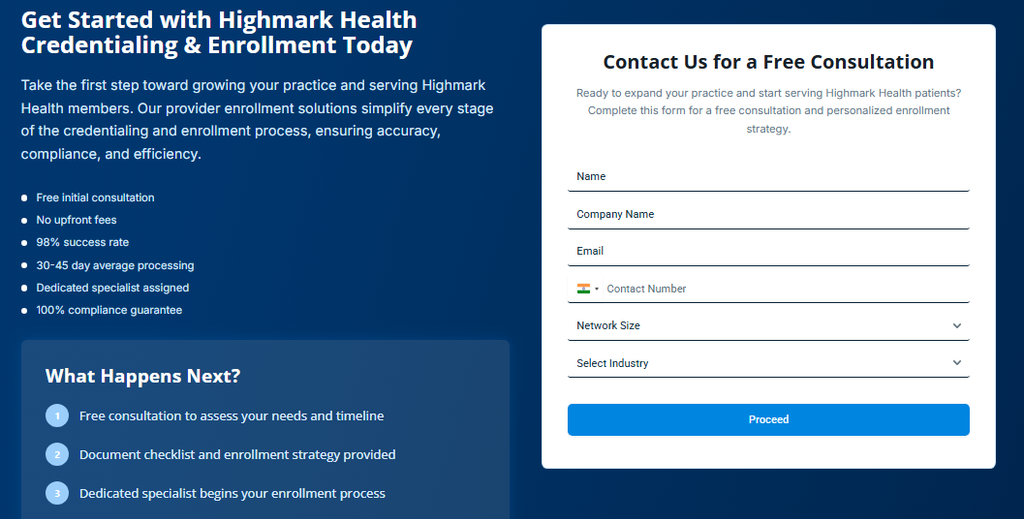
The service can support areas such as:
- CAQH Setup and Management – MantraComply can help organize CAQH profile preparation, document management, updates, and ongoing maintenance.
- Provider Application Preparation – Applications can be reviewed and prepared with supporting documentation to reduce avoidable errors and missing information.
- Credentialing Documentation – Instead of keeping provider documents scattered across emails and folders, credentialing teams can centralize documentation and track expiration dates.
- Application Tracking – Monitoring application progress helps teams identify pending items and follow up when additional information is required.
- Recredentialing Management – Highmark requires professional providers to recredential every three years.
A centralized system can help teams track those deadlines instead of relying on manual spreadsheets and calendar reminders.
You can also explore MantraComply’s healthcare credentialing and enrollment platform to see how credentialing automation can support multiple payer workflows.
Conclusion
Highmark credentialing involves several connected steps, beginning with provider information and CAQH management and continuing through application submission, verification, contracting, notification, and ongoing maintenance.
For professional providers, CAQH ProView is a central part of the process, while organizational providers may follow different application requirements depending on their region and provider type.
The most important point is that credentialing is not the same as network activation. Providers need to complete the applicable credentialing and contracting requirements and receive confirmation before treating Highmark members under the network.
For practices managing multiple providers, locations, and payers, automated credentialing and enrollment management can make it easier to keep applications, documents, provider data, and recredentialing deadlines organized.
Frequently Asked Questions
The stated goal is to complete initial review within 45 days of a complete application, though volume and missing information can extend this. CAQH-based processing can separately take up to 180 days under NCQA-mandated timelines.
Professional providers do. Organizational providers, such as facilities and ancillary providers, use a separate state-specific initial application instead.
No, but the two run together rather than one after the other. Credentialing verifies your qualifications; Highmark contracting establishes the participation agreement that sets payment terms and network conditions. Both are required before a provider can go live.
Providers are recredentialed at least every three years. Highmark typically sends notice about six months ahead of the due date.
Once credentialing and contracting are both complete, participating providers get portal access through Availity, where claims submission, eligibility checks, and benefit verification all take place.
View Sources
- Highmark. Provider Resources . Accessed 10/3/2026.
- Highmark. Provider Credentialing . Accessed 10/3/2026.
- CAQH. CAQH ProView . Accessed 10/3/2026.
- MantraComply. Healthcare Credentialing Services . Accessed 10/3/2026.
- MantraComply. MantraComply . Accessed 10/3/2026.